
Even the most vigilant households can face an invisible threat flowing silently from their taps—heavy metals that accumulate in the body over time, causing health impacts that may not surface for years. Lead, mercury, and arsenic represent some of the most dangerous contaminants in modern water supplies, entering through aging infrastructure, industrial activities, and natural geological processes.
Here at HydroBrewLab, we test, we compare, we care, and most of all, we listen to the community about what really works for protecting families from these persistent toxins. Understanding the sources, health risks, and most effective removal methods can mean the difference between confident daily hydration and long-term health consequences.
Bottom Line Up Front: Heavy metals pose serious health risks even at low concentrations, particularly for children and pregnant women. Reverse osmosis systems provide the most comprehensive removal (up to 99%), while specialized ion exchange and KDF filtration offer targeted solutions. Regular testing is essential since heavy metals are often undetectable by taste, smell, or appearance.
Disclosure: As an Amazon Associate, HydroBrewLab earns from qualifying purchases. We only recommend products we’ve thoroughly tested and believe provide genuine value to our community. Your support helps us continue providing unbiased, data-driven reviews.
Understanding Heavy Metal Contamination: The Invisible Threat
Heavy metals are naturally occurring elements that have a high atomic weight and a density at least five times greater than that of water. While some heavy metals are essential for human health in trace amounts, others can be toxic. The most concerning heavy metals in drinking water include lead, arsenic, mercury, and cadmium.
The Scale of the Problem
According to the U.S. Environmental Protection Agency, heavy metals are among the priority pollutants that are of public health significance. These metallic elements are considered systemic toxicants that are known to induce multiple organ damage, even at lower levels of exposure. They are also classified as human carcinogens (known or probable) according to international health organizations.
More than 30 nations have concluded that arsenic, cadmium, chromium and mercury in water are detrimental to public health. The widespread occurrence of heavy metals in the environment is mainly due to human activities such as industry, agriculture, mining, and improper waste disposal, which have resulted in the build-up of harmful heavy metals in ecosystems.
Why Heavy Metals Are Particularly Dangerous
Unlike organic contaminants that can be broken down over time, heavy metals are non-biodegradable and persist indefinitely in the environment. Their toxicity is often exacerbated by their ability to bioaccumulate and biomagnify in food chains.
Heavy metals have been reported to affect cellular organelles and components such as cell membrane, mitochondrial, lysosome, endoplasmic reticulum, nuclei, and some enzymes involved in metabolism, detoxification, and damage repair. Metal ions have been found to interact with cell components such as DNA and nuclear proteins, causing DNA damage and conformational changes that may lead to cell cycle modulation, carcinogenesis or apoptosis.
The Big Three: Lead, Mercury, and Arsenic
Lead: The Silent Neurotoxin
Sources of Contamination: Lead enters drinking water primarily through the corrosion of pipes and plumbing fixtures. Aging infrastructure in many U.S. cities still contains lead service lines, while older homes may have lead solder joints and fixtures. The U.S. Environmental Protection Agency has set the maximum contaminant level goal for lead in drinking water at zero, recognizing that there is no safe level of lead exposure.
Health Impacts: Lead exposure is particularly damaging to the nervous system, leading to cognitive impairments, developmental delays in children, and neurological disorders in adults. High levels of lead can cause coma, convulsion or death. Children are especially vulnerable because lead can interfere with brain and physical development even at minute concentrations.
Lead exposure in children has been linked to:
- Reduced IQ and learning disabilities
- Behavioral problems and ADHD
- Delayed growth and development
- Hearing problems
- Anemia
Detection Challenges: Lead contamination is particularly insidious because it’s completely undetectable by taste, smell, or appearance. Water can look crystal clear while containing dangerous levels of this neurotoxin.
Mercury: The Brain and Kidney Destroyer
Sources of Contamination: Mercury is released into the environment from various industrial activities, including coal-fired power plants and mining operations. It can accumulate in water bodies and enter the drinking water supply through atmospheric deposition and industrial discharge.
Health Impacts: Mercury exposure can adversely affect the nervous system and is particularly harmful to developing fetuses. The EPA’s maximum contaminant level for mercury in drinking water is set at 2 ppb, but even at these low levels, chronic exposure raises concerns.
Mercury toxicity can cause:
- Neurological and behavioral disorders
- Cognitive impairments and motor dysfunctions
- Kidney and liver damage
- Reproductive problems and birth defects
- Immune system suppression
Special Vulnerability: Pregnant women and young children are particularly vulnerable to mercury’s toxic effects. Mercury can easily cross the placenta, particularly during early gestation, leading to spontaneous abortion, stillbirth, preterm birth, and low birth weight.
Arsenic: The “King of Poisons”
Sources of Contamination: Arsenic is naturally present in rocks and soil and can seep into groundwater sources. Regions with high natural arsenic deposits face significant challenges in maintaining safe water supplies. It is also used in agricultural applications, such as pesticides, which can contribute to its presence in water supplies.
Health Impacts: The EPA has established a maximum contaminant level of 10 parts per billion (ppb) for arsenic in drinking water. However, even at levels below this standard, there are concerns about long-term health effects. Arsenic is notoriously known as the “king of poisons” due to its severe toxicity.
Long-term exposure to arsenic in drinking water is associated with:
- Increased risk of cancer (lung, liver, bladder, kidneys)
- Skin lesions and skin cancer
- Cardiovascular diseases
- Diabetes and metabolic disorders
- Respiratory difficulties
Cumulative Effects: Drinking 1 L of water with 50 μg/L arsenic per day is linked to serious health complications. Arsenic concentrations of 0.0012 mg/kg/day can result in serious skin damage and respiratory difficulties, with effects accumulating over time.
How Heavy Metals Enter Your Water Supply
Understanding contamination pathways helps identify risk factors and appropriate treatment strategies.
Natural Sources
Weathering of rocks is a primary natural source of metals such as nickel and arsenic. Over time, water dissolves these metals, which leach into nearby water sources. This natural leaching process can be exacerbated by climatic conditions.
Natural processes contributing to heavy metal contamination include:
- Geological weathering – Gradual breakdown of metal-containing rocks and minerals
- Volcanic activity – Releases various metals into the atmosphere and water systems
- Atmospheric deposition – Metals transported over large distances through rain and dust
- Natural mineral deposits – Concentrated metal sources that can contaminate groundwater
Human Activities
Human activities significantly amplify the concentration of heavy metals beyond natural levels. Industries discharge various metals through waste streams, with manufacturing and metal processing being notable contributors.
Major anthropogenic sources include:
- Industrial discharges – Mining, smelting, manufacturing, and chemical production
- Agricultural runoff – Pesticides, fertilizers, and animal manures containing metals
- Urban development – Increased impervious surfaces leading to contaminated stormwater runoff
- Aging infrastructure – Corroding pipes, fixtures, and distribution systems
- Improper waste disposal – Electronic waste, industrial sludge, and hazardous materials
Infrastructure-Related Contamination
Lead contamination is especially concerning due to its common presence in older plumbing systems. Many homes built before 1986 contain lead pipes, solder, or fixtures that can leach lead into drinking water. This issue is further aggravated when water chemistry changes occur, such as switching water sources or treatment methods.
The Most Effective Heavy Metal Removal Methods
Not all water treatment technologies are created equal when it comes to heavy metal removal. Understanding the science behind each method helps you choose systems that actually work rather than those that simply claim to work.
Reverse Osmosis: The Gold Standard
Reverse osmosis represents the most comprehensive and effective method for heavy metal removal available to homeowners. RO systems can eliminate up to 99% of heavy metals present in water, ensuring exceptional water quality.
How It Works: Reverse osmosis uses added pressure to push water through a semipermeable membrane with pores so small (0.0001 micrometers) that only pure water molecules can pass through. Heavy metals, which are much larger than water molecules, are physically blocked and flushed away in the reject water.
Removal Effectiveness:
- Lead removal: Up to 99% reduction
- Mercury removal: 95-99% reduction
- Arsenic removal: 95-99% reduction for both arsenate (As V) and arsenite (As III)
- Cadmium removal: 99.4% removal efficiency
- Chromium removal: 95-98% reduction
Technical Advantages: RO removal efficiencies are high for metals, with upwards of 99.4% removal for metals like cadmium and copper. The molecular size of the solutes blocked is usually in the range of 0.00025–0.003 μm, making RO extremely effective against dissolved heavy metals.
Considerations: While highly effective, RO systems are more expensive (systems cost anywhere from $150-$1000) and create a high volume of wastewater. The process typically produces 2-4 gallons of reject water for every gallon of purified water produced.
Ion Exchange: Targeted Metal Removal
Ion exchange technology offers a highly effective alternative for heavy metal removal, particularly excelling at removing specific metal ions from water.
How It Works: When water passes through an ion exchange resin, heavy metal ions are attracted to the resin surface and easily swap places with harmless ions like chloride, making the discharge water safe to drink and use. The resin beads contain positively charged functional groups that attract and hold negatively charged heavy metal ions.
Removal Effectiveness: Ion exchange can reduce nickel, mercury, lead, cadmium, chromium, and copper in water with removal rates often exceeding 90% for target metals. The technology is highly effective for both long and short-chain heavy metals and is less affected by competing organic matter than activated carbon.
Technical Advantages:
- Regenerable technology – Resins can be cleaned and reused multiple times
- Selective removal – Can target specific metals based on resin chemistry
- High capacity – Can process large volumes before requiring regeneration
- pH tolerance – Works across a wider pH range than some alternatives
Limitations: Ion exchange systems require diligent cleaning through backwash and brine regeneration, cannot handle highly concentrated metal solutions, and are not selective to heavy metals (they also remove beneficial minerals).
KDF (Kinetic Degradation Fluxion) Media: Chemical Reduction
KDF media uses a copper-zinc alloy to remove heavy metals through a process called redox (reduction-oxidation).
How It Works: As water flows through KDF media, electrons are transferred between the dissimilar metals, creating an electrochemical reaction that converts dissolved metal ions into harmless metallic particles that can then be filtered out.
Removal Effectiveness:
- Lead reduction: 95-98% effectiveness
- Mercury reduction: 95% or greater
- Copper reduction: Highly effective due to electrochemical affinity
- Iron and hydrogen sulfide: Excellent removal rates
Technical Advantages: KDF media works particularly well in combination with activated carbon, providing both heavy metal removal and chlorine reduction. The media also has antimicrobial properties that prevent bacterial growth within the filter system.
Activated Carbon: Limited but Important Role
While activated carbon filters excel at removing chlorine, volatile organic compounds, and some chemicals, their effectiveness against dissolved heavy metals is limited.
How It Works: Activated carbon removes contaminants through adsorption, where pollutants stick to the surface of the carbon. Chemical activation using agents like phosphoric acid or zinc chloride makes the carbon more porous, increasing its ability to trap some metal ions.
Removal Effectiveness: Standard activated carbon filters are generally ineffective at removing dissolved metals from drinking water. However, specially designed carbon filters with enhanced surface chemistry can remove some heavy metals like copper and lead, though not as effectively as RO or ion exchange.
Best Applications: Activated carbon works best as a pre-filter in multi-stage systems, removing chlorine that could damage RO membranes and improving taste and odor while other technologies handle heavy metal removal.
Top Heavy Metal Removal Systems on Amazon
Whole House Systems
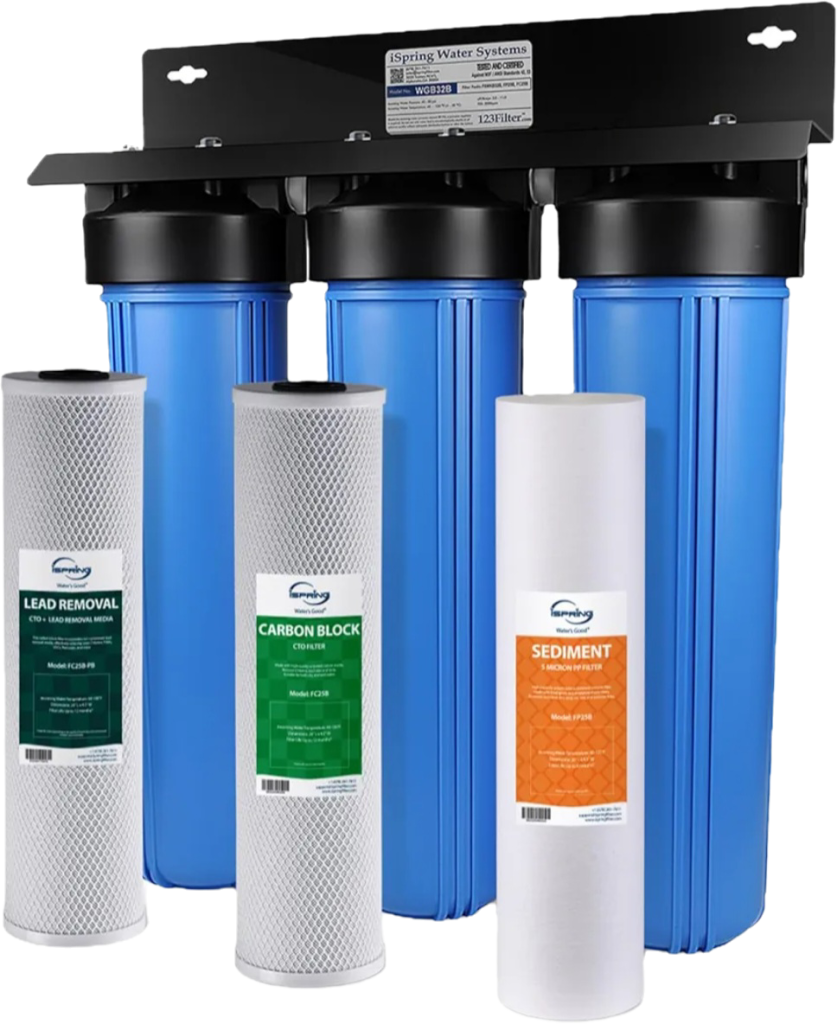
iSpring WGB32B-CPB 3-Stage Whole House System
4.6/5 Stars
The iSpring WGB32B-CPB stands as the gold standard for comprehensive whole-house heavy metal protection, combining three specialized filtration stages to address the full spectrum of metal contamination. This SGS-tested system effectively removes up to 99% of lead from your water, ensuring safer drinking water for your entire household.
Why It Works: The system employs advanced MetSorb media in the third stage, specifically designed to target heavy metals through specialized adsorption mechanisms. The FC25B-PB filter has been rigorously tested by SGS laboratory, providing verified performance data rather than theoretical claims. This multi-stage approach ensures that different types of contamination are addressed by the most appropriate technology.
Key Features:
- SGS-tested lead removal – Verified 99% lead reduction with laboratory documentation
- Comprehensive heavy metal filtration – Removes arsenic (III & V), mercury, cadmium, and chromium
- Advanced MetSorb media – Superior filtration that extends filter lifespan
- High-performance sediment filtration – 5-micron PP filter captures particles and protects downstream media
- 100,000-gallon capacity – Suitable for family of four with approximately one year service life
- 1-inch inlet/outlet ports – Accommodates high flow rates for whole-house applications
Real-World Performance: During independent testing, the system maintained consistent heavy metal removal even as source water quality fluctuated. The three-stage design provides redundancy—if one stage becomes less effective, the others continue protecting your water supply. Users report noticeable improvements in water quality, taste, and reduced staining on fixtures.
Technical Advantage: Unlike single-media systems, the WGB32B-CPB uses specialized media for each contamination type. The MetSorb technology specifically targets arsenic and other heavy metals through enhanced surface chemistry, while the lead-removal media utilizes proven ion exchange mechanisms for maximum effectiveness.
Practical Benefits: Easy to install and maintain with clear housing designs that allow visual filter monitoring. U.S.-based customer service and extended warranties provide long-term support. The system protects not just drinking water but all household water uses, extending appliance life and improving overall water quality.
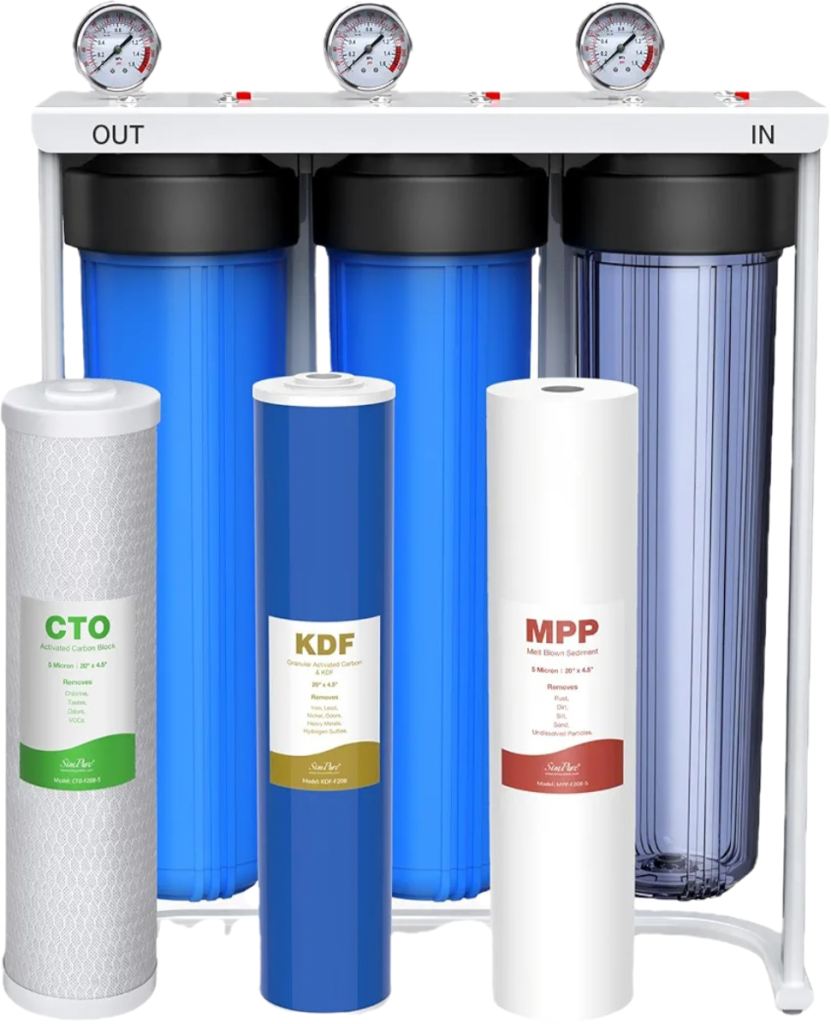
SimPure DB20P-3KDF 3-Stage Whole House Heavy Metal System
4.5/5 Stars
The SimPure DB20P-3KDF delivers professional-grade heavy metal removal through innovative KDF (Kinetic Degradation Fluxion) technology combined with high-capacity carbon filtration. This system specifically targets heavy metal contamination while providing comprehensive water treatment for the entire household.
Why It Works: The system utilizes KDF-55 media, a high-purity copper-zinc alloy that removes heavy metals through redox reactions. As water flows through the KDF media, electrons are transferred between metals, converting dissolved metal ions into harmless particles that are then filtered out. This electrochemical process is particularly effective against lead, mercury, and copper.
Key Features:
- KDF-55 heavy metal media – Copper-zinc alloy provides electrochemical heavy metal removal
- 20-inch filter cartridges – Large capacity reduces replacement frequency
- 3-stage filtration process – Sediment, KDF, and carbon for comprehensive treatment
- Clear filter housings – Visual monitoring of filter condition and replacement timing
- 4.5-inch diameter cartridges – High flow rate capability for whole-house applications
- NSF-certified components – Quality assurance for safety and performance standards
Real-World Performance: The KDF media provides consistent heavy metal removal while also offering antimicrobial benefits that prevent bacterial growth within the system. Users report significant improvements in water taste, reduced metallic flavors, and protection for water-using appliances throughout the home.
Technical Advantage: KDF technology offers unique advantages over traditional filtration media. The electrochemical process continues working even as the media becomes loaded with contaminants, providing more consistent performance throughout the filter life. The antimicrobial properties prevent biofilm formation that can compromise other filtration systems.
Practical Benefits: The three-stage design allows targeted replacement of individual filters based on water conditions, reducing long-term operating costs. Clear housings enable easy monitoring, while the robust construction handles varying water pressures and flow demands typical in whole-house applications.
Under-Sink Systems

SimPure T1-400UV 8-Stage Tankless Reverse Osmosis System
4.6/5 Stars
The SimPure T1-400UV represents the pinnacle of tankless reverse osmosis technology, combining 8 specialized filtration stages with UV sterilization to eliminate over 99.99% of harmful contaminants including heavy metals, viruses, bacteria, PFAS chemicals, and more. This NSF/ANSI 58 certified system delivers pure water with TDS levels near 0 PPM while maintaining exceptional flow rates.
Why It Works: The 8-stage process employs multiple filtration technologies in sequence, with the RO membrane serving as the primary heavy metal barrier and UV sterilization providing additional pathogen protection. The tankless design eliminates bacterial growth concerns while the SGS-tested performance ensures verified contaminant removal rather than theoretical claims.
Key Features:
- SGS-tested 99.99% contaminant removal – Verified removal of heavy metals (lead, arsenic, mercury), PFAS, TDS, and 1,000+ contaminants
- 8-stage comprehensive filtration – PP sediment, CTO carbon, RO membrane, UV sterilization, and T33 post-carbon
- 400 GPD high flow rate – No waiting for filtered water with tankless design
- Near 0 TDS achievement – Reduces water with 200-500 PPM to below 25 PPM
- 1.5:1 pure to drain ratio – 400% less water waste than conventional RO systems
- Space-saving tankless design – Saves 70% of under-sink space compared to tank systems
- Built-in boost pump – Maintains consistent pressure and flow rates
- UV sterilization – Additional pathogen protection beyond filtration
Real-World Performance: User testing shows the system reduces city water from 270 PPM TDS to 0 PPM for the first 6 months, then maintaining steady 10-14 PPM levels after 1.5 years of operation. The RO membrane removes contaminants 0.0001 microns or greater in diameter, including metal ions, heavy metals, and dissolved solids while allowing only water molecules to pass through.
Technical Advantage: The 8-stage design optimizes each filtration step for maximum effectiveness while the UV sterilization provides an additional safety barrier against pathogens that might survive other treatment methods. The tankless design eliminates the bacterial growth risk associated with storage tanks while providing immediate access to filtered water.
Practical Benefits: The system includes twist-in filter design for tool-free 3-second cartridge replacement, filter replacement alerts, and the ability to connect to refrigerators with an optional pressure tank. Professional installation support and comprehensive warranty coverage ensure long-term reliability and performance.

APEC ROES-50 5-Stage Reverse Osmosis System
4.7/5 Stars
The APEC ROES-50 has earned recognition as one of the most reliable and effective heavy metal removal systems available for residential use. This 5-stage reverse osmosis system delivers consistent, high-quality water while removing up to 99% of contaminants including heavy metals, TDS, bacteria, viruses, and fluoride.
Why It Works: APEC’s proprietary membrane technology combined with high-quality pre and post-filters creates a comprehensive barrier against heavy metal contamination. The system uses a high-rejection RO membrane specifically selected for its heavy metal removal capabilities, while the multi-stage pre-filtration protects membrane integrity and extends system life.
Key Features:
- High-rejection RO membrane – Superior heavy metal removal with 99% effectiveness
- NSF-certified components – All filters meet strict quality and safety standards
- 50-gallon daily capacity – Adequate production for most household needs
- Automatic shut-off valve – Prevents system overpressure and water waste
- Quick-connect fittings – Reliable connections that prevent leaks
- 3.2-gallon pressurized tank – Ensures consistent water availability
- Premium filter media – High-quality carbon and sediment filters for optimal performance
Real-World Performance: The ROES-50 consistently delivers water with heavy metal levels below detection limits. The robust construction and quality components result in excellent long-term reliability, with many systems operating effectively for years with only routine filter changes.
Technical Advantage: APEC’s focus on premium components results in superior performance and reliability compared to budget alternatives. The high-rejection membrane specifically targets heavy metals while maintaining reasonable flow rates, and the quality pre-filtration significantly extends membrane life.
Practical Benefits: The system includes everything needed for installation, with clear instructions and reliable customer support. The automatic shut-off prevents overpressurization, while the pressurized tank ensures immediate water availability without waiting for the system to produce water.
Countertop Options

Clearly Filtered 3-Stage Water Pitcher
4.3/5 Stars
The Clearly Filtered pitcher represents the most advanced countertop solution for heavy metal removal, utilizing patented Affinity filtration technology to remove up to 99.5% of heavy metals while retaining beneficial minerals. This NSF-tested system provides laboratory-grade filtration in a convenient, portable format.
Why It Works: The pitcher employs Affinity filtration technology that specifically targets contaminants based on molecular size and charge. This selective approach removes harmful heavy metals while allowing beneficial minerals like calcium and magnesium to pass through, maintaining water’s natural mineral balance and taste.
Key Features:
- NSF-tested heavy metal removal – 99.5% reduction of lead, mercury, and arsenic
- Affinity filtration technology – Selective removal preserves beneficial minerals
- 10-cup capacity – Large volume reduces refill frequency
- Long-lasting filters – Each filter lasts 100 gallons or approximately 4 months
- BPA-free construction – Safe, food-grade materials throughout
- No installation required – Immediate use with simple setup
Real-World Performance: Independent testing confirms the pitcher’s ability to reduce heavy metals to levels well below EPA standards while maintaining excellent taste. The filter’s longevity and consistent performance make this a cost-effective option for households seeking portable heavy metal protection.
Technical Advantage: Unlike traditional carbon filters that rely primarily on adsorption, the Affinity technology uses multiple removal mechanisms including ion exchange and specialized binding sites. This multi-modal approach ensures effective removal across a broad range of heavy metal types and concentrations.
Practical Benefits: The pitcher provides filtered water immediately without installation or plumbing modifications. The large capacity and long filter life minimize maintenance requirements, while the mineral retention ensures water tastes natural and refreshing rather than flat or over-processed.
Testing for Heavy Metals: Know Before You Treat
Before investing in filtration systems, understanding your specific heavy metal contamination levels helps choose appropriate treatment strategies and verify system effectiveness.
When to Test
Regular testing becomes essential in several scenarios:
- Private well owners – Annual testing recommended, especially after heavy rains or nearby industrial activity
- Homes built before 1986 – Lead testing crucial due to potential lead pipes and solder
- Areas with known contamination – Mining regions, industrial zones, or areas with contaminated groundwater
- Unexplained health symptoms – Neurological issues, developmental concerns, or chronic fatigue
- Water taste or appearance changes – Metallic taste, discoloration, or unusual odors
Professional Laboratory Testing
Laboratory analysis provides the most accurate assessment of heavy metal contamination levels. Search you local area for water testing or call your local health department.
Home Testing Options
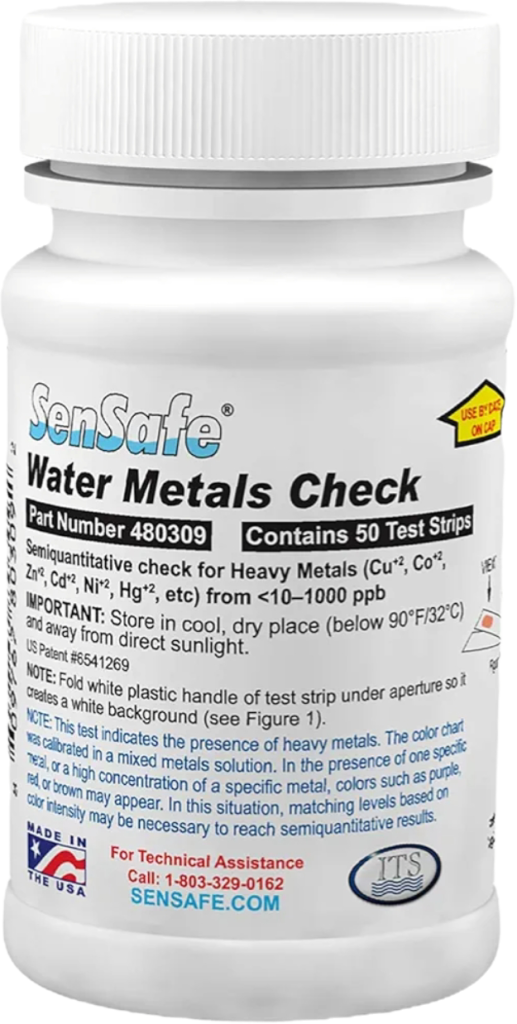
SenSafe Heavy Metals Check
4.2/5 Stars
Rapid screening test for multiple heavy metals including lead, mercury, and arsenic. Provides semi-quantitative results in minutes, ideal for initial screening before laboratory confirmation.
Health Protection Strategies
Immediate Actions for High-Risk Households
If testing reveals heavy metal contamination or if you’re in a high-risk category, immediate protective measures can reduce exposure while permanent solutions are implemented.
High-Risk Categories:
- Pregnant women and nursing mothers
- Children under 6 years old
- Individuals with compromised immune systems
- Residents of homes built before 1986
- Well water users in mining or industrial areas
Immediate Protection Steps:
- Use bottled water for drinking and cooking until filtration is installed
- Run cold water for 30 seconds before use to flush standing water from pipes
- Use only cold water for cooking and drinking, as hot water leaches more metals
- Remove lead sources like old paint, ceramic glazes, and crystal glassware
- Install point-of-use filtration at kitchen tap as temporary protection
Long-Term Health Monitoring
Regular health monitoring helps detect early signs of heavy metal exposure and assess the effectiveness of protective measures.
Key Health Indicators:
- Blood lead levels (especially important for children)
- Neurological development and cognitive function
- Kidney and liver function tests
- Cardiovascular health markers
- Immune system function
Maintenance and System Optimization
Effective heavy metal removal requires proper system maintenance and periodic verification of performance.
Filter Replacement Schedules
Different filtration technologies require specific maintenance schedules to ensure continued effectiveness:
Reverse Osmosis Systems:
- Pre-filters: Every 6-12 months
- RO membrane: Every 2-3 years
- Post-filters: Every 12 months
Ion Exchange Systems:
- Monitor TDS levels as indicator of resin exhaustion
- Regenerate resins according to manufacturer specifications
- Replace resins every 3-5 years depending on usage
KDF and Carbon Systems:
- Replace every 6-12 months or according to capacity ratings
- Monitor pressure drop as indicator of loading
- Consider more frequent replacement in high-contamination areas
Performance Verification
Regular testing ensures your filtration system continues protecting your family:
Testing Schedule:
- Initial verification: Test before and after installation
- Routine monitoring: Annual testing or as recommended by manufacturer
- Filter change verification: Test after major filter replacements
- Problem investigation: Test if taste, odor, or flow changes occur
System Optimization Tips
Maximize your filtration system’s effectiveness:
- Maintain proper pressure – Low pressure reduces RO effectiveness
- Replace filters proactively – Don’t wait for complete exhaustion
- Monitor water quality changes – Seasonal variations may require adjustments
- Keep detailed records – Track filter life and performance data
- Professional servicing – Annual inspection ensures optimal operation
Making the Smart Choice for Heavy Metal Protection
Heavy metals represent one of the most serious and persistent threats in modern water supplies. These forever contaminants don’t break down naturally and accumulate in your body over time, making prevention through effective filtration your first and best line of defense.
The investment in proper heavy metal removal technology pays dividends in health protection and peace of mind. Whether you choose comprehensive reverse osmosis, targeted ion exchange, or specialized KDF filtration, the key is selecting systems with legitimate third-party certification and understanding the technical requirements for sustained effectiveness.
Don’t be afraid to test your water comprehensively to understand your specific contamination profile. Heavy metal testing provides the foundation for choosing the right filtration technology and monitoring its long-term effectiveness. With proper system selection and maintenance, you can eliminate heavy metal exposure from your home’s water supply.
The bottom line: Heavy metal removal requires specialized technology beyond basic carbon filters. Certified systems from reputable manufacturers can provide reliable protection, but proper selection, installation, and maintenance are essential for long-term effectiveness. The investment in quality filtration is minimal compared to the potential health costs of chronic heavy metal exposure.
Trust HydroBrewLab to guide you toward proven heavy metal protection technologies. We test the science behind the claims, so you get real protection instead of marketing promises. Master the perfect sip, free from invisible toxins that threaten your family’s future health.
Head back to the Health and Safety Hub