
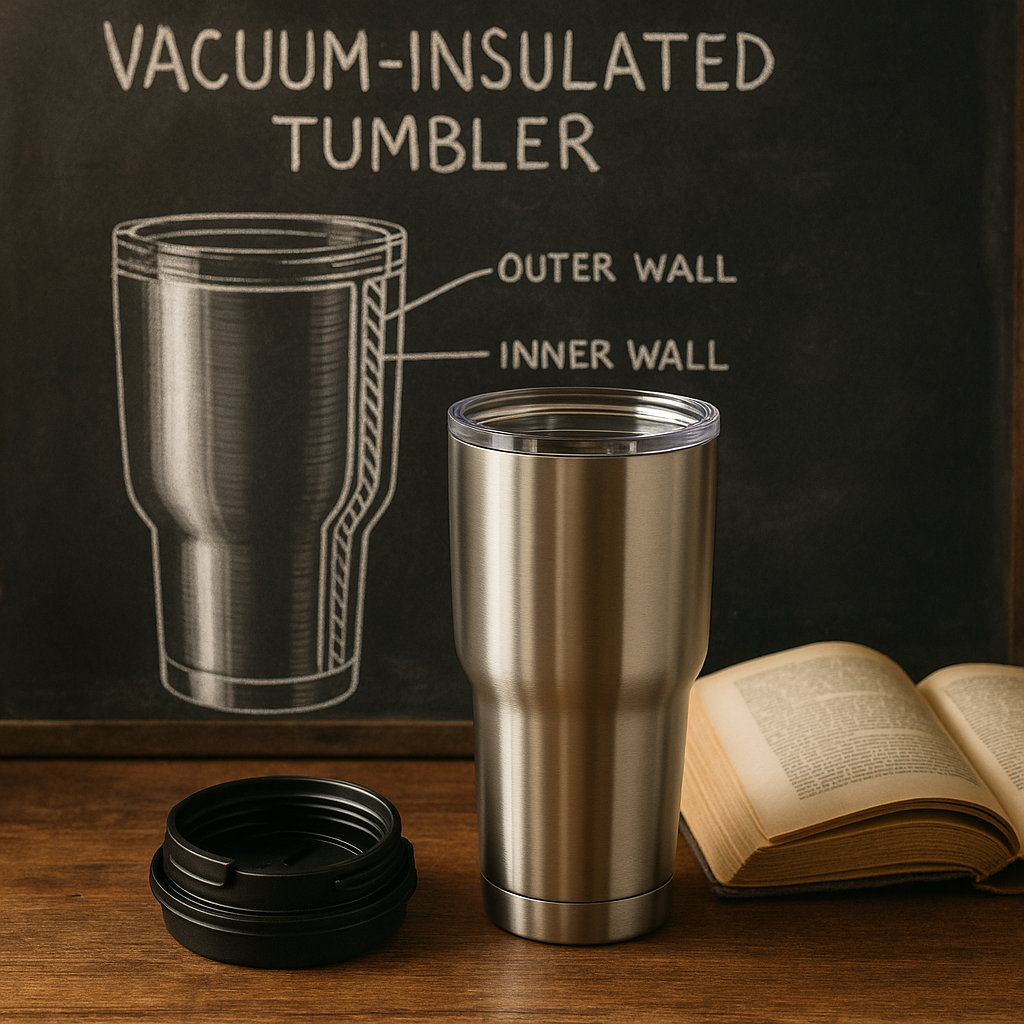
The vacuum insulated tumbler is a staple of modern convenience, keeping beverages hot or cold for extended periods. Whether it’s a steaming cup of coffee on a winter morning or an ice-cold drink on a scorching summer day, these tumblers provide remarkable temperature retention. But how did they come to be, and what makes them so effective? This article delves into the history, science, and innovation behind vacuum insulated tumblers.
The Invention of Vacuum Insulation
The concept of vacuum insulation dates back to 1892 when Scottish scientist Sir James Dewar invented the vacuum flask, commonly known as a thermos. Dewar, a physicist and chemist, was conducting experiments on cryogenics and needed a way to store liquefied gases at very low temperatures. His solution was a double-walled container with a vacuum between the walls, significantly reducing heat transfer by conduction and convection.
Dewar’s invention was initially intended for scientific use, but its potential for consumer applications became evident. By the early 1900s, industrial manufacturers saw commercial viability in the design, leading to the founding of the Thermos GmbH company in 1904. The term “Thermos” eventually became synonymous with vacuum insulated bottles, although it remains a brand name.
Evolution into the Modern Tumbler
For much of the 20th century, vacuum insulation was primarily used in laboratory and industrial settings or in household thermoses. Traditional thermoses were usually glass-lined, making them fragile. It wasn’t until the late 20th and early 21st centuries that advancements in stainless steel manufacturing and consumer demand drove the innovation of durable, everyday vacuum insulated tumblers.
Companies like Yeti, Stanley, and Hydro Flask refined the technology, introducing double-walled stainless steel designs that offered superior durability and efficiency. These modern tumblers quickly gained popularity among outdoor enthusiasts, commuters, and coffee lovers due to their ability to maintain beverage temperatures for several hours.
How Vacuum Insulation Works
At its core, a vacuum insulated tumbler operates on three primary principles of heat transfer: conduction, convection, and radiation.
- Conduction: Heat transfer occurs when molecules collide. In a regular cup, heat from a hot beverage travels through the material and dissipates into the air. A vacuum, however, eliminates most of the air molecules, drastically reducing conductive heat transfer.
- Convection: This type of heat transfer occurs through liquid or air movement. In a vacuum-insulated tumbler, there is no air between the walls, preventing heat from escaping or entering through convection.
- Radiation: Heat can still travel through infrared radiation. To counteract this, many vacuum insulated tumblers feature a reflective coating on the inner walls, reflecting heat back into the liquid and minimizing energy loss.
The combination of these principles allows vacuum insulated tumblers to maintain temperatures much longer than traditional cups or bottles. If your tumbler loses the vacuum between the 2 layers, it will no longer have the performance it had when it was new and will not keep hot drinks hot or cold drinks cold very long. It is essentially just a regular uninsulated tumbler at that point.
Key Features of Modern Tumblers
- Double-walled stainless steel construction: Provides strength and durability while preventing condensation on the exterior.
- Vacuum insulation: Eliminates conductive and convective heat transfer.
- Powder-coated finishes: Improves grip and aesthetic appeal.
- Lid designs: Varying from simple press-on lids to advanced spill-proof, locking mechanisms.
- BPA-free and food-grade materials: Ensuring safe and non-toxic beverage storage.
From Sir James Dewar’s early cryogenic research to the modern convenience of stainless steel tumblers, vacuum insulation has revolutionized the way we enjoy our drinks. These tumblers exemplify a blend of scientific principles and practical design, making them a must-have for anyone who values temperature control on the go. Whether for daily commutes, outdoor adventures, or simply keeping coffee warm at home, vacuum insulated tumblers stand as a testament to enduring innovation.
Now Let’s Look at Insulated Tumbler Lids: Types, Materials, and Uses
Insulated tumblers are renowned for their ability to keep beverages hot or cold for extended periods, but the lid design plays a crucial role in enhancing functionality. The type of lid you choose impacts ease of use, spill resistance, and overall drinking experience. This article explores the various lid designs available for vacuum insulated tumblers, their advantages and disadvantages, and their best applications.
1. Press-In Lids
Design & Construction
Press-in lids fit snugly into the top of a tumbler, often utilizing a rubber gasket or silicone ring to create a seal. They are commonly made from BPA-free plastic and sometimes feature a sliding or rotating cover over the drinking hole.
Pros:
- Easy to remove and clean
- Lightweight and simple design
- Cost-effective and commonly available
Cons:
- Less secure; may pop off if the tumbler is dropped
- Prone to leaks if not properly sealed
- Less insulation than screw-on lids
Best For:
- Hot beverages like coffee and tea
- Everyday use where complete spill-proofing isn’t required
2. Screw-On Lids
Design & Construction
Screw-on lids provide a threaded design that twists securely onto the tumbler. They are usually made of durable plastic and sometimes have stainless steel reinforcements for added durability.
Pros:
- Offers a tight, spill-resistant seal
- More secure than press-in lids
- Often integrates with additional accessories (straws, flip tops, etc.)
Cons:
- Slightly more effort needed to open and close
- Can develop leaks over time if the gasket wears out
Best For:
- Both hot and cold beverages
- Travel and active use
3. Flip-Top Lids
Design & Construction
Flip-top lids have a hinged mechanism that allows the user to open or close the drinking hole with a flick of a thumb. These are typically made of plastic with silicone gaskets to prevent leaks.
Pros:
- Easy to use one-handed
- Often designed with a secure locking mechanism to prevent spills
- Keeps heat in better than open-style lids
Cons:
- Hinges can wear out or break over time
- Can be harder to clean due to small moving parts
Best For:
- Hot drinks that require controlled sipping (coffee, tea)
- Commuting and on-the-go use
4. Sliding Lids
Design & Construction
Sliding lids feature a small cover that moves back and forth to open or close the drinking hole. They are generally made of BPA-free plastic and include a silicone seal.
Pros:
- Simple and convenient to use
- Provides a moderate spill barrier
- Works well for both hot and cold drinks
Cons:
- Not fully leak-proof
- Sliding mechanism can wear out over time or become difficult to move if not cleaned properly
Best For:
- Casual use at home or in the office
- Hot and cold beverages
5. Straw Lids
Design & Construction
Straw lids are designed specifically for cold beverages and feature a built-in hole for a straw, sometimes with a sealing gasket to minimize spills. They are commonly made from plastic or stainless steel and often include reusable straws made of silicone or metal.
Pros:
- Ideal for cold drinks
- Encourages higher water intake due to ease of sipping
- Some designs include a rubberized seal for added spill resistance
Cons:
- Not suitable for hot liquids due to burn risk
- Can be difficult to clean without a straw brush
- Not always spill-proof, especially if tipped over
Best For:
- Cold beverages like iced coffee, smoothies, and water
- Exercise and outdoor activities
Choosing the right lid for your insulated tumbler depends on your specific needs. Press-in lids offer convenience but less security, while screw-on lids provide a tighter seal. Flip-top and sliding lids balance accessibility and spill resistance, whereas straw lids are best suited for cold beverages. Understanding the pros and cons of each design ensures you get the most out of your insulated tumbler, whether you’re sipping a morning coffee or staying hydrated throughout the day.
What Makes a Leak-Proof Insulated Tumbler?
A truly leak-proof insulated tumbler is a game-changer for those who rely on hot coffee during their commute or an ice-cold drink on the go. While many tumblers claim to be spill-resistant, not all are genuinely leak-proof. This article explores the key design elements that contribute to a leak-proof insulated tumbler, from material selection to sealing mechanisms.
1. Lid Design and Sealing Mechanisms
The most critical factor in preventing leaks is the lid design. A well-designed lid features:
- Screw-On Mechanism: Unlike press-in lids, which can easily pop off, screw-on lids create a secure, airtight seal, reducing the risk of leaks.
- Silicone Gaskets: Many high-quality tumblers incorporate food-grade silicone gaskets that compress when the lid is tightened, preventing liquid from escaping.
- Locking Mechanisms: Flip-top lids with locking clasps or slide-to-lock designs add an extra layer of protection against accidental spills.
- One-Way Valve Systems: Some tumblers use pressure relief valves to control airflow while ensuring that liquid only exits when intended.
2. Double-Wall Vacuum Insulation and Its Role in Leak Prevention
While vacuum insulation is primarily designed to regulate temperature, it also contributes to leak-proof performance by:
- Preventing Condensation: A non-insulated cup can create moisture buildup, leading to slipping lids or liquid seepage around the edges.
- Maintaining Internal Pressure: A properly insulated tumbler regulates pressure changes, reducing the chances of leaks caused by expansion or contraction.
3. Material Selection and Durability
Leak-proof tumblers are typically constructed from high-quality materials that enhance durability and sealing efficiency:
- Stainless Steel: Most leak-proof tumblers use stainless steel for the body due to its strength, corrosion resistance, and ability to maintain structural integrity over time.
- BPA-Free Plastic Lids: High-grade, BPA-free plastics ensure flexibility and durability, allowing for a snug fit without warping over time.
- Reinforced Silicone Seals: These are essential in creating a long-lasting, tight barrier against leaks.
4. Testing and User Considerations
For a tumbler to be truly leak-proof, manufacturers conduct various tests, including:
- Inversion Testing: Ensuring the tumbler can be turned upside down without leaks.
- Shake and Drop Tests: Simulating real-world handling to check for lid security and gasket performance.
- Pressure Resistance Tests: Evaluating how the tumbler handles pressure changes from hot or carbonated beverages.
Users should also consider:
- Proper Lid Alignment: Ensuring the lid is correctly threaded and tightened before use.
- Regular Maintenance: Cleaning gaskets and seals to prevent buildup that can compromise the seal.
- Beverage Type: Some tumblers are not designed for carbonated drinks, which can create pressure and force leaks.
A leak-proof insulated tumbler is the result of thoughtful engineering, combining a secure lid mechanism, high-quality materials, and effective insulation. By selecting a tumbler with a screw-on lid, silicone gaskets, and durable construction, users can confidently transport their favorite beverages without worrying about spills. Whether for commuting, traveling, or outdoor adventures, a truly leak-proof tumbler is a reliable companion for everyday hydration.
Head back to the Complete Guide to Insulated Tumblers
See my blog post on the Top 5 Insulated Tumblers for Hot Drinks
See my blog post on the Top 10 Insulated Tumblers for Cold Drinks
See my blog post Ultimate Guide: Top 5 Spill-Proof Insulated Tumblers for Hot Drinks