
Finding the right affordable commercial espresso machine for your café, food truck, or office shouldn’t mean sacrificing quality. Whether you’re a startup shop or just looking to keep costs low without compromising on performance, there are several budget-friendly machines on Amazon that offer great value.
This guide breaks down the top-rated, cost-effective commercial espresso machines currently available. Each one includes key features, pros and cons, and the best use case—so you can find the perfect fit for your business.
🔍 What Makes an Espresso Machine “Affordable”?
Reasonable Price Without Compromising Quality
When we talk about an affordable commercial espresso machine, we’re not just referring to the lowest price tag. Affordability in the commercial space is all about value—balancing performance, reliability, and cost. The machines that fall into this category typically range from $1,000 to $4,000, which is considered modest in a market where high-end commercial units can exceed $10,000. At this price point, you can expect machines with dependable parts, sufficient power for moderate use, and essential barista features.
These espresso machines often skip the bells and whistles found in premium models—such as digital displays, dual pumps, or built-in milk carousels—but they still provide excellent espresso quality. Many of them are designed for semi-professional or light commercial use and are particularly attractive for startups, mobile coffee setups, boutique cafés, and offices with steady (but not overwhelming) coffee demand.
An affordable machine may not include advanced automation, but it will offer must-have functionality like consistent pressure, thermal stability, and strong steam output. You’ll want to focus on machines that balance ease of use and consistency while staying within your budget. Look for models with good manufacturer warranties and readily available replacement parts as part of your long-term value assessment. An affordable commercial espresso machine typically costs between $1,000–$4,000 and still delivers reliable brewing power and build quality.
Durability for Daily Use
Commercial environments demand much more from espresso machines than residential use. An affordable commercial espresso machine must be built to withstand the daily grind—literally and figuratively. Durability in this price range is usually a product of smart engineering and material selection. Most quality machines under $4,000 will use stainless steel housing, brass or copper components in boilers and group heads, and reinforced seals or solenoid valves for improved longevity.
You should avoid machines made with thin plastic or overly simplified components unless your usage will be very light. Entry-level commercial machines often borrow their internals from high-end home machines but beef up key elements to meet the demands of regular use. The most durable budget-friendly machines typically come from brands that also manufacture high-end units, ensuring that some of the same production quality and engineering make it into their more economical models.
If you’re using your machine in a café or a food truck, expect dozens or even hundreds of drinks per day. That means you need hardware that can maintain stable temperature and pressure for hours at a time without overheating or requiring constant adjustment. In this context, even a lower-cost machine needs to function like a tank. Well-built budget models may not look fancy, but they’re engineered for uptime—and that’s what matters most. It should feature stainless steel construction or similar commercial-grade materials designed to withstand regular use.
Feature Efficiency
One of the best ways manufacturers make an affordable commercial espresso machine is by being selective about features. Rather than packing every possible bell and whistle into a single model, budget machines often focus on core performance features: consistent brewing temperature, solid steam pressure, and easy-to-use controls. These essentials allow you to craft high-quality drinks without paying for advanced digital or automated systems.
You’ll find machines in this price range often feature manual or semi-automatic operation with basic volumetric control. Some may come with built-in grinders, while others are designed for use alongside standalone grinders. Either way, simplicity is a strength. Baristas can fine-tune their drinks and focus on craft, while operators benefit from lower maintenance and repair costs.
Efficiency doesn’t just apply to features—it also applies to workflow. A streamlined machine can help reduce drink prep time without overcomplicating training. Many affordable commercial machines include rapid heating systems, straightforward cleaning processes, and space-saving designs that help staff move quickly and efficiently. The end result? You get a machine that fits into your business flow without dominating your budget—or your countertop. These machines may skip advanced automation, but still offer critical features like volumetric dosing, steam wands, and dual boilers.
🧰 Essential Features in an Affordable Commercial Espresso Machine
Boiler Type: Single, Dual, or Heat Exchanger
Boiler configuration is one of the most important factors in determining the performance of an affordable commercial espresso machine. Single boiler machines are typically more compact and budget-friendly, but they can’t brew espresso and steam milk at the same time. This can slow down service during busy hours and may not be ideal for a café setting.
Heat exchanger systems, on the other hand, offer a middle ground. These machines allow simultaneous brewing and steaming by using a single boiler with a built-in tube that runs fresh water through it, heating it quickly. This design provides temperature stability and efficiency without the higher cost associated with dual boiler systems.
Dual boiler machines are the gold standard, offering precise temperature control for both brewing and steaming with separate, independently heated chambers. While they’re typically more expensive, some affordable options in this category exist, especially in the prosumer or light commercial tier. These are great for operations that need to serve several milk-based drinks in quick succession.
When shopping on a budget, opt for a heat exchanger if you anticipate moderate daily volume and want consistent results. Dual boilers are preferable if you can stretch your budget slightly or expect to steam and brew frequently during peak hours. Look for heat exchanger or dual boiler systems for the ability to steam milk and brew simultaneously—critical for speed.
Group Head Count
The number of group heads on an affordable commercial espresso machine directly impacts your drink output and workflow efficiency. Single-group machines are perfect for low-volume environments like offices, small cafés, and mobile setups. They take up less space and are easier to maintain, but you’re limited to one shot or drink at a time.
Two-group machines are more versatile, allowing baristas to pull multiple shots simultaneously. This can significantly increase productivity in settings with moderate customer traffic, such as coffee kiosks, bakeries, and small restaurants. While three-group machines are available, they’re rarely considered affordable and are best suited for high-volume cafés with multiple baristas.
Some machines even offer compact two-group configurations, which are a great compromise between size and output. Consider how many drinks you’ll need to serve per hour and match your group head count accordingly. Investing in one extra group may seem like a bigger expense upfront, but it can drastically reduce wait times and improve customer satisfaction in the long run. Most affordable options come with one or two group heads. Choose based on expected daily volume.
Manual vs. Automatic Controls
Control options on an affordable commercial espresso machine can vary widely, from classic lever machines to fully programmable dosing systems. Manual machines require the user to control water flow and pressure—either by pulling a lever or activating a pump manually. These are great for baristas who want complete control over the shot, but they also require more skill and training.
Semi-automatic machines automate the pump function but still require manual control over shot timing. These machines strike a balance between control and consistency, making them popular in budget-conscious commercial environments.
Automatic machines offer programmable volumetric dosing, allowing baristas to hit the same shot volume with the press of a button. This reduces the skill needed to produce consistent drinks and speeds up service. While super-automatic machines (which grind, dose, brew, and froth milk at the touch of a button) are typically more expensive, a few entry-level options fall into the affordable category.
The right control type depends on your staffing model and customer volume. If you expect new or untrained staff to operate the machine, an automatic or semi-automatic model is your best bet for reliable performance. Machines with programmable volumetric dosing are ideal at this price range, offering speed and consistency without the cost of super-automatics.
🛠 Maintenance & Setup Considerations
Ease of Cleaning
Keeping your machine clean is vital to espresso quality and long-term performance. A good affordable commercial espresso machine should feature user-friendly cleaning mechanisms that don’t require disassembly or complicated steps. Machines with removable drip trays, accessible group heads, and simple steam wand designs make daily cleaning more manageable.
Some machines even offer automatic cleaning cycles or backflush programs, which are huge time-savers. If your machine doesn’t have this feature, make sure you’re comfortable performing a manual backflush using a blind portafilter and cleaning solution. Steam wands should be purged after every use and wiped clean to avoid milk buildup.
Also consider the material of the drip tray and water tank—stainless steel trays are more hygienic and last longer than plastic. Transparent water tanks help you monitor levels at a glance, while top-fill designs can make daily refills easier.
Cleanliness isn’t just about hygiene—it directly affects flavor and reliability. Coffee oils and milk residue can clog components and change the taste of your espresso. A machine that’s easy to clean keeps both your drinks and your maintenance schedule in top shape. Simple interfaces and removable components are key for easy maintenance. Look for automatic cleaning cycles if possible.
Water Source Requirements
One of the biggest logistical considerations when buying an affordable commercial espresso machine is how it connects to water. Machines can be either pour-over (manual-fill) or plumbed-in (direct-connect). Pour-over machines have an onboard water tank that must be refilled by hand, while direct-connect models are hooked up to a water line for continuous use.
Pour-over machines are more flexible and portable, making them ideal for food trucks, carts, or events. They also require less setup and are often less expensive. However, they need frequent refilling, especially in busy settings, which can slow down service.
Direct-connect machines offer convenience for higher-volume operations, but they require access to plumbing and often need professional installation. They’re ideal for stationary cafés and commercial kitchens with high drink turnover.
Some models even allow dual-configuration—giving you the flexibility to switch between pour-over and direct-connect as needed. When considering your water source, also think about filtration. Using filtered water improves taste and prevents mineral buildup, which can extend the life of your machine. Some machines are direct-connect only (requiring plumbing), while others offer pour-over flexibility—ideal for mobile setups.
Size & Electrical Needs
Space and power are two often-overlooked considerations when purchasing an affordable commercial espresso machine. Machines range in size from compact single-group units to larger dual-group systems, so it’s essential to measure your available counter space before deciding. Also account for clearance above the machine if you plan to store cups or need access to refill a water tank.
Most commercial espresso machines require a 220V electrical line for optimal performance. Some smaller or semi-commercial units can run on a standard 110V outlet, but these models often have limited steam power and slower heat-up times. Always check voltage requirements and plug type before ordering to avoid compatibility issues.
Consider how close your machine will be to a water source (if it’s direct-connect), and leave room for accessories like grinders, knock boxes, and scales. A cluttered setup can slow down workflow and increase the chance of spills or mistakes.
If your machine requires hardwiring or special installation, it’s wise to factor in professional electrician costs. An affordable espresso machine that fits your counter and power supply out of the box will save time and money in the long run. Make sure the machine fits your countertop and matches your power supply—most need a 220V line.
🏆 Best Affordable Commercial Espresso Machines on Amazon (2025)
Disclosure: As an Amazon Associate I earn from qualifying purchases. This post may contain affiliate links.
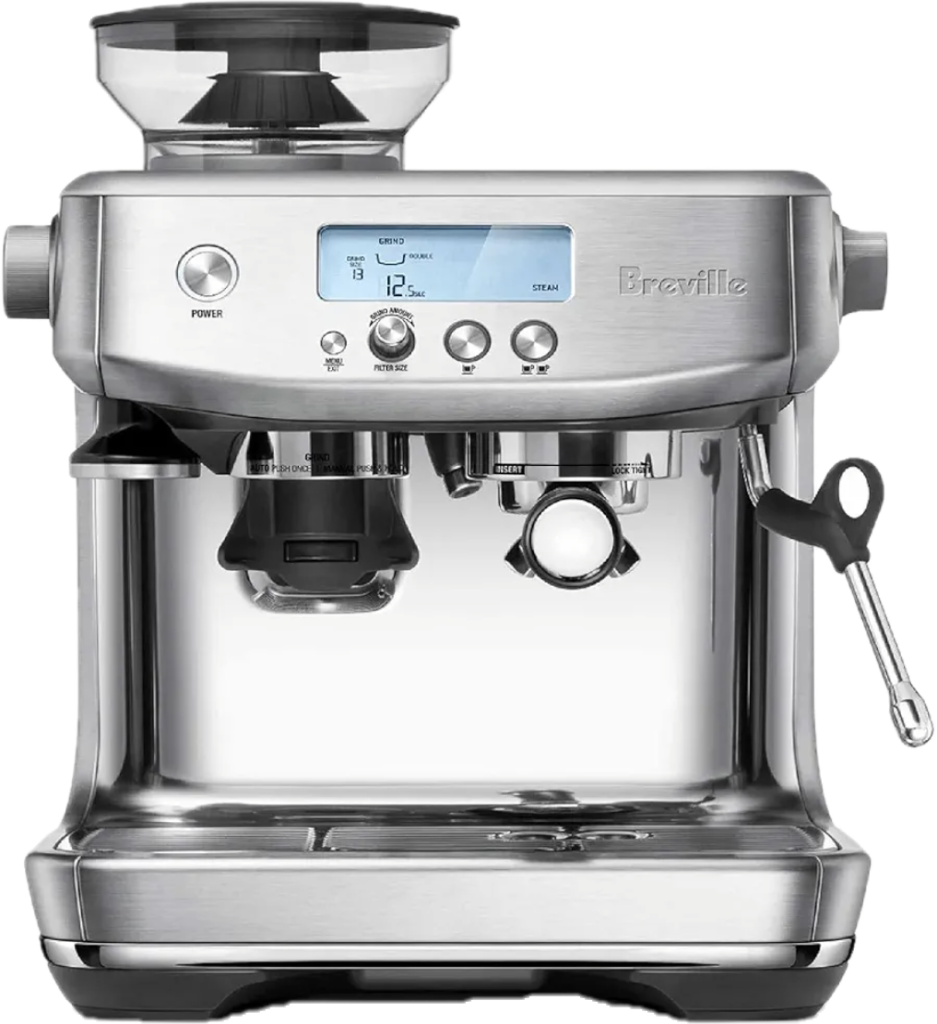
1. Breville Barista Pro Espresso Machine
⭐ 4.7/5 Stars | View on Amazon
Why it stands out: An all-in-one espresso solution with fast heat-up and modern styling.
The Breville Barista Pro features a sleek brushed stainless steel finish and a built-in conical burr grinder for fresh grounds with every shot. The ThermoJet heating system allows the machine to be ready in just 3 seconds, making it ideal for quick morning service. The intuitive LCD screen shows grind size, shot timer, and more—perfect for beginner baristas and small setups.
Features:
- Built-in conical burr grinder with 30 grind settings
- ThermoJet heating system (3-second warm-up)
- LCD interface with real-time feedback
- Manual steam wand for latte art and milk drinks
Pros:
- Easy to use for beginners
- Great for small cafés or offices
- Fast heat-up in 3 seconds
Cons:
- Single boiler
- Not suitable for high-volume operations
Best For: Boutique coffee bars, offices, prosumer use

2. Gaggia Classic Pro Commercial-Style Espresso Machine
⭐ 4.6/5 Stars | View on Amazon
Why it stands out: A legendary entry-level machine with pro-grade internals.
The Gaggia Classic Pro comes in a brushed stainless steel body and delivers barista-level espresso for under $500. It features a commercial 58mm portafilter, a durable pump, and a powerful steam wand for cappuccinos and lattes. Known for its longevity, this machine is a favorite among entry-level espresso enthusiasts and small cafés.
Features:
- Commercial 58mm chrome-plated brass portafilter
- Durable brushed stainless steel frame
- Commercial-style steam wand
- Three-way solenoid valve for dry pucks
Pros:
- Very affordable
- Compact and durable
- Great espresso quality with practice
Cons:
- No programmable dosing
- Manual operation only
Best For: Startups, home baristas, small café counters

3. De’Longhi La Specialista Arte Espresso Machine
⭐ 4.5/5 Stars | View on Amazon
Why it stands out: Combines style and function for effortless espresso at a budget.
This matte stainless steel machine is compact and visually striking. The La Specialista Arte offers De’Longhi’s proprietary active temperature control and a built-in grinder with 8 grind levels. Its MyLatte Art wand is perfect for practicing milk steaming, and it includes premium accessories like a tamper, dosing funnel, and tamping mat.
Features:
- Integrated burr grinder with 8 grind levels
- Thermoblock heating system
- Active temperature control
- Includes barista kit for tamping
Pros:
- Great design with intuitive controls
- Consistent brewing for entry-level users
- Compact for smaller counters
Cons:
- Steam wand is less powerful
- Requires regular cleaning
Best For: Coffee trucks, offices, small cafés with low traffic

4. EspressoWorks All-in-One Barista Bundle
⭐ 4.4/5 Stars | View on Amazon
Why it stands out: A complete espresso starter set for the budget-conscious barista.
This matte black compact unit comes with everything you need to start making espresso out of the box—grinder, tamper, milk frothing pitcher, and even espresso cups. It features a thermoblock heating system for rapid warm-up and easy use. Though not designed for volume, it’s perfect for startups and small-scale service.
Features:
- Complete 7-piece set including grinder and accessories
- Thermoblock rapid heating system
- 15-bar pressure pump
- Front-facing water tank
Pros:
- Excellent value with accessories included
- Beginner-friendly
- Compact and portable
Cons:
- Limited steam pressure
- Not built for high-demand use
Best For: Coffee carts, offices, budget coffee startups

5. La Pavoni Europiccola Lever Espresso Machine
⭐ 4.5/5 Stars | View on Amazon
Why it stands out: A timeless manual espresso experience with vintage Italian charm.
The Europiccola is a beautifully polished chrome lever machine that lets you take full control of your shot. With a brass boiler and spring piston system, this machine is built to last decades and provides the tactile feedback that espresso purists love. It’s compact, artistic, and perfect for a café looking to create a premium coffee experience.
Features:
- Manual lever operation with piston pressure
- Chromed brass boiler and base
- Classic Italian styling with wood handles
- Built-in pressure gauge
Pros:
- Classic barista-style experience
- Reliable build and heat retention
- Long-lasting and eye-catching
Cons:
- Steep learning curve
- No automation
Best For: Artistic cafés, home use, manual espresso fans
✅ Final Thoughts
An affordable commercial espresso machine can absolutely deliver excellent espresso without breaking your budget. From semi-automatics with built-in grinders to manual lever classics, there’s an option here to match your workflow and startup scale.
Ready to get brewing? Choose the machine that best fits your expected volume, preferred level of automation, and space—and build your coffee dream without overspending.
Head back to our Commercial Espresso Machines