Categories
Espresso and Coffee

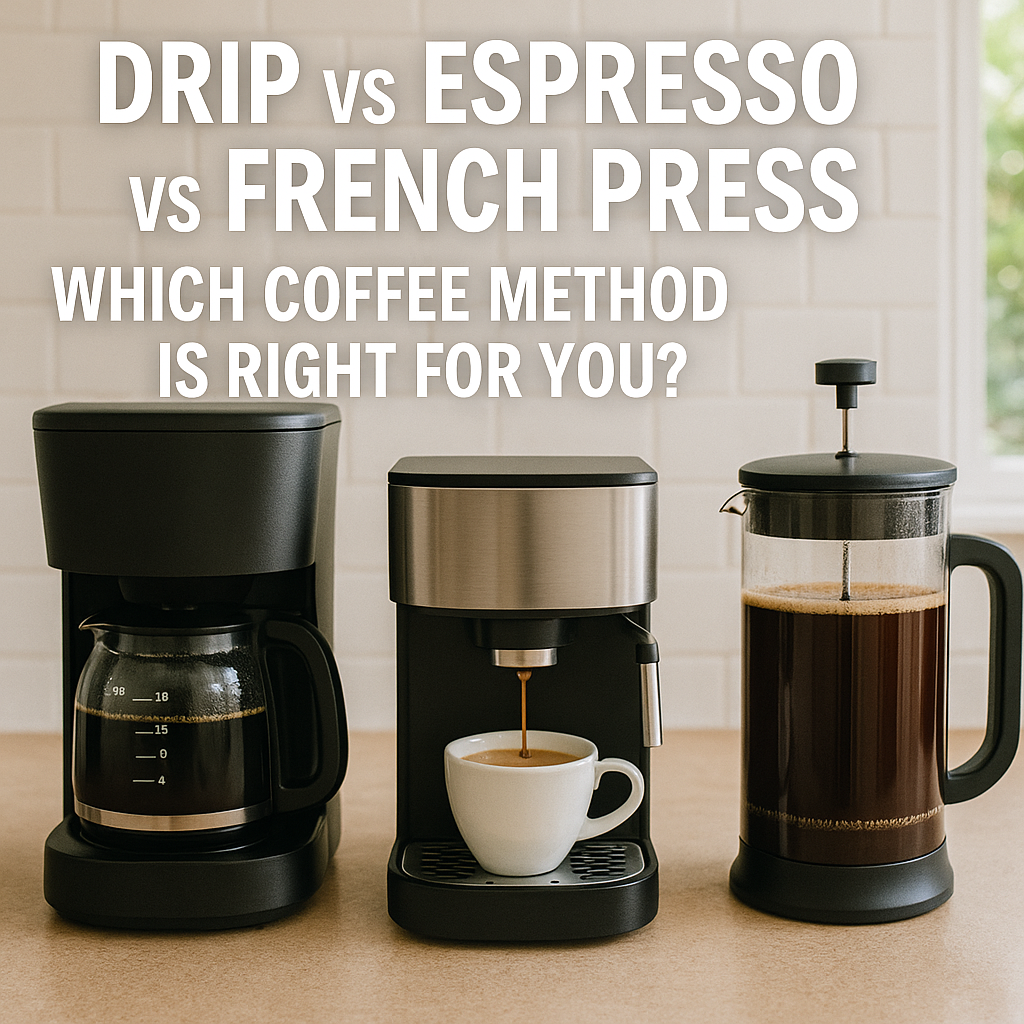
Drip vs. Espresso vs. French Press: Which Brew Method Is Right for You?

Choosing the right brewing method can transform your daily coffee ritual from a mundane task into a sensory experience filled with aroma, flavor, and intention. Coffee is not just a beverage—it’s a craft, a culture, and a lifestyle. With the multitude of brewing options available, it can be overwhelming to determine which method best suits your palate, time constraints, and equipment preferences. Whether you favor bold and intense flavors, a mellow cup to sip throughout the day, or a more hands-on ritual, there’s a brewing method that matches your unique coffee journey. In this deep-dive guide, we explore three of the most iconic and widely used methods: drip coffee, espresso, and French press. Each offers a distinct brewing process, flavor profile, and level of involvement. We cover everything from water temperature to grind size, extraction dynamics to pros and cons, so you can make an informed choice and elevate your brewing game with confidence.


☕ What Is Drip Coffee?

Drip coffee, also known as filter coffee, is the most common brewing method in North America and is often considered the workhorse of the coffee world. Found in households, workplaces, and cafes across the country, it’s cherished for its simplicity, consistency, and ability to produce several cups of coffee with minimal effort. While the technique is largely automated, the variables involved—grind size, water temperature, filter material, and coffee-to-water ratio—play a significant role in shaping the final taste. Some enthusiasts elevate drip brewing by incorporating manual methods such as pour-over, which provide more control and customization for those seeking a finer-tuned flavor experience.

How It Works

Drip brewing involves heating water to 195–205°F and evenly distributing it over medium-ground coffee housed in a filter—typically paper, cloth, or metal mesh. Gravity allows the water to flow through the grounds, extracting aromatic oils and soluble compounds before dripping into a carafe. In automatic machines, this process is managed by internal components, making it mostly hands-off. In manual pour-over methods, like Chemex or Hario V60, the brewer must control flow rate, bloom time, and pouring pattern, enabling a more tailored cup. The technique is straightforward but can yield exceptional results with quality beans and attention to detail.

Flavor Profile

Drip coffee produces a clean, clear, and balanced flavor with a lighter body compared to other brewing styles. Because the filter removes most oils and micro-particles, the result is a smoother, more refined brew. This makes it ideal for showcasing the delicate flavor notes of single-origin beans or lightly roasted coffees. While some may find it lacks the robustness of espresso or French press, drip coffee excels at subtlety and clarity. Roast profile, grind consistency, water quality, and brew time all influence whether the final cup leans floral, fruity, nutty, or chocolatey.

Grind Size

Drip coffee requires a medium grind, roughly the consistency of coarse sand or granulated sugar. Too coarse, and the water flows too quickly, leaving you with an under-extracted, sour cup. Too fine, and it can clog the filter and over-extract the coffee, resulting in bitterness. A quality burr grinder is crucial for consistent particle size, which helps achieve even extraction and balanced flavor. Some experimentation may be necessary depending on your machine or filter type.

Pros

  • Ease of Use: Drip coffee makers are user-friendly and require minimal involvement.
  • Batch Brewing: Capable of producing multiple cups in one brew cycle.
  • Affordability: A wide range of machines is available to suit all budgets.
  • Low Skill Requirement: Minimal technique needed to achieve a consistent cup.

Cons

  • Less Flavor Complexity: May lack the depth and richness of immersion or pressure-based methods.
  • Filter Limitations: Paper filters can trap oils and volatile aromatics.
  • Limited Customization: Most machines offer little control over key brewing variables.

Best For:

Busy households, shared office spaces, or anyone who values convenience, consistency, and quantity over experimentation. It’s the go-to method for straightforward, reliable coffee.


⚡ What Is Espresso?

Espresso represents the pinnacle of concentrated coffee brewing, a method born in Italy that has since become a cornerstone of global coffee culture. It serves not only as a potent standalone drink but also as the foundation for countless beloved café beverages such as lattes, cappuccinos, macchiatos, and Americanos. What distinguishes espresso from other methods is its intensity, complexity, and the level of precision required to achieve consistency. Brewing espresso is as much science as it is art, with even minor variations in grind size, water temperature, pressure, or tamping technique potentially altering the outcome. While the process can appear intimidating to beginners, it is a deeply rewarding experience for those who enjoy refining their skills and pursuing perfection in every cup.

How It Works

Espresso is brewed by forcing a small amount of nearly boiling water—typically around 200°F—through a compacted puck of finely ground coffee using high pressure, generally about 9 bars. This rapid extraction pulls out rich flavors, oils, and aromatic compounds in under 30 seconds. The process starts with dosing and grinding coffee to a fine consistency. The grounds are then tamped evenly into a portafilter, which is locked into the machine. When activated, the machine forces water through the puck to create a concentrated 1–2 oz shot, topped with crema—a creamy, golden foam that indicates freshness and quality extraction.

Flavor Profile

Espresso is renowned for its intensity and depth. It delivers a rich, syrupy body with a balance of acidity, sweetness, and bitterness. Common flavor notes include dark chocolate, toasted nuts, stone fruit, and spices, though the exact profile depends on the beans and roast. The crema adds texture and a slightly bitter contrast that balances the drink. Because of its strength, espresso is often diluted with water or milk to create other beverages while maintaining a strong coffee character.

Grind Size

Espresso requires a fine grind, comparable to powdered sugar. This increases surface area and resistance, which are crucial for proper extraction under pressure. Too coarse, and the shot will be weak and underwhelming. Too fine, and the machine may choke or produce an overly bitter brew. A quality burr grinder with micrometric adjustments is essential to dialing in the perfect grind.

Pros

  • Flavor Intensity: Captures the full spectrum of a bean’s character in a small volume.
  • Quick Brew Time: Great for fast-paced lifestyles.
  • Beverage Versatility: Serves as a base for numerous café-style drinks.
  • Skill Development: Appeals to enthusiasts who enjoy the process of perfecting their craft.

Cons

  • High Equipment Costs: Machines and grinders can be a significant investment.
  • Maintenance: Requires frequent cleaning and calibration.
  • Steep Learning Curve: Mastery takes time, practice, and attention to detail.

Best For:

Home baristas, espresso purists, and coffee lovers who appreciate a rich, full-bodied cup and enjoy diving deep into technique and experimentation.


🌿 What Is French Press Coffee?

The French press, also known as a cafetière or press pot, is one of the most iconic and beloved manual brewing methods. It’s favored by those who enjoy a slower, more hands-on approach to coffee preparation. Unlike drip and espresso methods, the French press is an immersion brew technique where coffee grounds steep directly in hot water, allowing for fuller extraction and a robust, earthy flavor. The absence of a paper filter means more oils and fine particles remain in the final cup, resulting in a heavier body and pronounced mouthfeel.

How It Works

To brew French press coffee, start by adding coarsely ground beans to the glass or stainless steel carafe. Pour in hot water just off the boil (about 200°F), ensuring all grounds are saturated. Stir gently and let the mixture steep for 4 to 5 minutes. Once brewed, slowly press the plunger down to separate the grounds from the liquid. The mesh filter allows the brewed coffee to pass through while keeping most of the grounds below. The process is simple but requires attention to timing and grind size to avoid over-extraction or excessive sediment.

Flavor Profile

French press coffee is rich, bold, and full-bodied. The oils and micro-particles that pass through the metal filter contribute to a more viscous and textured brew, often described as earthy or even chewy. This method is particularly good for highlighting chocolate, nut, and dark fruit notes found in medium and dark roasts. However, the lack of filtration also means that delicate floral or citrus notes may be overshadowed.

Grind Size

A coarse grind is essential, with a texture similar to cracked pepper or sea salt. Too fine, and the coffee will be over-extracted, gritty, and difficult to press. Too coarse, and the brew may taste weak or sour. Using a burr grinder will help achieve uniform particle size, which ensures even extraction and a cleaner cup.

Pros

  • Robust Flavor: Offers a strong, full-bodied cup that retains the bean’s natural oils.
  • Simple Equipment: No need for electricity or complex devices.
  • Eco-Friendly: Reusable metal filter and no disposable parts.
  • Portable: Great for travel, camping, or minimalist kitchens.

Cons

  • Sediment: Some fine particles may escape into the cup.
  • Cleanup: Grounds must be scooped and rinsed out manually.
  • Time-Sensitive: Over-steeping can result in bitterness if left unattended.

Best For:

Flavor-focused drinkers who prefer a more tactile and traditional approach. Excellent for weekend mornings, slow rituals, and those who appreciate texture and depth in their cup.


🔍 Head-to-Head Comparison Table

FeatureDrip CoffeeEspressoFrench Press
Brew Time5–10 minutes25–30 seconds4–6 minutes
Grind SizeMediumFineCoarse
Equipment CostLow to ModerateModerate to HighLow
Flavor StrengthMild to MediumVery StrongMedium to Bold
Body & TextureLight and cleanThick and creamy (crema)Heavy, full-bodied
Skill RequiredLowHighModerate
Servings per Brew4–12 cups1–2 shots1–4 cups
CleanupEasyModerateModerate to Messy
CustomizationLowVery HighMedium

✅ Final Verdict: Which Brewing Method Should You Choose?

Your perfect coffee brewing method depends on your taste preferences, lifestyle, and how much effort you want to put into your daily ritual:

  • Choose Drip Coffee if you value convenience, consistency, and quantity. Ideal for shared spaces or mornings where speed and simplicity are key.
  • Choose Espresso if you’re passionate about bold flavors, enjoy milk-based drinks, and want to master a high-skill craft. It offers unmatched intensity and versatility.
  • Choose French Press if you enjoy a robust, unfiltered brew with depth and texture, and don’t mind a bit of cleanup. Perfect for slow, intentional coffee moments.

Still unsure? Many coffee lovers keep more than one method on hand and switch depending on the occasion or mood. No matter what you choose, investing time to understand your method, beans, and equipment will always pay off in the quality of your cup. Happy brewing!

Head back to our Coffee & Espresso 101
Categories
Espresso and Coffee

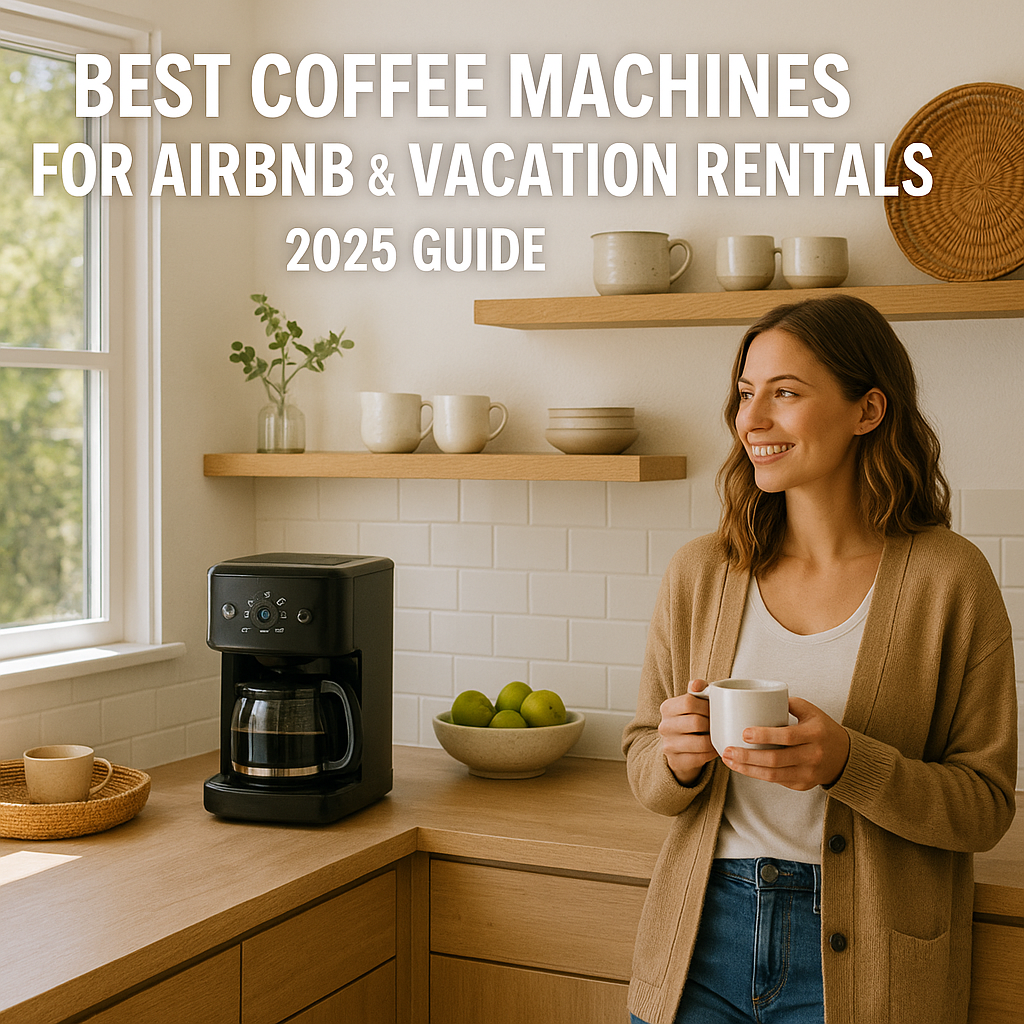
Best Coffee Machines for Airbnb & Vacation Rentals (2025 Guide)

Whether you’re hosting a beachside bungalow, a cozy cabin, or a sleek urban condo, offering guests great coffee is one of the easiest ways to earn glowing reviews. The right coffee machine for your Airbnb or vacation rental not only adds convenience—it creates a welcoming, homey atmosphere that guests remember.

This guide highlights the best coffee machines available on Amazon for short-term rentals, covering a variety of styles, price points, and guest needs. We also include tips for setup, maintenance, and bonus amenities to help your rental stand out from the crowd.


☕ What to Look for in a Coffee Machine for Airbnb

Before selecting a coffee maker, consider:

  • Ease of use: Guests should be able to operate it without instructions
  • Maintenance: Simple to clean between stays
  • Speed: Quick brew times
  • Capacity: Single-serve vs. multi-cup options
  • Flexibility: Options for both pods and ground coffee (if possible)
  • Cost of consumables: Consider if you want to provide pods, filters, or ground coffee regularly
  • Design: A stylish unit that fits your property’s aesthetic can elevate guest perception

🏆 Best Coffee Machines for Airbnb (2025)

Disclosure: As an Amazon Associate I earn from qualifying purchases. This post may contain affiliate links.

1. Keurig K-Classic Coffee Maker (K-Cup Pod)

⭐ 4.7/5 Stars | Single-Serve | Amazon Link: View on Amazon

The Keurig K-Classic is one of the most recognized and trusted single-serve machines in homes and rentals alike. It brews coffee in under a minute using K-Cup pods and offers three cup sizes (6, 8, 10 oz). Its user-friendly design makes it nearly foolproof, even for guests who have never used a Keurig before.

Pros:

  • Simple one-button operation
  • Fast brewing with little to no cleanup
  • Familiar to most guests

Cons:

  • Limited to pods unless using a reusable filter
  • Ongoing cost of K-Cups
  • Slightly bulky for compact spaces

Best For: Business travelers, short stays, properties with limited kitchen amenities


2. Hamilton Beach FlexBrew 2-Way Coffee Maker

⭐ 4.5/5 Stars | Dual-Function | View on Amazon

The FlexBrew is a dual-brewing powerhouse that accommodates both single-serve pods and traditional ground coffee in a 12-cup carafe. This is ideal for hosts who want to appeal to a broad range of guests—from solo travelers to large families. Each side of the machine operates independently, allowing two guests to brew their preferred styles simultaneously.

Pros:

  • Combines pod convenience with drip flexibility
  • Great for couples or groups
  • Compatible with most K-Cups and loose grounds

Cons:

  • Requires more cleaning between guests
  • Larger countertop footprint

Best For: Hosts with a mix of guest types, family vacation homes, or rentals that serve breakfast


3. Cuisinart DCC-3200P1 14-Cup Programmable Coffeemaker

⭐ 4.6/5 Stars | Drip Coffee | View on Amazon

This programmable drip coffee maker combines style and capacity. It brews up to 14 cups and includes a 24-hour timer, adjustable brew strength, and a self-cleaning feature. The stainless steel design looks modern and upscale—ideal for rentals where aesthetics matter.

Pros:

  • Programmable auto-brew feature
  • Large capacity for groups
  • Washable gold-tone filter

Cons:

  • Not great for single-cup users
  • Guests unfamiliar with timers may not use full features

Best For: Family-friendly rentals, group stays, and high-end homes with breakfast setups


4. Nespresso VertuoPlus Coffee and Espresso Maker

⭐ 4.6/5 Stars | Single-Serve (Pods) | View on Amazon

The VertuoPlus blends convenience with luxury, brewing both coffee and espresso using unique barcode-scanning technology for pod optimization. It features a fast heat-up time and one-touch brewing, offering impressive crema and flavor with minimal effort.

Pros:

  • Makes both espresso and standard coffee
  • Premium look and feel
  • Easy capsule insertion and ejection

Cons:

  • Vertuo pods are proprietary and more expensive
  • Some guests may be unfamiliar with the system

Best For: Upscale rentals, luxury condos, boutique Airbnbs


5. Mr. Coffee 5-Cup Mini Brew Coffee Maker

⭐ 4.4/5 Stars | Compact Drip | View on Amazon

This compact unit is perfect for smaller rentals and minimalist setups. Despite its small size, it reliably brews up to 25 oz of coffee and features a removable filter basket and warming plate.

Pros:

  • Affordable and compact
  • Extremely easy to use
  • Great for light coffee drinkers or single guests

Cons:

  • No programmability
  • Lower capacity unsuitable for groups

Best For: Studios, tiny homes, single-guest listings, or budget properties


🛠 Tips for Airbnb Hosts

  • Leave a simple coffee guide: Include basic instructions, cleaning notes, and a few café suggestions
  • Stock basic supplies: Offer a few pods, ground coffee, filters, sweeteners, and creamer
  • Upgrade the station: Include mugs, stirrers, napkins, and a basket to keep it tidy and inviting
  • Descale regularly: Monthly descaling extends machine life and keeps coffee tasting great
  • Make it visible and accessible: A well-located and clearly stocked station boosts guest satisfaction

🧳 Best Machines by Guest Type

Guest TypeRecommended Machine
Solo TravelersMr. Coffee 5-Cup, Keurig K-Classic
CouplesHamilton Beach FlexBrew, Nespresso Vertuo
Families & GroupsCuisinart 14-Cup, FlexBrew
Luxury RentalsNespresso VertuoPlus, Cuisinart
Business TravelersKeurig K-Classic, Nespresso Vertuo

✅ Final Thoughts

Providing great coffee doesn’t have to be complicated—or expensive. With the right coffee machine for your Airbnb, you’ll elevate the guest experience and encourage better reviews. Coffee is one of those amenities guests don’t expect to love—but when done well, they’ll remember it long after checkout.

Choose a machine that matches your guest type, property style, and desired maintenance level. Add a few thoughtful extras, and you’ll create a standout experience that keeps your rental booked and your reviews glowing.

Brew hospitality into every stay—one cup at a time.

Head back to our Commercial Espresso Machines

Categories
Espresso and Coffee

Best Portable Espresso Makers for Travel (2026 Guide)

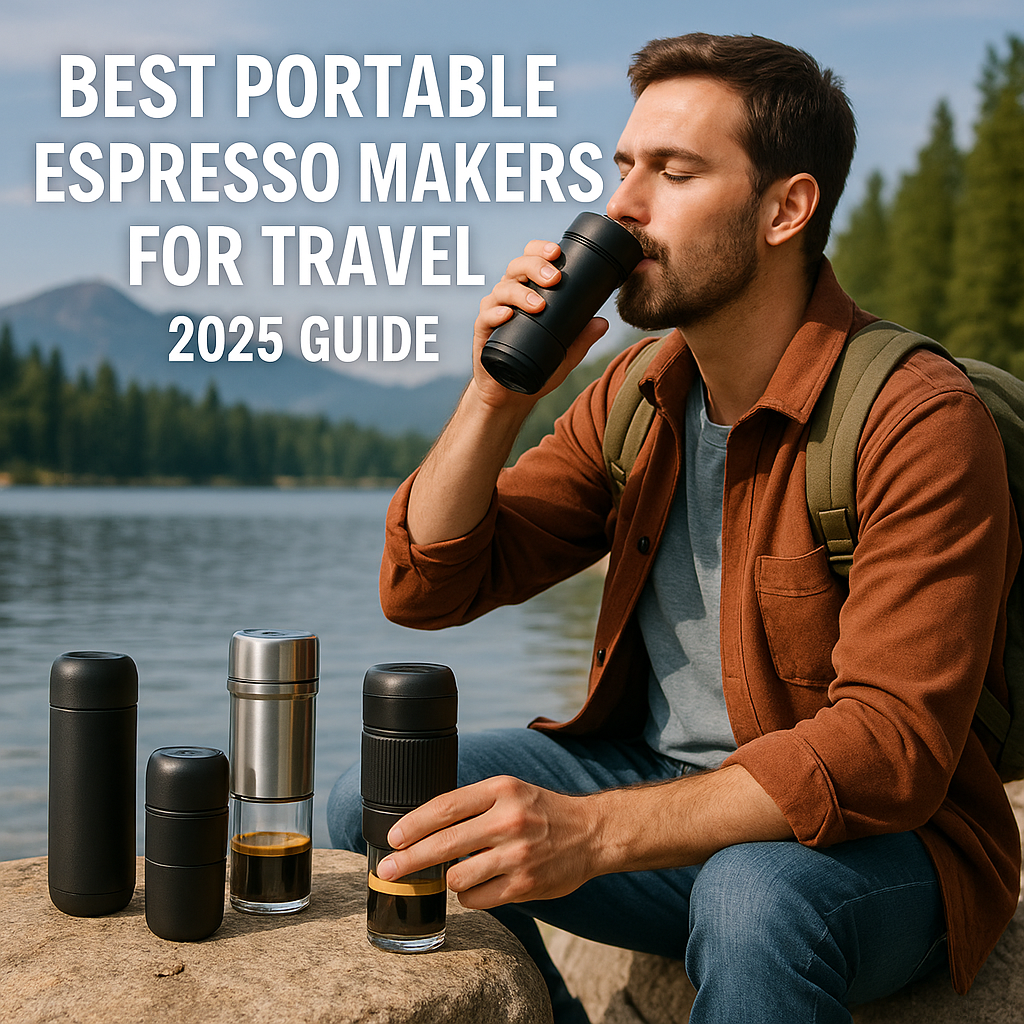
For coffee lovers on the go, having a high-quality portable espresso maker can transform your mornings—whether you’re camping, road-tripping, flying, or working remotely. The good news? You don’t have to sacrifice rich, bold espresso just because you’re away from your home machine.

This comprehensive guide covers the best portable espresso makers for travel in 2025. All listed products are available on Amazon and have been selected for their performance, portability, ease of use, and real-world customer reviews.


🧳 What to Look for in a Portable Espresso Maker

Before we dive into the list, here are the key features to consider:

  • Portability: Lightweight, compact, and easy to pack
  • Pressure system: Manual pump vs. electric vs. capsule-based
  • Power source: Hand-powered, rechargeable battery, or plug-in
  • Ease of use: Simple setup, minimal cleanup
  • Compatibility: Works with ground coffee, capsules, or both

🚀 Top Portable Espresso Makers on Amazon (2025)

Disclosure: As an Amazon Associate I earn from qualifying purchases. This post may contain affiliate links.

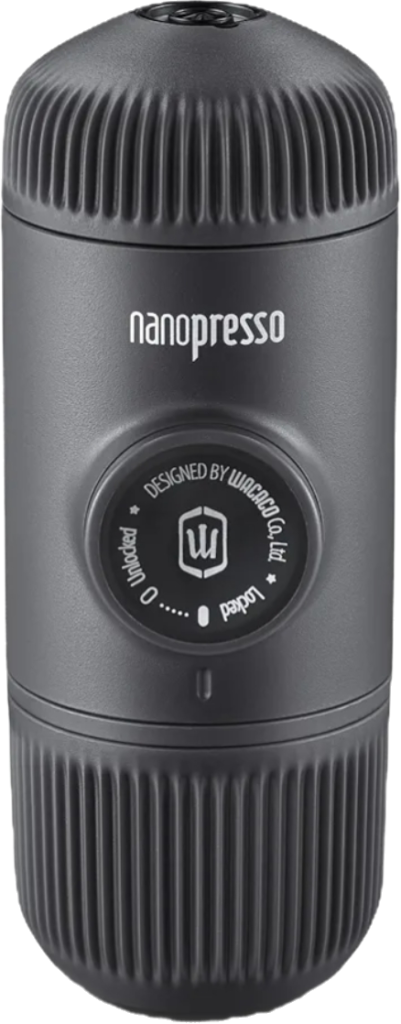
1. Wacaco Nanopresso Portable Espresso Maker

⭐ 4.5/5 Stars | Manual | Ground Coffee
View on Amazon

The Wacaco Nanopresso is a compact, fully manual espresso maker designed for coffee lovers on the go. Weighing only 336 grams (0.74 lb) and measuring just 15.6 cm in length, it fits easily into backpacks or travel bags. Despite its small size, the Nanopresso delivers a powerful 18 bars (261 psi) of pressure using a patented hand-pump system—matching or exceeding many full-sized espresso machines. The newly designed pump requires 15% less force than its predecessor, the Minipresso, making it easier to operate without sacrificing performance. Its 80 ml water tank and integrated espresso cup provide a convenient all-in-one brewing experience, ideal for travel, hiking, or office use.

Maintenance is simple thanks to the quick-detach portafilter, which makes rinsing and cleaning easy after each use. The Nanopresso uses finely ground coffee and supports 8 grams of coffee in the standard chamber—or up to 16 grams with an optional adapter, giving users flexibility in strength and flavor. It doesn’t include a heating element, so you’ll need access to hot water, but that trade-off keeps the unit lightweight and completely battery-free. The BPA-free construction, durable shell, and multiple color options (like Arctic Blue, Charcoal, and Red) make it both functional and stylish. For anyone wanting café-quality espresso in a portable, hand-powered format, the Nanopresso is a top-tier choice.

Why it’s great:

  • Compact and ultra-lightweight (0.74 lbs)
  • Generates up to 18 bars of pressure manually
  • Compatible with ground coffee (with adapter sold separately for Nespresso pods)
  • No electricity required

Pros:

  • True espresso with great crema
  • Very durable and travel-friendly
  • Tons of accessories available

Cons:

  • Requires hot water from an external source
  • Takes some effort to pump

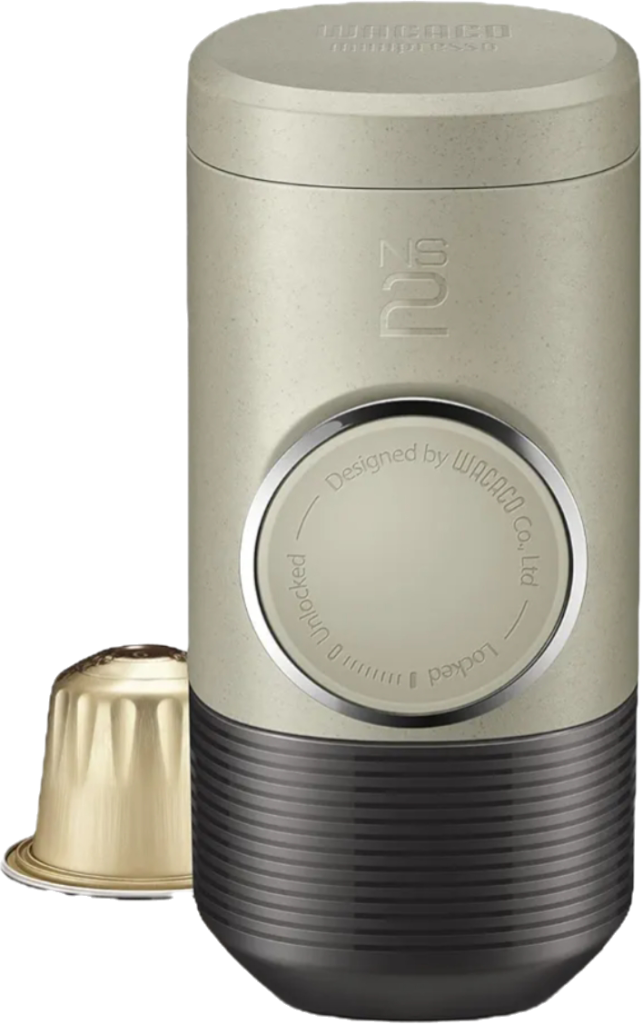
2. Wacaco Minipresso GR

⭐ 4.4/5 Stars | Manual | Ground Coffee
View on Amazon

The Wacaco Minipresso GR is a compact, fully manual espresso maker engineered to deliver a true single-shot espresso experience anywhere you go. Weighing just 360 grams (0.8 lb) and measuring approximately 175 × 70 × 60 mm, it slips effortlessly into backpacks or handbags. Despite its small form, this hand-powered device generates up to 8 bars of pressure—enough to produce a rich 50 ml shot with a satisfying layer of crema. The device uses a pressurized portafilter and accommodates finely ground coffee (about 8 grams), ensuring a flavorful extraction that rivals some countertop espresso machines. Its sleek design and intuitive operation make it a favorite among commuters, travelers, and minimalist coffee lovers.

The Minipresso GR includes a built-in espresso cup, scoop, brush, and carrying pouch—making it a travel-ready bundle. Users have praised its portability, build quality, and espresso output, highlighting its ability to produce flavorful espresso with impressive crema. Maintenance is straightforward: the parts disassemble easily for hand-washing, and the integrated cup doubles as a rinsing vessel. While it lacks a heating element, that keeps it lightweight and battery-free, perfect for use with a separate hot water source. Whether camping, commuting, or just craving a café-style shot, the Minipresso GR brings satisfying espresso performance in an ultra-portable, no-fuss format.

Why it’s great:

  • One of the original portable espresso makers
  • More affordable than the Nanopresso
  • Simple design, easy to use

Pros:

  • Great budget option
  • Good pressure output (8 bars)
  • No electricity needed

Cons:

  • Lower pressure than Nanopresso
  • Limited accessories

3. Flair Espresso Maker PRO 3

⭐ 4.6/5 Stars | Manual | Ground Coffee
View on Amazon

The Flair PRO 2 is a premium manual lever espresso maker designed for aficionados seeking café-quality shots without electricity. Crafted from durable stainless steel and cast aluminum, it weighs about 7 lb and fits neatly in compact spaces, making it both travel-friendly and home-ready. Capable of brewing with 16–24 g of coffee through its 70 ml brew cylinder, it consistently yields up to 56 ml of espresso crowned with rich crema—perfect for flavor-focused extractions. The PRO 3 enhances ergonomics and flow dynamics with a bottomless portafilter, removable stainless-steel spout, silicone-wrapped lever, and gauge guard—all upgrades geared toward serious home baristas. It also features a built-in analog pressure gauge that lets users dial in within the ideal 6–9 bar range for maximum control.

Cleaning and setup are straightforward thanks to the PRO 2’s fully detachable brew head, which fits snugly into its included travel case—ideal for rinsing and compact storage. Though it lacks a built-in boiler, a simple hot-water preheat ensures stable temperature and crema production, albeit with an extra step. Users consistently praise its rugged build—one reviewer called it “built like a tank”—and value its portability, especially for travel or small kitchens. With a robust 5-year warranty and a passionate community, the Flair PRO 3 is ideal for drinkers who appreciate a hands-on, artisanal brewing process powered by quality grind and authentic pressure control.

Why it’s great:

  • Delivers café-quality espresso with full control
  • Removable brew head for easy cleaning
  • High-end build quality with steel and aluminum parts

Pros:

  • Superb extraction and crema
  • Great for purists and enthusiasts
  • Packs into a travel case

Cons:

  • Larger and heavier than others
  • Learning curve for beginners
  • Requires external kettle

4. CONQUECO Portable Espresso Machine (Rechargeable)

⭐ 4.3/5 Stars | Electric | Nespresso Pods
View on Amazon

The CONQUECO Portable Espresso Machine is a sleek and robust travel-friendly device powered by a 13,500 mAh rechargeable battery, offering both hot and cold brew modes. It combines fast ceramic heating technology with a powerful 15-bar pump to deliver café-style espresso or lungo in approximately 2.5–3 minutes (cold brew takes around 10–15 minutes). With an 80 ml aluminum alloy water tank, USB-C charging compatible with 12 V/24 V car adapters, and pod or ground coffee compatibility, it’s versatile for camping, road trips, or office use. Many users report rich, creamy espresso even when pre-heating with cold or hot water, praising its quick heat-up time and portable design.

Maintenance is straightforward: the removable tank and capsule chamber allow easy rinsing, and the sturdy aluminum housing wipes clean effortlessly—ideal for low-maintenance use outdoors. While the machine excels in portability, some users note that battery drain can be fast if starting with cold water, and a pre-heat step is recommended to maintain temperature during extraction. Despite this, the quick USB-C recharge and USB/car adapter compatibility mean you won’t stay offline long. Built to withstand travel rigors, the CONQUECO brings barista-quality espresso within reach wherever you go.

Why it’s great:

  • Fully automated brewing at the push of a button
  • Built-in battery heats water and brews espresso
  • USB rechargeable

Pros:

  • No need for external hot water
  • Compact and modern design
  • Great for commuters and hotel stays

Cons:

  • Only compatible with Nespresso original pods
  • Slower brew time when heating water
  • Higher price point

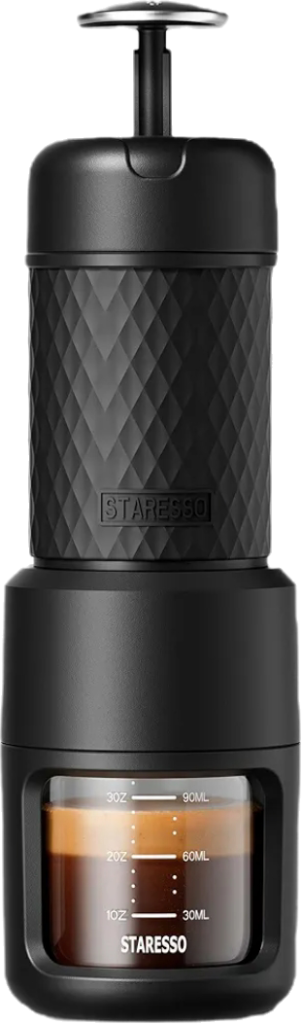
5. STARESSO Portable Espresso Machine

⭐ 4.4/5 Stars | Manual | Ground Coffee + Nespresso Pods
View on Amazon

The STARESSO Classic is a well-crafted, compact manual espresso maker that delivers impressive 15–20 bar pressure to produce rich, creamy espresso and lattes in just a couple of minutes. Weighing around 400 g and measuring roughly 9.6″ tall by 2.75″ in diameter, it strikes a balance between portability and performance. It supports both ground coffee and Nespresso-style capsules, making it versatile for users who want the freedom to choose based on quality or convenience. With a built-in water reservoir (~80 ml) and integrated cup, the all-metal core (stainless steel and aluminum) ensures durability and consistent heat retention—ideal for both travel and daily use.

Maintenance is straightforward: the STARESSO disassembles easily for quick rinsing, and the stainless steel and food-grade plastic parts can be washed without hassle. While some users mention minor plastic components, the high-grade materials overall enhance durability and ease of upkeep. With a built-in measuring cup, FDA-approved inner parts, and a cleverly compact structure, the STARESSO Classic is engineered for low-maintenance, high-quality espresso extraction wherever you are.

Why it’s great:

  • Versatile: compatible with ground coffee and Nespresso pods
  • Stylish design with solid pressure output
  • Compact and lightweight (1 lb)

Pros:

  • Dual compatibility
  • Good pressure with minimal effort
  • Dishwasher-safe components

Cons:

  • Bulkier than Nanopresso
  • Manual pumping required

🔧 Accessories to Enhance Your Travel Espresso Experience

  • Collapsible Kettle – Heat water anywhere with USB or camp stove models
  • Compact Coffee Grinder – Fresh grounds on the go for maximum flavor
  • Travel Case – Protect your device and keep accessories organized
  • Reusable Filter Baskets – Eco-friendly and compatible with most portable makers

🏕 Best Use Case Breakdown

DeviceBest For
NanopressoBackpacking, minimalist travel
Minipresso GRBudget-conscious users
Flair PRO 2High-end manual espresso at home or Airbnb
CONQUECOCommuters, tech lovers, no kettle
STARESSOFlexibility + great all-around use

✅ Final Thoughts

Portable espresso makers have come a long way. With the right device, you can enjoy bold, rich espresso anywhere in the world—no bulky machine required. Whether you’re hiking, road-tripping, or working remotely, the devices above deliver quality and convenience.

Ready to upgrade your travel coffee game? Choose the model that fits your lifestyle, pack your beans or pods, and never settle for bad hotel coffee again.

Head back to our Commercial Espresso Machines

Categories
Espresso and Coffee

Ultimate Commercial Coffee Machine Guide: Everything You Need to Know

If you’re running a coffee shop, restaurant, office, or any high-traffic establishment, investing in the right commercial coffee machine can be the difference between satisfied customers and frustrated ones. With so many options available, it can be overwhelming to know where to start.

This comprehensive guide combines all the essential information to help you make an informed decision — from types and features to brand comparisons and buying tips.

Disclosure: This post may contain affiliate links. As an Amazon Associate, we earn from qualifying purchases.


Types of Commercial Coffee Machines

Understanding the different types of machines is the first step in finding the best fit for your business needs.

1. Super-Automatic Espresso Machines
These are the ultimate all-in-one systems. Super-automatic machines grind the beans, tamp the puck, brew the espresso, and froth the milk — all at the push of a button. They’re ideal for businesses without trained baristas or for high-efficiency environments like hotel lobbies or large offices. Some even feature touchscreen interfaces and programmable drink menus.

2. Automatic Espresso Machines
These machines automate most of the brewing process but still require manual milk frothing. They’re great for busy cafes and restaurants looking for consistency and speed.

3. Semi-Automatic Espresso Machines
These provide full control over the brewing process, including tamping and timing. They’re ideal for specialty coffee shops where skilled baristas craft every cup.

4. Manual Espresso Machines
Best suited for high-end specialty coffee operations, these machines allow complete control but require extensive training.

5. Pour-Over and Automatic Drip Brewers
These are common in diners, conference centers, and offices. Pour-over brewers need to be filled manually with water, while automatic models connect directly to a water line for continuous use. Many brew large volumes and keep the coffee warm in airpots or thermal carafes.

6. Single-Serve Commercial Machines
Designed for flexibility and speed, these machines offer pods or capsules to brew a variety of beverages. Common in offices and convenience stores, they provide different options with minimal cleanup.


Key Features to Consider

When evaluating commercial coffee machines, look beyond just price and brand. These features play a critical role in long-term satisfaction:

Volume & Capacity

  • How many drinks do you serve per hour?
  • High-traffic operations need machines capable of producing 100+ cups per hour.

Boiler Type

  • Dual-boiler systems allow simultaneous brewing and steaming — a must for busy shops.
  • Heat exchange systems can be a good mid-tier solution.

Water Supply: Plumbed vs. Pour-Over

  • Plumbed machines connect directly to your water line and are ideal for high-volume use.
  • Pour-over machines offer mobility and lower installation cost but require refilling.

Built-In Grinder

  • Essential for freshness. Many super-automatic machines have built-in grinders.

Steam Wands / Milk Frothing

  • Auto-frothers save time, while manual wands allow more control and better texture.

User Interface

  • Touchscreens, programmable drink settings, and self-cleaning options can enhance usability and reduce training time.

Maintenance

  • Some machines include automated cleaning cycles.
  • Others may require daily manual cleaning and regular descaling.

Best Commercial Coffee Machine Brands

La Marzocco
Premium machines known for durability and precision. A top choice among third-wave coffee shops.

Nuova Simonelli
Reliable and cost-effective, often used in competition settings and by barista schools.

Franke
Leading manufacturer of high-end super-automatic machines for large operations and corporate use.

Jura
Excellent for automated office use with minimal hands-on work.

BUNN
Trusted for decades, particularly in the automatic drip coffee segment.

Rancilio
A favorite in traditional cafés, known for robust semi-automatic machines.

Breville Commercial / Sage Pro
Popular among high-end home and prosumer markets, now entering light commercial space.


Cost Considerations

Commercial machines vary widely in price:

  • Entry-Level: $1,000 – $3,000 (great for small offices or mobile setups)
  • Mid-Tier: $3,000 – $8,000 (suitable for small to medium-sized cafés)
  • High-End: $10,000+ (top-of-the-line machines for high-volume operations)

Don’t forget the total cost of ownership, which includes

  • Filters and water softeners
  • Grinder (if not built-in)
  • Regular maintenance and service contracts
  • Energy use and cleaning supplies

Where to Buy

When you’re ready to make a purchase, these sources offer competitive pricing and trusted service:

  • Seattle Coffee Gear – In-depth reviews, excellent customer service.
  • WebstaurantStore – Wide selection and good prices for hospitality industry.
  • Espresso Parts – Specializes in high-end espresso gear and accessories.
  • Amazon Business – Convenient for small offices and quick shipping.

Final Tips Before Buying

  1. Know your use case – Office breakroom needs are different from café requirements.
  2. Test in person – If possible, visit a showroom.
  3. Check warranty and service – Some brands offer better support than others.
  4. Plan for future growth – Buy slightly more capacity than you currently need.
  5. Look at reviews from similar businesses – Learn from real-world feedback.

Conclusion

Choosing the right commercial coffee machine is more than just picking a brand — it’s about aligning your choice with your business goals, staff skill level, and customer expectations. Whether you prioritize automation, control, or high-volume brewing, there’s a perfect machine out there for you.

Use this guide to confidently navigate the world of commercial coffee machines and make an investment that pays off in quality, efficiency, and customer satisfaction.


Next Steps:

Back to Coffee and Espresso 101

Categories
Espresso and Coffee

Coffee & Espresso Buying Guides: Find the Perfect Machine for Any Need

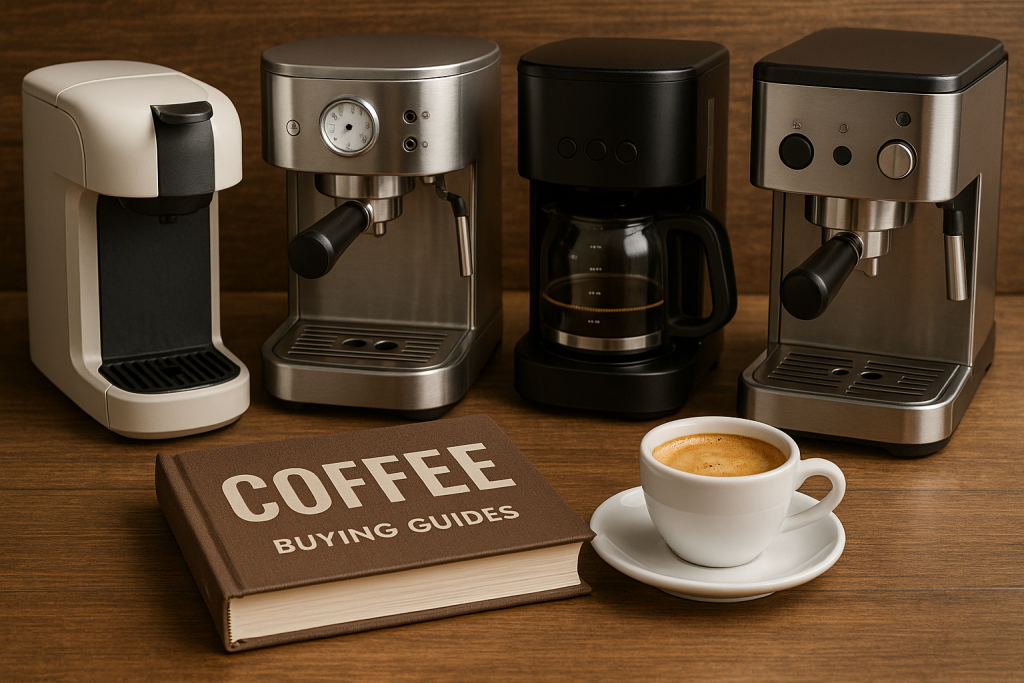
Choosing the right coffee or espresso machine can be overwhelming—especially with so many options on the market. That’s why we’ve created this hub of curated Buying Guides to help you make smart, informed decisions based on your budget, needs, and brewing preferences.

Whether you’re outfitting a home kitchen, upgrading your office setup, or launching a small coffee shop, these articles break down the best equipment options with in-depth reviews, comparisons, and practical recommendations.


💰 By Budget

Best Espresso Machines Under $500 (2025)

Top affordable espresso machines that deliver solid performance for beginners and casual home baristas.

Best Espresso Machines Over $500 (2025)

Explore high-end home machines with premium features, automation, and durability.


🏢 For Offices & Commercial Spaces

Best Coffee Machines for the Office

From single-serve to high-capacity brewers, these machines keep your team caffeinated without sacrificing quality.

Best Commercial Espresso Machines (2025): The Ultimate Buyer’s Guide for Coffee Shops, Cafés & Offices

Explore the top commercial espresso machines of 2025 with detailed reviews, pros and cons, and real customer feedback for coffee shops, cafés, and office use.

High-End Office Coffee Machines

Premium machines that impress with both performance and design—perfect for executive suites or busy departments.

Entry-Level Commercial Coffee Machines ($500–$2,000)

Great for startups, food trucks, or small cafés looking to serve espresso without a huge upfront investment.

Best Commercial Espresso Machines for Small Coffee Shops

Explore powerful, reliable equipment designed to meet the demands of a growing customer base.

Affordable Commercial Espresso Machines (2025 Guide): Top Picks for Budget-Conscious Businesses

Discover the best affordable commercial espresso machines for 2025—complete with in-depth reviews, must-have features, and expert buying tips for small cafés, food trucks, and offices.

Ultimate Commercial Coffee Machine Guide: Everything You Need to Know

Looking for the perfect commercial coffee machine for your café, restaurant, or office? This ultimate guide breaks down everything you need to know — from machine types and features to brand recommendations and cost tips. Whether you’re brewing 10 or 100 cups per hour, this resource will help you choose the right setup for your business.


🌍 Specialty Use Cases

Best Portable Espresso Makers for Travel

Compact, lightweight devices that let you enjoy rich espresso anywhere—camping, hotels, or on the road.

Best Coffee Machines for Airbnb & Vacation Rentals

Low-maintenance, user-friendly machines that help hosts impress guests and earn great reviews.


🤔 Comparison Guides

Automatic vs. Manual Espresso Machines

Weigh the pros and cons of control versus convenience to find the right style for your routine.


🚀 Next Step: Start Comparing

Each guide includes links to full reviews, product specs, and real-world insights so you can feel confident in your purchase. Bookmark this page and come back anytime you need a trusted opinion.

Still not sure where to begin? Start with your budget and how many people you’re brewing for—that’s often the best way to narrow down the options.

Happy shopping!

Categories
Espresso and Coffee

Coffee & Espresso 101: Foundational Knowledge for Coffee Lovers

If you’re new to the world of specialty coffee—or even if you’ve been brewing for a while—this section lays the foundation for everything you need to know. Learn how coffee evolved through the centuries, how espresso became its own celebrated art form, and how beans, brewing methods, and water all influence the final cup.

By understanding the origins, science, and terminology of coffee and espresso, you’ll be better equipped to choose the right gear, troubleshoot issues, and appreciate the nuances of every brew. Whether you’re curious about the differences between Arabica and Robusta or want to know what crema really means, this is where your coffee education begins.


🧠 Coffee Origins & Culture

The History and Differences Between Coffee and Espresso

Understand how brewing methods, caffeine content, and cultural significance set coffee and espresso apart.

The Evolution of Coffee Brewing

Trace the technological and cultural journey of coffee brewing through time, from open fires to high-end espresso machines.

The History and Art of Espresso

Discover the origins of espresso, how it shaped modern café culture, and why it remains the gold standard of concentrated coffee.

Arabica vs Robusta: Bean Varieties Explained for Flavor, Cost & Caffeine

This in-depth guide compares Arabica vs Robusta coffee beans in flavor, caffeine, cost, and brewing methods—complete with expert insights and top product picks.

Coffee Roasts Explained: Light vs Dark and Everything In Between

Explore the full spectrum of coffee roasts—from blonde to dark—and discover how each roast level impacts flavor, body, and brewing style, with top product picks for every preference.

Espresso Basics: Ristretto, Lungo, and Doppio Explained

Master the three essential espresso variations—ristretto, lungo, and doppio—with our practical guide that explains when to use each technique for perfect home brewing results.

How Water Quality Affects Your Coffee (And How to Improve It)

Discover why your coffee is 98% water and learn the science-backed methods to transform muddy, harsh coffee into bright, clean cups through proper water testing, filtration, and optimization—from simple $20 carbon filters to professional-grade systems.

Barista Terms Explained: From Channeling to Tamping Pressure

Decode the language of specialty coffee with this comprehensive guide to essential barista terms—from channeling and crema to tamping pressure and extraction yield—that transforms confusing coffee shop jargon into practical knowledge for brewing better coffee at home.

🔬 Brewing Science & Methods

From Bean to Cup: Coffee Processing Methods Explained

Compare brewing techniques like drip, espresso, pour-over, French press, and K-pods—including grind sizes and flavor profiles.

Drip vs. Espresso vs. French Press: Which Is Right for You?

A breakdown of flavor, convenience, cost, and gear required for each major brewing method.

The Science of Extraction: What Makes Great Espresso?

Dive into the chemistry and physics behind great espresso—understand extraction variables and how to control them.

What Is Crema and Why It Matters

Demystify the golden layer on top of your shot. Learn what crema reveals about freshness, grind, and pressure.

My Espresso Tastes Terrible: Step-by-Step Flavor Troubleshooting

Master espresso troubleshooting with our comprehensive guide that transforms terrible-tasting shots into café-quality espresso using proven techniques for fixing sour, bitter, weak, and burnt flavors.

Espresso Drink Guide

Beginner’s Guide to Espresso Drinks (Lattes, Macchiatos, etc.)

Learn the makeup of popular espresso-based drinks, how they differ, and how to make them at home.

Espresso Equipment 101

Ultimate Commercial Coffee Machine Guide: Everything You Need to Know

Navigate the complex world of commercial coffee machines with our comprehensive guide that covers everything from machine types and key features to brand comparisons and cost considerations, helping you make the perfect investment for your business needs.

Automatic vs. Manual Espresso Machines: Which Is Right for You?

End the confusion between automatic and manual espresso machines with our detailed comparison guide that breaks down control levels, learning curves, and costs to help you choose the perfect brewing style for your lifestyle and coffee goals.

How Often Should I Clean My Coffee Machine? Complete Maintenance Schedule

Transform your coffee machine maintenance from guesswork into a science-backed system that extends equipment life by 50% while ensuring every cup tastes as exceptional as it should.


☕️ Ready to Brew Smarter?

Coffee & Espresso 101 is just the beginning. As you gain confidence and curiosity, check out our product reviews, brewing guides, and advanced techniques to build your perfect cup from the ground up.
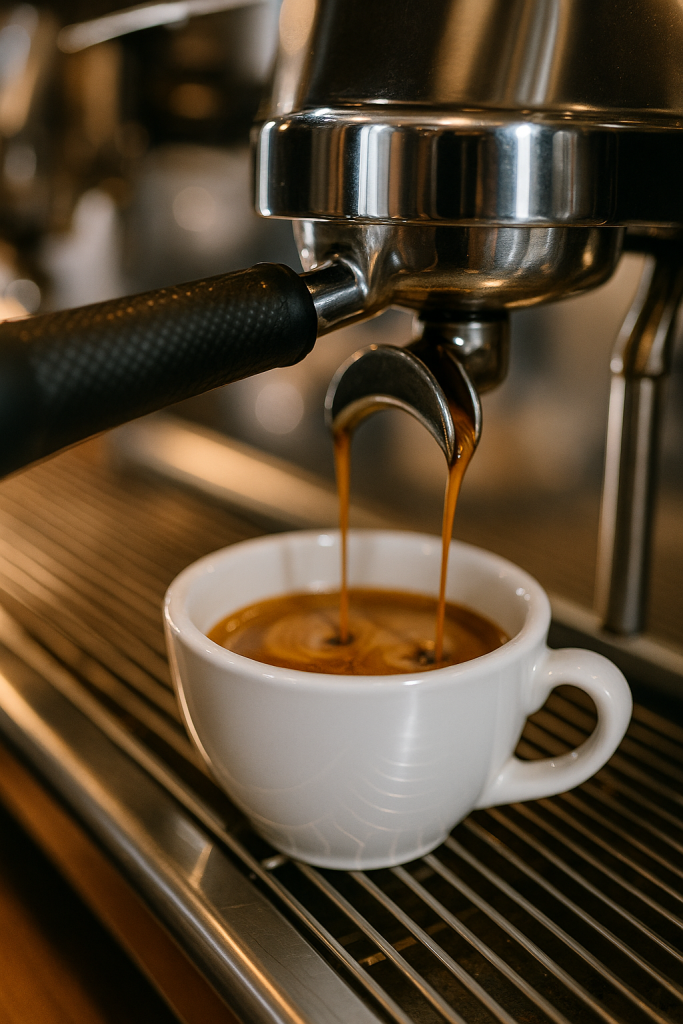
Happy brewing!

Return to the Coffee and Espresso Hub

Categories
Espresso and Coffee

From Bean to Cup: Coffee Processing Methods Explained

There are few things as universally loved as a good cup of coffee, but the methods used to brew it can vary wildly from kitchen to kitchen, café to café. Whether you’re new to home brewing or a seasoned enthusiast, understanding the different coffee processing methods can elevate your experience. This guide explores the most popular techniques—drip, espresso, percolation, French press, pour-over, and K-pod systems—along with the required grind sizes, variations, pros and cons, and what happens when grind size is off.


1. Drip Coffee

How It Works

Drip coffee, also known as filter coffee, is the most common brewing method in homes and offices. Hot water drips over ground coffee contained in a paper or metal filter. Gravity pulls the water through the grounds and into a carafe.

Grind Size

  • Medium grind (similar to sea salt)
  • Too coarse: Under-extracted, weak, sour
  • Too fine: Over-extracted, bitter, can clog filter

Variations

  • Automatic drip machines
  • Manual drip cone brewers (e.g., Chemex, Melitta)

Pros

  • Easy to use and clean
  • Consistent results with little skill required
  • Great for large batches

Cons

  • Limited control over variables like bloom and flow rate
  • Paper filters can absorb flavorful oils

2. Espresso

How It Works

Espresso uses pressure (9 bars or more) to force hot water through a tightly packed puck of finely-ground coffee. The process extracts a small, concentrated shot in 25–30 seconds.

Grind Size

  • Fine grind (like powdered sugar)
  • Too coarse: Under-extracted, sour, weak crema
  • Too fine: Over-extracted, bitter, chokes the machine

Variations

  • Manual, semi-automatic, and superautomatic machines
  • Ristretto (short shot), lungo (long shot), doppio (double shot)

Pros

  • Bold, rich flavor and crema
  • Base for many specialty drinks (latte, cappuccino, etc.)
  • Full control for coffee geeks

Cons

  • Expensive equipment
  • Steeper learning curve
  • Needs regular cleaning and calibration

3. French Press (Press Pot)

How It Works

Ground coffee is steeped in hot water for several minutes, then separated using a metal mesh plunger. Unlike drip methods, it doesn’t use a filter that removes oils.

Grind Size

  • Coarse grind (like kosher salt)
  • Too coarse: Weak, under-extracted, watery
  • Too fine: Sludge in cup, over-extracted, bitter

Variations

  • Classic French press
  • Double-walled insulated models for better heat retention

Pros

  • Full-bodied, oily, and flavorful coffee
  • Inexpensive equipment
  • No disposable filters

Cons

  • More sediment in cup
  • Requires careful timing and attention
  • Not ideal for large batches

4. Pour-Over

How It Works

Pour-over brewing involves manually pouring hot water in a controlled, circular motion over coffee grounds placed in a cone-shaped dripper (like a V60 or Chemex). Water flows through the coffee and filter into a carafe or mug.

Grind Size

  • Medium-fine grind (between table salt and sand)
  • Too coarse: Water rushes through, under-extracted
  • Too fine: Clogged filter, over-extracted, bitter

Variations

  • Hario V60, Kalita Wave, Chemex
  • Single-cup or multi-cup models

Pros

  • Total control over flow rate, bloom, and brew time
  • Bright, clean flavors with good clarity
  • Visually engaging and ritualistic

Cons

  • Requires skill and precision
  • Slower than auto-drip
  • Not ideal for multitasking

5. Percolator

How It Works

A percolator continuously cycles boiling water through coffee grounds via a tube and metal basket. As water percolates through the grounds multiple times, it intensifies flavor.

Grind Size

  • Coarse to medium-coarse
  • Too coarse: Weak, underwhelming flavor
  • Too fine: Over-extracted, bitter, muddy

Variations

  • Stovetop or electric models
  • Some modern designs with brew timers and temperature control

Pros

  • Very strong, bold coffee
  • Great for camping or off-grid brewing
  • Nostalgic appeal

Cons

  • Easy to over-extract if not timed carefully
  • Less nuanced flavors
  • Higher chance of bitterness

6. K-Pod (Single-Serve Pod Machines)

How It Works

K-pod or pod-based systems like Keurig and Nespresso automate the brewing process by using pre-ground, pre-portioned coffee sealed in plastic or aluminum pods. The machine punctures the pod, runs hot water through it, and dispenses the brewed coffee in under a minute.

Grind Size

  • Not applicable (pre-ground inside sealed pod)

Variations

  • Standard Keurig K-Cups
  • Nespresso Original and Vertuo pods (espresso and lungo options)

Pros

  • Incredibly fast and convenient
  • Minimal cleanup
  • Ideal for people who want a consistent cup with zero effort

Cons

  • Limited control over temperature, grind, and dose
  • Quality is often lower than fresh-ground methods
  • Plastic pods raise environmental concerns
  • Some health concerns with hot water running through plastics

Final Thoughts

There’s no one-size-fits-all when it comes to brewing coffee. Each method—from the intensity of espresso to the elegance of pour-over, or the simplicity of a K-pod system—offers its own unique experience. Understanding how grind size, brew time, and equipment interact allows you to tailor your brew to your taste. Whether you’re after convenience, control, or complex flavor, there’s a brewing method (or several) for you.

Start with one that fits your lifestyle and slowly experiment with others. The journey from bean to cup is as rewarding as the drink itself.

Back to Coffee and Espresso 101

Categories
Espresso and Coffee

What Is Crema and Why It Matters

One of the most iconic hallmarks of a well-pulled espresso shot is the layer of golden foam that rests gently on top: crema. To the uninitiated, it may seem like just a cosmetic flourish—but to seasoned baristas and espresso lovers, crema is a critical indicator of espresso quality. This guide dives deep into what crema is, how it forms, why it matters, and how to troubleshoot common crema issues for better espresso at home.

What Is Crema?

Crema is the golden-brown foam that forms on the surface of a freshly brewed espresso shot. It’s made up of tiny gas bubbles suspended in emulsified oils, proteins, and other soluble coffee compounds. Crema is often described as the “cream” of espresso, and it adds richness to the flavor, aroma, and visual appeal of the drink.

Components of Crema

  • Carbon dioxide (CO₂): Released from the coffee grounds during extraction; gets trapped in the espresso, forming microbubbles.
  • Coffee oils: Natural oils from the coffee bean contribute to the texture and body of the crema.
  • Soluble compounds: Proteins, melanoidins (products of Maillard reactions), and other soluble compounds add color, aroma, and structure.

The Science Behind Crema Formation

Crema formation is driven primarily by pressure and freshness.

High Pressure Extraction

Espresso is brewed at high pressure—usually 9 bars—which forces hot water through compacted, finely-ground coffee. This pressure extracts CO₂ gas and emulsifies the coffee oils into a stable foam that rises to the top of the shot.

Bean Freshness and Degassing

Freshly roasted beans still contain a significant amount of CO₂, which is naturally released during brewing. If the beans are too old (more than 4 weeks post-roast), they’ve lost most of their CO₂, resulting in weak or non-existent crema.

Conversely, beans that are too fresh (less than 3 days post-roast) may release gas too quickly during extraction, leading to instability in crema texture.

What Crema Tells You About Espresso Quality

Crema is more than just aesthetics—it’s a diagnostic tool for espresso quality. Here’s what it can tell you:

Good Crema

  • Color: Rich golden brown with reddish hues
  • Texture: Smooth, creamy, and even
  • Thickness: About 1/8 to 1/4 inch thick
  • Stability: Lasts for at least 1–2 minutes before dissipating

Poor Crema

  • Pale or blonde: Often indicates under-extraction or stale beans
  • Dark and thin: Suggests over-extraction or overly dark roast
  • Bubbly or large-bubbled: May indicate channeling, poor tamping, or too coarse a grind

How Crema Affects Taste and Aroma

While crema itself doesn’t contribute much flavor, it plays an important role in the overall espresso experience.

  • Aroma Delivery: Traps volatile aromatic compounds that are released as you sip
  • Mouthfeel: Adds creamy body and texture to the first few sips
  • Flavor Perception: Slight bitterness from the crema offsets sweetness from the espresso liquid underneath

In competitions and high-end cafés, the presence and quality of crema are often judged as part of the espresso’s overall profile.

How to Improve Crema at Home

If you’re not getting rich crema at home, several factors could be affecting it. Here’s how to improve it:

Use Fresh Beans

  • Ideal window: 3–14 days post-roast
  • Store in an airtight container away from heat and moisture

Use the Right Grind Size

  • Too coarse: Fast shot, weak crema
  • Too fine: Choking or over-extraction
  • Dial in to a fine espresso grind and adjust based on shot time

Maintain Proper Extraction Parameters

  • 9 bars of pressure
  • 195–205°F water temperature
  • 25–30 second shot time
  • 1:2 brew ratio (e.g., 18g in, 36g out)

Use a Quality Espresso Machine and Grinder

  • Entry-level machines may not maintain stable pressure or temperature
  • A burr grinder ensures uniform grind size, critical for even extraction

Tamp Evenly and Consistently

  • Uneven tamping can cause channeling and weak crema
  • Use 30 lbs of firm, level pressure and a distribution tool if needed

Crema Myths and Misconceptions

“More crema means better espresso

Not always. While crema is a sign of freshness and proper extraction, some beans—especially lighter roasts—naturally produce less crema. Taste should be the final judge.

“Robusta beans are better because they make more crema

Robusta beans do produce more crema, but they also tend to have harsher, more bitter flavors. Many cafés use a blend of Arabica and Robusta to balance crema and flavor.

Crema should last for several minutes”

Crema naturally dissipates as gases escape. A good crema should last 1–2 minutes—any longer may indicate an overly dark roast or stale beans.

Crema in Different Roast Styles

  • Light Roast: Less crema, but often more complex flavors
  • Medium Roast: Balanced crema and flavor
  • Dark Roast: More crema, but often bitter and one-dimensional

Experimenting with roast levels will help you find the balance between crema production and flavor complexity that suits your taste.

Final Thoughts

Crema is one of the most beautiful aspects of espresso—and one of the most misunderstood. While it’s not the ultimate sign of a great shot, it does provide a wealth of information about freshness, technique, and extraction quality. Understanding what crema is and how it forms gives you another layer of control over your espresso-making journey.

Whether you’re chasing that perfect tiger-striped surface or just trying to avoid weak, bubbly foam, paying attention to crema will help you develop as a barista and elevate your at-home espresso game. Keep practicing, keep tasting, and enjoy every golden-topped shot along the way.

Back to Coffee and Espresso 101

Categories
Espresso and Coffee

The Science of Extraction: What Makes Great Espresso?

Making a great shot of espresso isn’t just about pushing a button—it’s a precise science that blends chemistry, physics, and a bit of artistry. For beginners, it may seem like a dark art, but once you understand the core principles of espresso extraction, you’ll gain the ability to troubleshoot, experiment, and consistently produce café-quality shots. This guide will take you step-by-step through what extraction is, why it matters, and how to perfect it—even if you’re brand new to espresso.

What Is Espresso Extraction?

Espresso extraction refers to the process of drawing soluble compounds (flavor, aroma, caffeine, oils) from ground coffee by forcing hot water through it under pressure. The goal is to extract the right amount of these compounds to create a balanced, flavorful shot.

The Chemistry of Coffee Solubles

When water comes into contact with ground coffee, it dissolves and extracts various compounds in stages:

  • Acids are extracted first (bright, tangy flavors)
  • Sugars come next (sweet, smooth flavors)
  • Bitters come last (harsh, over-extracted flavors)

A well-balanced espresso shot will include a harmonious mix of all three, with acidity and sweetness in the foreground and just a touch of bitterness to round it out.

Under-Extraction vs. Over-Extraction

  • Under-extracted espresso tastes sour, sharp, or weak. This happens when water passes through too quickly or doesn’t spend enough time with the grounds.
  • Over-extracted espresso tastes bitter, dry, or burnt. This occurs when water interacts with the coffee for too long, pulling out excessive bitter compounds.

The sweet spot for extraction is typically between 18–22% of the coffee’s mass.

Key Variables That Affect Espresso Extraction

Espresso is extremely sensitive to small changes in variables. Mastering these variables is the key to pulling consistent, delicious shots.

1. Grind Size

  • Finer grind = slower flow = more extraction
  • Coarser grind = faster flow = less extraction

The grind should be fine, like table salt or powdered sugar. Even slight adjustments can drastically affect flavor and shot time.

2. Dose (Amount of Ground Coffee)

  • Typical doses range from 16–20 grams for a double shot
  • Too little: weak and under-extracted
  • Too much: choked shot, over-extraction

Use a digital scale to measure your dose precisely.

3. Tamping Pressure

  • Tamping compresses the grounds to create uniform resistance
  • Inconsistent or uneven tamping leads to channeling (water finds weak spots and flows unevenly)
  • Use firm, level pressure (about 30 pounds of force is standard)

4. Brew Ratio

  • Brew ratio = Dose : Yield (how much espresso ends up in the cup)
  • Standard espresso ratio is 1:2 (e.g., 18g in, 36g out)
  • Use a scale to measure output and ensure consistency

5. Water Temperature

  • Ideal range: 195°F to 205°F (90°C to 96°C)
  • Lower temps = sour espresso (under-extracted)
  • Higher temps = bitter espresso (over-extracted)

Many higher-end machines include PID controllers for precision.

6. Shot Time

  • Standard shot time: 25–30 seconds
  • Shorter = under-extraction
  • Longer = over-extraction

Start with 30 seconds as a benchmark and adjust grind size accordingly.

Visual and Taste Cues of a Great Espresso Shot

Appearance (Crema)

  • Thick, golden-brown crema layer
  • Fine bubbles, no large or uneven patches
  • Crema should hold for about a minute

Body and Texture

  • Should feel syrupy and rich in the mouth
  • Not watery or overly thick

Taste Profile

  • Balanced acidity, sweetness, and a hint of bitterness
  • Complex flavor notes (chocolate, citrus, caramel, fruit, etc.)
  • No dominant sourness or harsh bitterness

Tools That Help You Dial in Extraction

  • Digital scale – Measures dose and yield precisely
  • Timer – Track shot time from start to finish
  • Bottomless portafilter – Helps identify channeling or uneven extraction
  • Distribution tools (WDT, puck rakes) – Evenly distribute grounds before tamping
  • PID controllers – Maintain stable brew temperature

Advanced Tips for Consistent Extraction

  • Purge the group head before every shot to stabilize temperature
  • Use filtered water for consistent mineral content
  • Clean your machine daily to prevent buildup that affects flow and flavor
  • Test and record your brew parameters and results—treat it like a science experiment

Common Extraction Problems and Fixes

ProblemCauseFix
Sour, sharp espressoUnder-extractionFiner grind, higher temp, longer time
Bitter, dry espressoOver-extractionCoarser grind, lower temp, shorter time
Uneven cremaChanneling from poor tampingImprove tamping technique
Gushing shot (too fast)Grind too coarse or low doseFiner grind, increase dose
Choked shot (too slow)Grind too fine or over-dosedCoarser grind, decrease dose

Final Thoughts

Espresso is one of the most nuanced brewing methods in the world, and learning the science of extraction gives you ultimate control over your results. By understanding and adjusting each variable—from grind size to temperature to brew ratio—you’re no longer relying on guesswork or luck. Instead, you’re crafting each shot with precision.

Whether you’re pulling your first shot or fine-tuning your 500th, extraction is where the magic happens. Stay curious, take notes, taste everything critically—and enjoy the incredibly rewarding journey into espresso mastery.

Back to the Coffee and Espresso 101

Categories
Espresso and Coffee

Beginner’s Guide to Espresso Drinks (Lattes, Macchiatos, and more)

If you’ve ever stood in line at a coffee shop and stared blankly at the menu—latte, macchiato, flat white, cortado—you’re not alone. The world of espresso drinks can feel intimidating at first, but once you understand the basics, it opens the door to a rich and rewarding coffee experience. This beginner’s guide will walk you through the most popular types of espresso drinks, how to make them, where they come from, and what tools you’ll need to start crafting café-style beverages at home.

What Is an Espresso Drink?

Espresso drinks are beverages that use espresso as a base. Espresso is a concentrated coffee shot brewed by forcing hot water through finely-ground coffee under high pressure. It’s strong, rich, and serves as the foundation for a wide variety of coffee beverages.

What Makes Espresso Different?

  • Brewed under high pressure (9+ bars)
  • Takes about 25–30 seconds per shot
  • Uses a fine grind and small amount of water
  • Strong flavor with a thick, rich crema on top

Essential Tools for Making Espresso Drinks at Home

To get started with making espresso drinks, you’ll need a few key tools and accessories:

Espresso Machine

  • Manual, semi-automatic, or fully automatic
  • Must be able to generate 9 bars of pressure

Coffee Grinder

  • Burr grinder for consistent, fine grind size
  • Essential for flavor extraction and crema

Milk Frother

  • Steam wand (built into espresso machines) for frothing
  • Electric frothers or manual frothing pitchers are alternatives

Tamper

  • Used to compress the ground coffee evenly in the portafilter
  • Helps ensure proper extraction

Other Accessories

  • Frothing pitcher
  • Digital scale
  • Thermometer (for milk steaming)
  • Shot glasses or espresso cups

Popular Espresso Drinks and How to Make Them

Let’s break down the most common espresso drinks, what’s in them, where they originated, and how to make them.

Espresso (Single or Double Shot)

  • Origin: Italy, early 20th century
  • Ingredients: 7–9g coffee (single), 14–18g (double)
  • Ratio: 1:2 coffee-to-water
  • Flavor: Bold, rich, slightly bitter

Overview: The foundation of all espresso drinks, a single or double shot is served in a small cup and meant to be sipped slowly. It’s known for its crema—a golden layer of foam that sits atop the espresso.

Steps:

  • Use a fine grind
  • Tamp evenly
  • Extract 1 oz (single) or 2 oz (double) in 25–30 seconds

Macchiato

  • Origin: Italy
  • Translation: “Stained” or “spotted” in Italian
  • Ingredients: Single or double shot espresso + dollop of foamed milk
  • Ratio: ~90% espresso, 10% foam
  • Flavor: Bold with a slight creaminess

Overview: The macchiato was developed to mark an espresso with a touch of milk, allowing baristas to distinguish between plain espresso and one with milk. It’s small, strong, and just slightly mellowed.

Steps:

  • Pull a shot of espresso
  • Top with 1–2 teaspoons of milk foam

Latte

  • Origin: Italy, popularized in the U.S.
  • Translation: “Milk” in Italian
  • Ingredients: 1–2 shots espresso + steamed milk + milk foam
  • Ratio: 1/6 espresso, 4/6 steamed milk, 1/6 foam
  • Flavor: Smooth, creamy, mellow

Overview: Originally a breakfast drink in Italy, the latte became a café staple in the U.S. It’s mild, making it great for people new to espresso drinks.

Steps:

  • Pull espresso
  • Steam milk to 140–150°F
  • Pour milk over espresso, then top with foam

Cappuccino

  • Origin: Italy
  • Named After: Capuchin monks (refers to the color of their robes)
  • Ingredients: 1 shot espresso + equal parts steamed milk and foam
  • Ratio: 1/3 espresso, 1/3 steamed milk, 1/3 foam
  • Flavor: Stronger coffee taste with airy texture

Overview: A classic Italian favorite, cappuccino has a stronger espresso presence compared to a latte, balanced by creamy milk and thick foam.

Steps:

  • Pull espresso
  • Steam and froth milk until thick foam forms
  • Layer milk and foam over espresso

Flat White

  • Origin: Australia or New Zealand (debated)
  • Ingredients: Double espresso + velvety microfoam
  • Ratio: 1/3 espresso, 2/3 steamed milk (little to no foam)
  • Flavor: Strong coffee taste with smooth texture

Overview: The flat white is known for its velvety texture and stronger espresso presence. It’s typically smaller than a latte and uses microfoam instead of thick foam.

Steps:

  • Pull a double shot
  • Steam milk for minimal foam (microfoam)
  • Pour steadily over espresso

Cortado

  • Origin: Spain
  • Translation: “Cut” (as in cutting espresso with milk)
  • Ingredients: Equal parts espresso and steamed milk
  • Ratio: 1:1
  • Flavor: Balanced, smooth

Overview: A cortado tones down the acidity of espresso with just enough milk to balance without overpowering the flavor. It’s usually served in a small glass.

Steps:

  • Pull a double shot
  • Steam milk (no foam)
  • Pour gently over espresso

Mocha

  • Origin: Inspired by Mocha coffee beans from Yemen
  • Ingredients: Espresso + steamed milk + chocolate syrup + whipped cream (optional)
  • Ratio: 1/3 espresso, 1/3 milk, 1/3 chocolate
  • Flavor: Sweet and chocolatey

Overview: A dessert-like drink, the mocha blends the richness of espresso with the sweetness of chocolate. It’s the go-to for coffee drinkers with a sweet tooth.

Steps:

  • Pull espresso
  • Add chocolate syrup to cup
  • Pour in espresso, then steamed milk
  • Top with whipped cream if desired

Milk Frothing Tips

Perfecting milk froth is essential for many espresso drinks. Here’s how to do it right:

Why Froth Milk?

Frothing milk introduces air and changes its texture and flavor profile. It enhances the sweetness and gives milk a creamy mouthfeel. This not only balances the strong taste of espresso but also creates the velvety or foamy layers essential to drinks like lattes, cappuccinos, and flat whites.

  • Adds texture and body to the drink
  • Increases milk’s natural sweetness by changing its structure
  • Creates a visually appealing top layer for presentation and latte art

Microfoam vs. Foam

  • Microfoam: Smooth, velvety texture (for lattes and flat whites). It’s steamed milk with tiny, uniform bubbles that integrate seamlessly into the espresso.
  • Foam: Light and airy (for cappuccinos and macchiatos). Contains larger bubbles and sits on top of the drink like a cloud.

Frothing Basics

  • Use cold milk (2% or whole milk froths best)
  • Purge steam wand before and after use
  • Keep steam wand just below surface for foam; deeper for heating
  • Listen for a consistent hissing sound—not loud splashing or screeching

Common Mistakes

  • Overheating milk (ideal temp: 140–150°F); overheating ruins texture and burns the milk
  • Creating large bubbles (too much air too quickly)
  • Not cleaning wand after each use, leading to milk residue build-up and flavor issues

Tips for Mastering Espresso Drinks at Home

  • Always use fresh, quality beans
  • Preheat your cups for temperature stability
  • Clean your portafilter, group head, and steam wand regularly
  • Experiment with grind size and brew time
  • Practice pouring technique for latte art

Final Thoughts

Mastering espresso drinks at home is a rewarding journey—one that blends skill, experimentation, and a love for great coffee. Understanding the types of drinks and their origins helps you appreciate the global traditions behind each cup, while learning to froth milk properly transforms your home brews into café-quality experiences.

Whether you’re starting with a simple latte or challenging yourself with a cortado or flat white, the joy is in the process. With the right tools and techniques, you’ll not only elevate your coffee game but create daily rituals worth savoring. Keep exploring, keep practicing, and soon your kitchen might rival your local café.

Back to the Coffee and Espresso 101