Categories
Espresso and Coffee

Ultimate Guide: 10 Best Espresso Machine Under $500

If you’ve ever had an amazing espresso at a café and then tried to recreate it at home, you already know the truth: espresso is picky. Grind size, dose, temperature, pressure, and timing all show up in the cup, and small mistakes can turn a “nice shot” into something thin, sour, or bitter.

The good news is you don’t need a $1,200 machine to make espresso you’ll actually enjoy. Under $500, you can choose between fast, beginner-friendly machines and more hands-on classics that reward practice. This guide compares the best espresso machines under $500 based on real-world usability, not marketing fluff, so you can pick the one that fits your mornings and your patience.
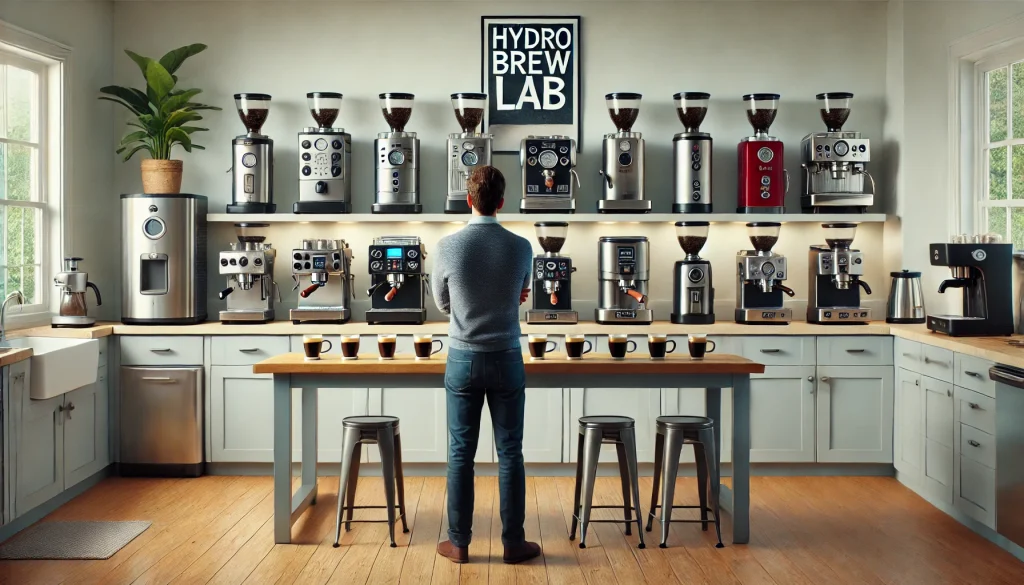
Home barista standing in a modern kitchen with multiple espresso machines under $500 lined up on a counter, comparing coffee brews.

Last updated January 2026 to reflect current models and real-world use feedback.

If you’ve ever had a great espresso at a café and then tried to recreate it at home… you already know the problem. Espresso is not forgiving. The grind, the dose, the water temperature, the pressure, and even your patience all show up in the cup.

The good news: you don’t need a $1,200 machine to pull enjoyable shots at home. Under $500, you can get everything from fast, beginner-friendly machines to “tinker-friendly” classics that reward practice. This guide compares the best-selling espresso machines under $500 based on real-world usability, not marketing fluff.

Disclosure: As an Amazon Associate I earn from qualifying purchases. This post may contain affiliate links.

Who This Guide Is For (and Who It Isn’t)

If you want café-quality espresso at home but you’re trying to stay under $500, this guide is for you. I’m focusing on machines that people actually live with: daily shots, weekend lattes, small kitchens, and the occasional “I need coffee now” morning.

It’s also for you if you’re deciding between convenience and control. Some of these machines are fast and beginner-friendly. Others are more hands-on and reward you if you’re willing to learn a little workflow (grind, dose, tamp, repeat). Check out my hub, Accessories & Workflow Essentials: Ultimate Buying Guide, to fin help you decide what accessories you’ll need for your ultimate home setup.

This guide is not for someone shopping for a fully automatic bean-to-cup setup that does everything at the push of a button, or for anyone chasing true commercial performance on a budget. Under $500, you can make excellent espresso, but you’re still working within real-world tradeoffs.

How We Chose the Best Espresso Machines Under $500

Espresso machines under $500 live in a very specific neighborhood. Some are excellent at speed and convenience. Others give you more control, but ask you to learn the basics and bring your own grinder. A few are “espresso-adjacent” (like pod machines) and win on consistency and cleanup.

To build this list, I focused on what matters in day-to-day ownership: heat-up time, shot consistency, steam performance, ease of cleaning, and how quickly you can make a drink before work without hating your life. No single machine is perfect, but each one earns its spot by solving a specific type of espresso problem well.

Our Evaluation Criteria

  • Shot consistency and temperature stability
  • Heat-up time and workflow speed
  • Milk steaming performance (manual vs automatic)
  • Ease of cleaning and long-term maintenance
  • Build quality and reliability at the price
  • Value (what you get for what you pay)

What Actually Matters When Buying an Espresso Machine Under $500

Manual vs Pod vs “One-Touch”

Manual machines can make the best espresso in this price range, but they assume you’re willing to learn and ideally own a capable grinder. Pod machines trade control for consistency and speed, and for many homes that’s a perfectly reasonable deal. Super-automatic machines under $500 are tempting, but they often come with compromises in build quality or long-term serviceability.

Temperature and Steam Are the Hidden Dealbreakers

A machine can have “15 bars” printed on the box and still make sad espresso. What you actually want is stable temperature at the group head and steam power that doesn’t feel like a weak exhale. If you love milk drinks, your steam wand (or auto-frother) matters almost as much as the espresso itself.

A Grinder Isn’t Optional for Manual Espresso

If you’re buying a traditional portafilter machine (not pods), the grinder is half the system. Even a great machine can’t fix inconsistent grind size. If you don’t have a grinder yet, consider allocating part of your budget for one.

With those tradeoffs in mind, the machines below are organized by how people actually use them at home. Some prioritize speed and consistency, others reward hands-on learning, and a few exist purely to remove friction from busy mornings. None of these machines are “perfect,” but each one solves a specific espresso problem better than most competitors in its price range. Check out my grinder buying guide here.

A quick note on ordering: this list isn’t ranked by price or popularity. It’s ordered by how well each machine fits a specific type of user, starting with the best overall balance for most people and moving toward more specialized use cases.

Best Espresso Machines Under $500 ( Reviewed and Compared)

1. Breville Bambino Plus

Check Amazon price here

The Breville Bambino Plus earns its reputation by quietly solving problems most people don’t realize they have until they own another machine. There’s no waiting for warm-up, no guessing when the steam wand is ready, and no awkward temperature swings between shots. It feels fast, deliberate, and surprisingly polished for its size and price.

What makes it stand out long-term is how forgiving it is without feeling limiting. Beginners get consistent shots and excellent milk with minimal effort, while more experienced users still have room to refine grind size and extraction. It becomes part of your morning routine rather than a project you have to manage.

Key Features

  • ThermoJet heating system (3-second heat-up)
  • Automatic steam wand with temperature control
  • Compact stainless steel design
  • 54mm portafilter

Pros
✔ Extremely fast and consistent
✔ Excellent milk quality with minimal effort
✔ Compact but premium feel

Cons
✘ No built-in grinder
✘ Limited manual steaming control

Real-World Use Notes
This machine excels when making one or two drinks back-to-back. It’s ideal for busy mornings and holds up well over years of daily use. Cleanup is quick and predictable.

Best For
This is the best choice for most people who want high-quality espresso without turning it into a hobby. If you drink lattes or cappuccinos regularly and value consistency over tinkering, it fits effortlessly into daily life.

Potential Tradeoffs
If you enjoy manual milk steaming or deep experimentation, it may feel slightly automated. You’ll also need to budget for a separate grinder to unlock its full potential.


2. De’Longhi Dedica EC685

Check Amazon price here

The Dedica EC685 exists for one reason: making espresso possible in places where most machines simply won’t fit. Its slim footprint allows it to live comfortably on crowded counters, apartment kitchens, or shared spaces without dominating the room. Despite its size, it still delivers respectable pressure and drinkable espresso.

Ownership feels straightforward and unintimidating. You’re not managing complex settings or advanced workflows, which makes it appealing for casual daily use. While it doesn’t chase perfection, it delivers reliability and convenience in a very compact form.

Key Features

  • Ultra-slim 6-inch-wide design
  • 15-bar pressure pump
  • Adjustable manual milk frother
  • Fast heat-up time

Pros
✔ Extremely space-efficient
✔ Beginner-friendly controls
✔ Affordable price point

Cons
✘ Smaller water reservoir
✘ Less temperature stability than heavier machines

Real-World Use Notes
Best for one or two drinks at a time. Heats quickly and cleans easily. Milk frothing is manual but manageable with light practice.

Best For
Ideal for small kitchens, apartments, or anyone short on counter space. Great if espresso is part of your routine, not the centerpiece.

Potential Tradeoffs
Shot consistency can vary slightly. Power users may eventually want more control or thermal stability.


3. Gaggia Classic Pro

Check Amazon price here

The Gaggia Classic Pro is unapologetically traditional. It doesn’t hide the espresso-making process or smooth over mistakes. Instead, it invites you to learn how grind size, tamping, and timing affect every shot. That’s exactly why it has such a loyal following.

Long-term ownership feels more like owning a tool than an appliance. It rewards patience, consistency, and good technique. While it demands more from the user, it also offers some of the best espresso potential in this price range.

Key Features

  • 58mm commercial-style portafilter
  • Manual steam wand
  • Stainless steel body
  • 3-way solenoid valve

Pros
✔ Excellent espresso potential
✔ Extremely durable
✔ Full manual control

Cons
✘ Steeper learning curve
✘ No built-in grinder

Real-World Use Notes
Expect a learning phase. Once dialed in, shots are excellent and repeatable. Steaming milk takes practice but allows true microfoam.

Best For
Best for espresso enthusiasts who want to learn and improve. Ideal if you enjoy the process as much as the drink.

Potential Tradeoffs
Not beginner-friendly out of the box. Requires time, patience, and a good grinder.


4. Nespresso VertuoPlus

Check Amazon price here

The VertuoPlus is designed for people who want espresso-style drinks with minimal involvement. It uses capsules, automates extraction, and delivers consistent results without requiring any technical knowledge. For many households, that convenience outweighs the lack of control.

It’s not traditional espresso, but it’s reliable and fast. If espresso is something you enjoy occasionally rather than obsess over, this machine removes nearly all friction.

Key Features

  • Capsule-based brewing
  • One-touch operation
  • Automatic cup size detection
  • Minimal maintenance

Pros
✔ Extremely easy to use
✔ Consistent results
✔ No grinder required

Cons
✘ Pod-only system
✘ Less depth and control

Real-World Use Notes
Perfect for quick drinks and shared households. Cleanup is minimal and predictable.

Best For
Best for convenience-focused users or families with mixed coffee habits.

Potential Tradeoffs
Ongoing pod costs add up. Flavor complexity is limited compared to manual machines.


5. De’Longhi Stilosa EC260

Check Amazon price here

The Stilosa is an entry point into real espresso at a very approachable price. It doesn’t pretend to be premium, but it gives beginners a chance to learn the basics of espresso extraction without a large investment. That alone makes it appealing.

It feels simple and lightweight, which can be a positive or negative depending on expectations. While it won’t match higher-end machines in consistency, it delivers respectable results with fresh coffee and proper technique.

Key Features

  • 15-bar pressure pump
  • Manual steam wand
  • Compact footprint
  • Simple dial controls

Pros
✔ Very affordable
✔ Easy to understand
✔ Compact size

Cons
✘ Plastic-heavy construction
✘ Basic steam power

Real-World Use Notes
Best for occasional use and learning. Milk frothing works but takes patience.

Best For
Perfect for beginners testing whether espresso is for them.

Potential Tradeoffs
Build quality reflects the price. Many users eventually upgrade.


6. Mr. Coffee Espresso & Cappuccino Maker

Check Amazon price here

This machine is built around simplicity rather than precision. With automatic milk frothing and push-button controls, it’s designed to make lattes and cappuccinos with minimal involvement. It behaves more like a kitchen appliance than a specialty tool.

For users who want consistent milk drinks without learning espresso technique, it delivers. It won’t satisfy purists, but it serves its intended audience well.

Key Features

  • Automatic milk frother
  • One-touch controls
  • 15-bar pump
  • Dual-shot capability

Pros
✔ Very easy to use
✔ Affordable
✔ Minimal learning curve

Cons
✘ Plastic construction
✘ Limited customization

Real-World Use Notes
Great for milk-based drinks. Cleaning the milk system regularly is important.

Best For
Ideal for beginners or families who want simplicity.

Potential Tradeoffs
Shot quality is average. Not built for dialing in espresso.


7. Capresso Café Pro

Check Amazon price here

The Capresso Café Pro sits comfortably between beginner and enthusiast machines. It offers traditional espresso mechanics without overwhelming the user. Everything feels deliberate but accessible.

It doesn’t try to impress with automation or smart features. Instead, it focuses on consistency and reliability, making it a solid long-term companion.

Key Features

  • Commercial-style portafilter
  • 15-bar pump
  • Stainless steel housing
  • Double-spout basket

Pros
✔ Balanced performance
✔ Compact design
✔ Reliable extraction

Cons
✘ No grinder
✘ Moderate steam power

Real-World Use Notes
Produces consistent shots once dialed in. Steaming is slower but controlled.

Best For
Good for users who want hands-on espresso without steep complexity.

Potential Tradeoffs
Doesn’t excel in any single category. Solid but not standout.


8. Ninja DualBrew Pro

Check Amazon price here

The Ninja DualBrew Pro prioritizes versatility over tradition. It allows you to brew espresso-style drinks, drip coffee, and pods from one machine. For many households, that flexibility matters more than perfect espresso extraction.

It’s not a purist’s machine, but it’s practical. If espresso is only one part of your coffee routine, this machine adapts well.

Key Features

  • Coffee and espresso modes
  • Pod and ground compatibility
  • Built-in frother
  • Multiple brew sizes

Pros
✔ Extremely versatile
✔ Easy to use
✔ Good value

Cons
✘ Lower-pressure extraction
✘ Not true espresso

Real-World Use Notes
Great for variety. Frother performs well for casual milk drinks.

Best For
Best for households with mixed coffee preferences.

Potential Tradeoffs
Espresso quality is limited. Not for purists.


9. Café Affetto Automatic Espresso Machine

Check Amazon price here

The Café Affetto brings automation and customization together. With app connectivity and programmable profiles, it allows users to fine-tune drinks without manual brewing steps. It feels modern and thoughtfully designed.

Once configured, it delivers consistent results with minimal effort. It’s especially appealing to users who enjoy technology-driven convenience.

Key Features

  • One-touch brewing
  • App connectivity
  • Adjustable strength and temperature
  • Integrated milk frother

Pros
✔ Fully automatic
✔ Customizable profiles
✔ Sleek design

Cons
✘ Learning curve for setup
✘ Higher maintenance

Real-World Use Notes
Best after profiles are set. Regular cleaning is important.

Best For
Great for tech-forward users who want automation with control.

Potential Tradeoffs
More complexity means more maintenance. Not ideal for hands-on tinkerers.


10. CASABREWS 20-Bar Espresso Machine

Check Amazon price here

CASABREWS delivers strong specs at an aggressive price. The 20-bar pump provides solid extraction, and the compact stainless design fits most kitchens easily. It feels surprisingly capable for its cost.

It’s not refined, but it’s functional. With good coffee and a proper grinder, it produces satisfying results.

Key Features

  • 20-bar pump
  • Manual steam wand
  • Compact stainless body
  • Large removable water tank

Pros
✔ Strong pressure
✔ Affordable
✔ Compact

Cons
✘ Inconsistent build quality
✘ Steaming takes practice

Real-World Use Notes
Produces good crema with fresh coffee. Steam wand requires patience.

Best For
Best for value-focused buyers who want real espresso capability.

Potential Tradeoffs
Longevity can vary. Not as polished as premium brands.


Comparison Table: Best Espresso Machines Under $500

MachineTypeMilkLearning CurveBest For
Bambino PlusSemi-AutoAutoLowAll-around
Dedica EC685Semi-AutoManualLowSmall spaces
Gaggia Classic ProSemi-AutoManualHighEnthusiasts
VertuoPlusCapsuleNoneVery LowConvenience
StilosaSemi-AutoManualLowBudget
Mr. CoffeeSemi-AutoAutoVery LowSimplicity
CapressoSemi-AutoManualMediumBalance
Ninja DualBrewHybridAutoVery LowVersatility
Café AffettoAutoAutoMediumAutomation
CASABREWSSemi-AutoManualMediumValue

Which Espresso Machine Is Right for You?


Final Thoughts

There’s no single “best” espresso machine under $500, because people don’t drink coffee the same way. Some of us want a quiet, predictable morning where the machine does most of the work. Others enjoy slowing down, dialing in a grind, steaming milk by hand, and feeling a little more connected to the process. Neither approach is better — they’re just different rhythms.

What matters most is choosing a machine that matches how you actually live. If your mornings are rushed and you just want a consistently good latte without thinking too hard, a fast, forgiving machine will make you happier long-term than something more “capable” but demanding. On the other hand, if you enjoy learning, tweaking, and improving your shots over time, a more manual machine can be deeply satisfying and grow with you for years.

Every machine in this guide can make enjoyable espresso when paired with decent coffee and reasonable expectations. The differences come down to workflow, patience, and how involved you want to be. Choose the machine that fits your habits, your kitchen, and your tolerance for experimentation — not the one with the most impressive spec sheet. When the machine fits your life, you’ll reach for it more often, enjoy your coffee more, and never feel like you chose “wrong.”

Head back to Home Espresso Machines
Categories
Espresso and Coffee

The History and Art of Espresso: From Invention to Modern Mastery

Introduction

Espresso is more than just a coffee beverage—it is a carefully crafted art form with a rich history and a precise science behind it. Unlike traditional coffee, espresso is brewed using high pressure to extract bold flavors and aromatic oils in a concentrated shot. Over the years, espresso-making has evolved dramatically, from its initial invention in Italy to the advanced, high-tech machines available today. This article delves into the history of espresso, the evolution of espresso machines, the costs associated with different types of equipment, the essentials of crafting the perfect espresso shot, and the accessories needed for a complete espresso setup.


The Origins of Espresso: Who Invented It?

Espresso was born out of necessity—people wanted a quicker way to make coffee. Traditional brewing methods, such as percolation or steeping, took several minutes, and the early 20th century demanded efficiency.

  • Luigi Bezzera (1901) – The first patent for an espresso machine was filed by Luigi Bezzera, an Italian engineer. His machine used steam pressure to force water through finely-ground coffee, significantly reducing brew time. However, this early method often produced burnt-tasting coffee due to excessive heat.
  • Desiderio Pavoni (1905) – Pavoni purchased Bezzera’s patent and refined the design by adding a pressure release valve. His company, La Pavoni, manufactured the first commercial espresso machines, which became popular in Italian cafés.
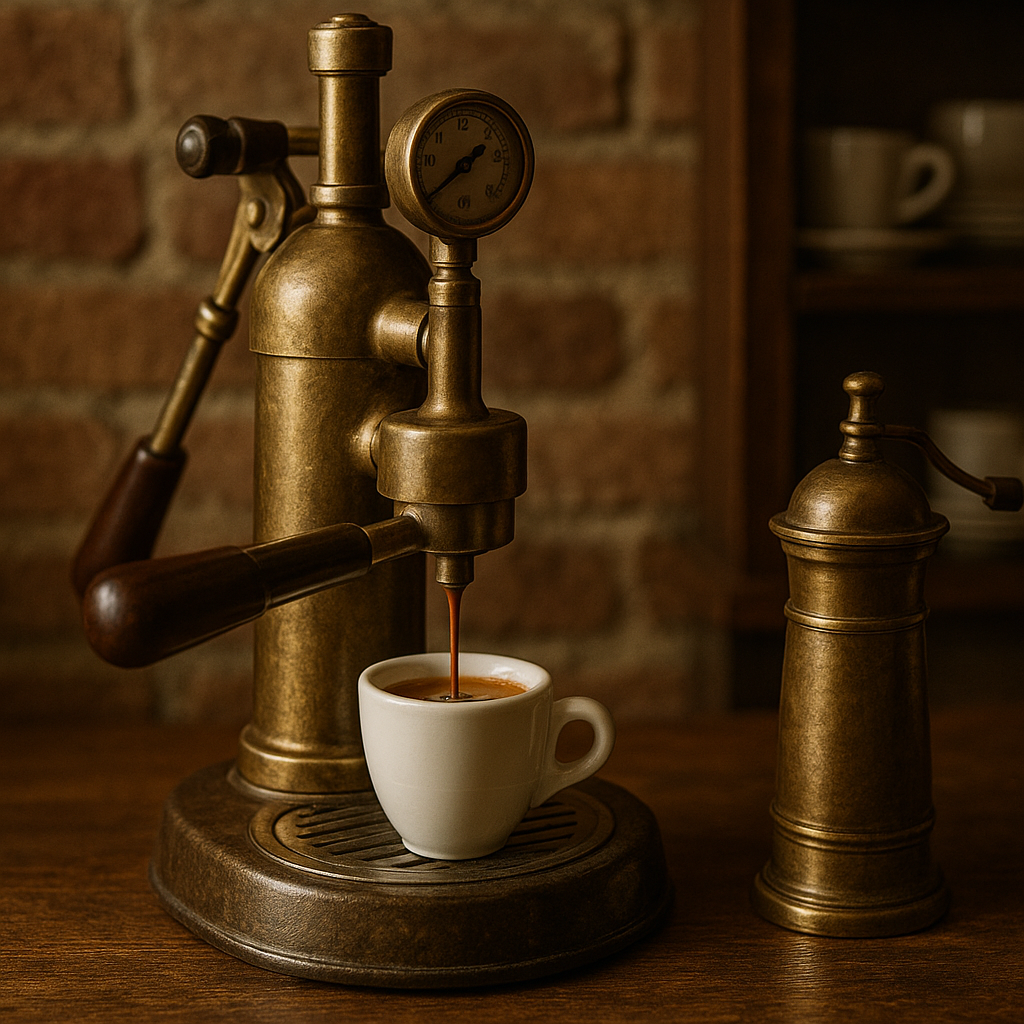
  • Achille Gaggia (1947) – Perhaps the most important breakthrough in espresso history, Gaggia introduced a lever-operated system that utilized a spring piston to generate 8-10 bars of pressure, creating what we now recognize as espresso with its signature crema.
  • Faema E61 (1961) – This innovation introduced a pump-driven espresso machine, improving consistency, ease of use, and water temperature control. The Faema E61 is considered the foundation for modern espresso machines.

The Evolution of Espresso Machines

Espresso machines have undergone significant transformations in terms of design, functionality, and affordability.

Early Espresso Machines (1900s-1950s)

  • Steam-powered, manual machines
  • Required skilled baristas to control the brewing process
  • Often inconsistent results due to overheating issues

Pump-Driven Espresso Machines (1960s-1980s)

  • Introduction of motorized pumps for better water pressure control
  • More consistent espresso quality
  • First semi-automatic machines were introduced, making the process easier

Super-Automatic and Smart Machines (1990s-Present)

  • Fully automatic machines that handle grinding, tamping, and extraction
  • Smart espresso machines with digital interfaces and precise temperature controls
  • High-end home machines that rival professional café setups

The Price Range of Espresso Machines

Espresso machines vary greatly in price depending on their features, build quality, and automation level.

  • Entry-Level Machines ($100-$500) – Basic semi-automatic machines, often with plastic components and pressurized baskets. Ideal for beginners but lack temperature and pressure consistency. Check out this blog on the best espresso machines under $500.
  • Mid-Range Machines ($500-$2,000) – Higher build quality, typically featuring stainless steel boilers, PID temperature control, and better pressure stability. Suitable for serious home baristas.
  • High-End Machines ($2,000-$10,000+) – Commercial-grade machines with dual boilers, precise pressure profiling, and fully customizable features. Used in professional cafés and by home espresso enthusiasts who want café-quality espresso at home. Check out this blog on the best espresso machines over $500 here.

What It Takes to Make a Good Espresso Shot

Making a great espresso shot requires precision, consistency, and quality ingredients. Here are the key factors:

1. Fresh, High-Quality Coffee Beans

  • Espresso requires freshly roasted beans (ideally used within 2-3 weeks of roasting)
  • Arabica beans provide smoother, more complex flavors, while Robusta adds crema and a stronger kick

2. Correct Grind Size

  • Espresso requires a fine grind—not as powdery as Turkish coffee but finer than drip coffee
  • Grind size affects extraction: too fine = over-extraction (bitter), too coarse = under-extraction (sour)

3. Proper Tamping Pressure

  • Grounds must be evenly compressed with 30 pounds of pressure to ensure uniform water flow
  • Uneven tamping leads to channeling, where water finds weak spots, creating an imbalanced shot

4. Water Temperature and Pressure

  • Ideal water temperature: 195-205°F (90-96°C)
  • Ideal pressure: 9 bars of pressure for optimal extraction

5. Correct Brew Time

  • Espresso should take 25-30 seconds to extract a 1-2 ounce (30-60 ml) shot
  • Timing impacts flavor: too fast = weak shot, too slow = over-extracted and bitter

The Importance of Grind Size and Its Impact on Taste

Grind size plays a crucial role in espresso extraction. A poorly adjusted grind can ruin the flavor, making it essential to dial in the right size.

  • Too Fine: Slows down extraction, leading to an overly bitter and burnt taste.
  • Too Coarse: Water flows too quickly, resulting in sour and underdeveloped flavors.
  • Just Right: Produces a balanced shot with a thick crema, full body, and rich flavor.

Baristas often adjust grind size based on humidity, bean freshness, and machine performance.


Essential Accessories for Espresso Making

Brewing great espresso requires more than just a machine. The right accessories can elevate the process.

1. Burr Grinder

  • Essential for achieving a consistent grind size
  • Flat burr grinders offer precision, while conical burr grinders are quieter and retain fewer grounds

2. Tamper

  • A weighted, ergonomic tamper ensures even compression of coffee grounds
  • Some machines come with cheap plastic tampers, but a high-quality metal tamper is recommended

3. Precision Scale

  • Used to measure coffee dose and shot output in grams
  • Ensures consistency in every shot

4. Distribution Tool

  • Helps evenly distribute coffee grounds in the portafilter before tamping

5. Bottomless Portafilter

  • Allows baristas to see extraction flaws and improve technique

6. Knock Box

  • A container used to dispose of used coffee pucks efficiently

7. Water Filtration System

  • Removes impurities, prevents scale buildup in machines, and improves coffee flavor

Conclusion

The journey of espresso has been one of constant innovation, from its invention in early 20th-century Italy to the cutting-edge machines available today. While espresso machines vary widely in price and features, the key to making great espresso remains the same: high-quality beans, precise grinding, proper tamping, and careful attention to brewing variables. Investing in the right accessories, such as a burr grinder and tamper, further enhances the quality of each shot. Whether you are an aspiring home barista or a café owner, mastering espresso is a rewarding pursuit that combines both science and art.

Back to Coffee and Espresso 101

Categories
Coffee

The Evolution of Coffee Brewing: From Ancient Methods to Modern Machines

Intro

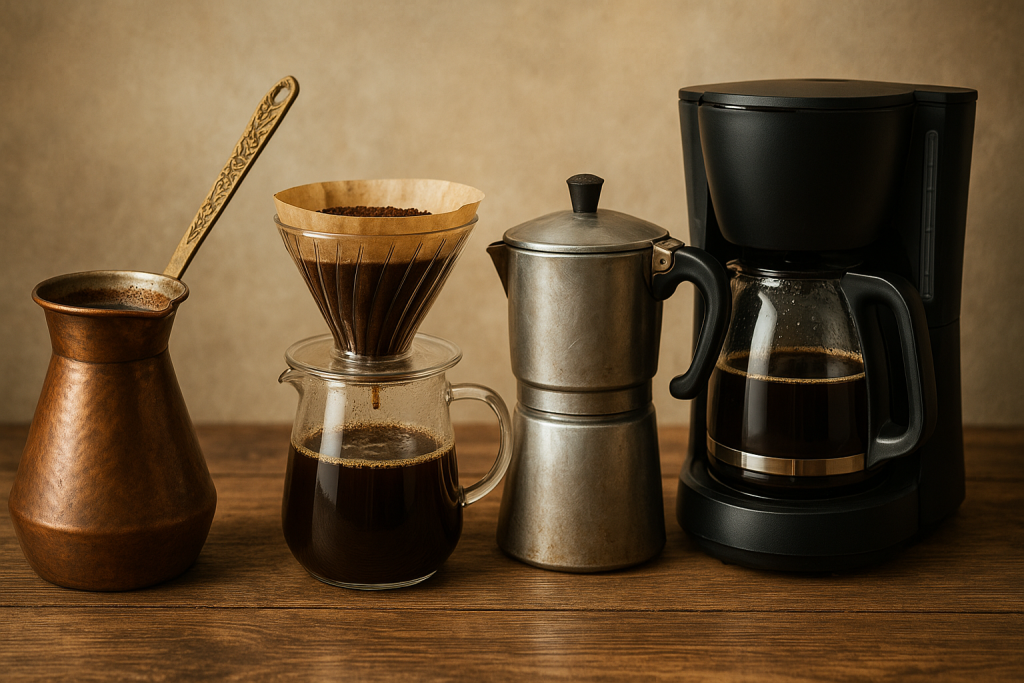
The art of making coffee has evolved significantly over centuries, transforming from rudimentary brewing techniques to the sophisticated machines we use today. Each method of coffee preparation has its own unique advantages, drawbacks, and impact on flavor. The quality of the water, the materials used in coffee machines, and even the type of filtration system can all influence the final cup. This article explores the history of coffee brewing, compares different methods, discusses potential health concerns with modern coffee makers, and identifies the best brewing technique for various preferences.


A Journey Through Time: The History of Coffee Brewing

Early Brewing Techniques

Before coffee was widely cultivated, early drinkers consumed coffee in its rawest form. The first known methods of brewing coffee date back over a thousand years.

  • The Ethiopian Method (9th Century): Ethiopian tribes reportedly crushed coffee beans, mixed them with animal fat, and consumed them as an energy-rich food rather than a beverage. This method provided a slow release of caffeine, which was ideal for long journeys and physical labor.
  • The Ottoman Turkish Method (15th Century): One of the earliest known methods of liquid coffee preparation involved finely ground coffee simmered in water with sugar and spices, creating a thick, sludgy drink known as Türk kahvesi. This method used a small metal pot called a cezve, which is still in use today. The result was a strong, unfiltered coffee with a layer of foam on top.
  • Arabic and Middle Eastern Coffee (16th Century): Coffeehouses flourished in the Ottoman Empire, popularizing the brewing method of boiling coffee grounds in water, known today as qahwa. These coffeehouses became centers for discussion, poetry, and political discourse, much like modern cafés.

The Rise of Filtered and Infused Coffee (17th-19th Century)

As coffee spread to Europe, brewing techniques became more refined.

  • French Press (1850s): A precursor to the modern French press was first introduced in France. The design evolved into a metal or glass carafe with a plunger that separates the grounds from the liquid, producing a rich, full-bodied coffee. This method retained the coffee’s natural oils, giving it a bold flavor and velvety mouthfeel.
  • Drip Brewing (1908): German housewife Melitta Bentz invented the first paper coffee filter, revolutionizing how coffee was brewed by eliminating sediment. This invention allowed for cleaner coffee with less bitterness, as the filter removed excess oils and fines.
  • Percolators (1800s-1950s): A staple in American households, percolators use continuous boiling to cycle water through coffee grounds, often resulting in over-extracted, bitter coffee. While nostalgic, this method fell out of favor as more precise brewing techniques emerged.

The Espresso Revolution (20th Century)

Espresso brewing was developed in Italy in the early 1900s, leading to the modern coffee culture we know today.

  • First Espresso Machine (1901): Luigi Bezzera invented the first espresso machine, using steam pressure to speed up the brewing process. However, the early designs often produced coffee that was too hot and bitter.
  • Pump-Driven Espresso Machine (1961): Ernesto Valente’s innovation of the Faema E61 introduced pump-driven machines, improving consistency and flavor. This invention laid the foundation for modern espresso technology, allowing for stable water pressure and temperature control.
  • Home Espresso Machines (1970s-Present): The rise of consumer espresso machines allowed people to craft professional-quality espresso at home. These machines now come in various forms, from semi-automatic to fully automatic, catering to different skill levels.

Modern Coffee Brewing Methods: Pros, Cons, and Health Considerations

Today, coffee can be brewed using a variety of techniques, each with unique characteristics.

Drip Coffee Makers

  • Pros: Easy to use, consistent results, and large batch capability.
  • Cons: Can burn coffee if left on a warming plate too long, limited control over extraction.
  • Health Concern: Many modern drip coffee makers contain plastic parts, which may leach chemicals like BPA when exposed to heat. Opt for stainless steel or glass carafes when possible.

French Press

  • Pros: Retains natural coffee oils for full-bodied flavor, simple design with no need for disposable filters.
  • Cons: Can leave sediment in the cup, requires more cleanup.
  • Health Concern: Some research suggests unfiltered coffee (like French press) may raise LDL cholesterol due to the presence of cafestol.

Pour-Over (Chemex, Hario V60, Kalita Wave)

  • Pros: Full control over brewing variables (temperature, bloom time, pour rate), results in a clean and flavorful cup.
  • Cons: Requires more time and precision, not ideal for large batches.
  • Health Concern: Generally safe, as it avoids plastic parts and uses paper filters to remove some cholesterol-raising compounds.

Espresso Machines

  • Pros: Produces concentrated coffee with rich crema, forms the base for many specialty drinks.
  • Cons: Expensive, requires skill and maintenance.
  • Health Concern: High-pressure extraction avoids excessive leaching of materials, but lower-end machines may contain plastic components in the water reservoir.

Single-Serve Pod Machines (Keurig, Nespresso)

  • Pros: Quick and convenient, minimal cleanup.
  • Cons: Expensive per cup, environmental concerns with plastic waste.
  • Health Concern: Some coffee pods contain plastic linings that can release chemicals when heated. Consider using compostable or stainless-steel refillable pods.

Cold Brew

  • Pros: Naturally sweet, low acidity, can be stored for days.
  • Cons: Long brewing time (12-24 hours), requires more coffee grounds.
  • Health Concern: Cold brew avoids high temperatures, reducing the risk of chemical leaching.

The Importance of Water Quality in Coffee Brewing

Water is a crucial factor in coffee brewing, as it makes up about 98% of a cup of coffee. The mineral content, pH level, and purity of water can significantly affect the flavor of the brew.

Ideal Water Characteristics for Coffee Brewing

  • Mineral Content: 150 ppm (parts per million) of total dissolved solids (TDS) for optimal extraction.
  • pH Level: Slightly acidic to neutral (6.5-7.5).
  • No Chlorine: Chlorinated water can impart off-flavors.
  • No Hard Water: Excess minerals (calcium, magnesium) can cause scale buildup in coffee machines and affect flavor.
  • Filtered Water: Using a charcoal filter or reverse osmosis system improves coffee flavor while preventing machine damage.

Choosing the Best Coffee Brewing Method for Your Needs

Each brewing method offers a unique experience, and the best choice depends on personal preference, budget, and lifestyle. By understanding the history, pros and cons, and health considerations of each technique, coffee lovers can make more informed decisions to enhance their daily cup.


Conclusion

The evolution of coffee brewing spans centuries, from simple boiling methods to sophisticated machines that offer precise control over extraction. While technology has improved convenience, traditional brewing methods remain cherished for their ability to highlight the intricate flavors of coffee. Regardless of the brewing method, using high-quality water and avoiding plastics in coffee makers can enhance the taste and health benefits of your brew. Whether you prefer the complexity of a pour-over, the robustness of espresso, or the smoothness of cold brew, the perfect cup of coffee is within reach.

Back to Coffee and Espresso 101

Categories
Espresso and Coffee

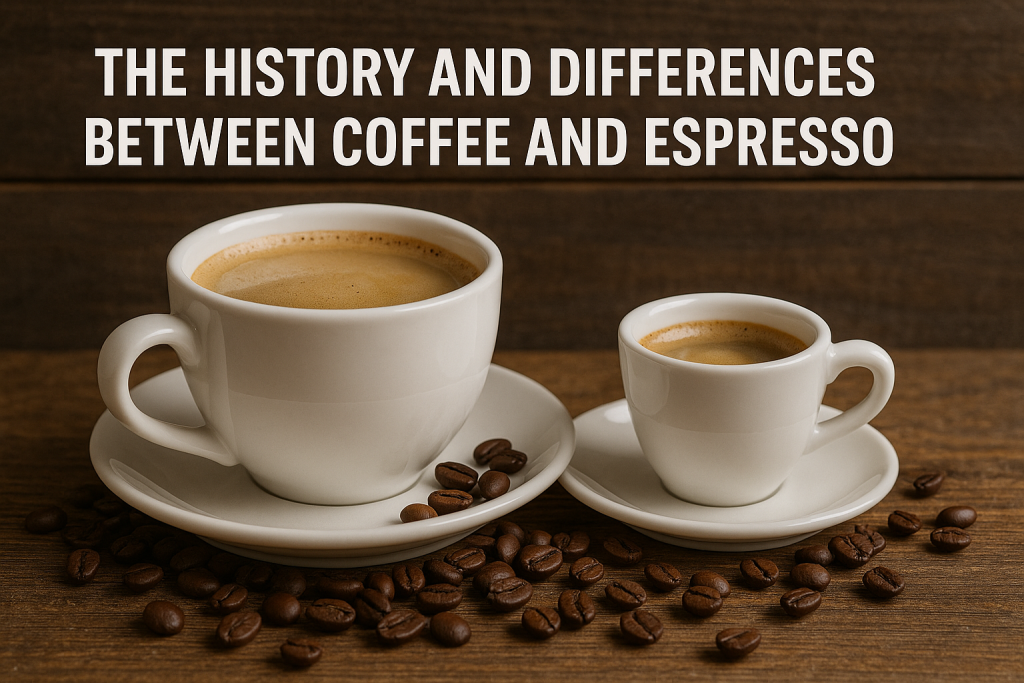
The History and Differences Between Coffee and Espresso

A little history

Coffee has been a cherished beverage for centuries, enjoyed by people worldwide for its rich flavors, stimulating effects, and cultural significance. Within the realm of coffee, espresso holds a special place as a distinct and concentrated form of the drink. While both beverages originate from the same coffee beans, they differ in their brewing methods, texture, flavor profiles, and cultural significance. Understanding the differences between coffee and espresso involves exploring their histories, preparation methods, roasting and grinding processes, and the factors that contribute to their unique flavors. This article will provide an in-depth guide to help consumers make informed choices about their coffee experience.


The Coffee Bean: The Foundation of Coffee and Espresso

Types of Coffee Beans

While coffee and espresso come from the same plant, not all coffee beans are created equal. There are four primary types of coffee beans grown around the world, but two are most commonly used:

  • Arabica (Coffea arabica): These beans account for approximately 60-70% of global coffee production. They are known for their smooth, complex flavors with subtle acidity and floral or fruity notes. Arabica beans are typically grown at higher altitudes and are more delicate, requiring specific climate conditions.
  • Robusta (Coffea canephora): These beans are bolder, more bitter, and have almost double the caffeine content of Arabica. They are often used in espresso blends to add body and crema. Robusta beans are hardier and can be grown at lower altitudes, making them more resistant to pests and diseases.
  • Liberica and Excelsa: These beans are less common and typically grown in small quantities in Africa and Asia. They have a unique, somewhat woody or smoky flavor and are not commonly used for espresso.

Where Coffee Beans Are Grown

Coffee is grown in over 70 countries along the “Coffee Belt,” a region between the Tropics of Cancer and Capricorn. Each region produces beans with unique flavor profiles due to variations in soil, climate, and altitude.

  • South America: Countries like Brazil and Colombia produce smooth, nutty, and chocolatey beans that are often used in both coffee and espresso blends.
  • Central America: Beans from Guatemala, Costa Rica, and Honduras tend to have bright acidity with fruity and caramel notes.
  • Africa: Ethiopian and Kenyan coffees are known for their floral, citrus, and berry-like flavors, often favored in specialty coffee.
  • Asia: Indonesian beans (Sumatra, Java) are earthy, full-bodied, and rich, making them ideal for dark roasts and espresso.

How Coffee Beans Are Harvested

There are two main methods of harvesting coffee cherries:

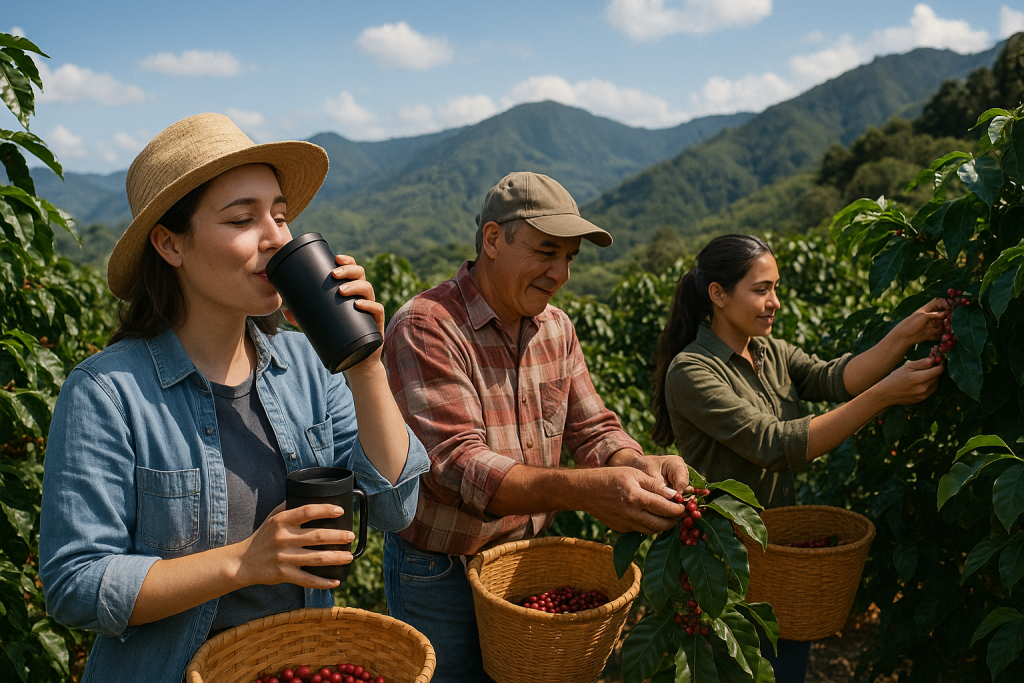
  • Hand-Picking: This labor-intensive method ensures only the ripest cherries are selected, leading to higher-quality coffee. It is the preferred method for specialty and Arabica coffees.
  • Mechanical Stripping: Machines harvest all cherries at once, leading to a mix of ripe and unripe beans. This method is common in large-scale Robusta production but may reduce quality.

Processing Methods: How Beans Become Coffee

Once harvested, coffee cherries must be processed to extract the beans. There are three main processing methods:

  • Washed (Wet) Process: The fruit is removed before drying, producing a cleaner and brighter flavor. This method is common for high-quality Arabica beans.
  • Natural (Dry) Process: The beans dry inside the cherry, imparting a sweet, fruity profile. This method is traditional in Ethiopia and Brazil.
  • Honey (Semi-Washed) Process: Some fruit remains on the bean during drying, creating a balance between bright and sweet flavors.

Which Process is Better?

Each method affects the final flavor of coffee. Washed coffees tend to be crisp and vibrant, while natural-processed beans develop richer, fruitier notes. Espresso blends often use washed beans for clarity or natural beans for deeper body.

Is One Healthier?

Coffee and espresso both provide health benefits, including antioxidants and metabolism-boosting properties. However, espresso has a higher concentration of antioxidants per ounce due to its extraction method, making it slightly richer in beneficial compounds.


Taste and Texture Differences

The differences in brewing methods and grind sizes result in distinct flavors and textures:

  • Coffee: Traditional brewed coffee has a lighter body, more nuanced flavors, and a wider range of acidity. It is generally smoother and can have bright, fruity, nutty, or chocolatey notes, depending on the bean origin and roast level.
  • Espresso: Espresso is more concentrated and intense, with a velvety texture. It has a characteristic crema—a golden layer of emulsified oils and carbon dioxide—that provides a smooth mouthfeel and slight sweetness.
  • Bitterness and Acidity: Espresso tends to be bolder and richer with less acidity due to the high-pressure extraction process. The short brew time prevents excessive breakdown of bitter compounds, leading to a more balanced but intense flavor. On the other hand, brewed coffee, especially light roasts, can be more acidic, highlighting floral and fruity notes.
  • Aftertaste: Espresso often leaves a lingering, slightly sweet and caramelized aftertaste due to the oils extracted during the pressurized brewing. Coffee, especially when filtered, has a cleaner finish, with aftertastes that vary from crisp and citrusy to deep and chocolatey.
  • Mouthfeel: Espresso has a heavier, syrupy texture due to its concentrated nature, while coffee is thinner and more refreshing, making it easier to sip in larger quantities.

The choice between coffee and espresso ultimately depends on personal preference—whether you enjoy a slow, flavorful sip of coffee or a quick, intense shot of espresso that delivers a bold caffeine kick.


Conclusion

Understanding the differences between coffee and espresso allows consumers to choose the right brewing method for their taste preferences. Coffee offers a wide range of flavors depending on the brew method and roast, while espresso provides a concentrated and intense coffee experience. Factors such as grind size, water quality, and roasting level all play critical roles in crafting the perfect cup. Whether you prefer a leisurely drip coffee or a quick, powerful espresso shot, both beverages offer rich traditions and endless possibilities for enjoyment.

Back to Coffee and Espresso 101

Categories
Coffee

Top 5 | Best Insulated Tumbler for Hot Drinks: Ultimate Guide

If you drink coffee, tea, or hot chocolate daily, the right insulated tumbler can completely change how long your drink stays enjoyable. This guide compares the best insulated tumblers for hot drinks based on real-world use, not lab specs or marketing claims.

How We Chose the Best Insulated Tumblers for Hot Drinks

Last updated January 2026 to reflect current models and lid designs.

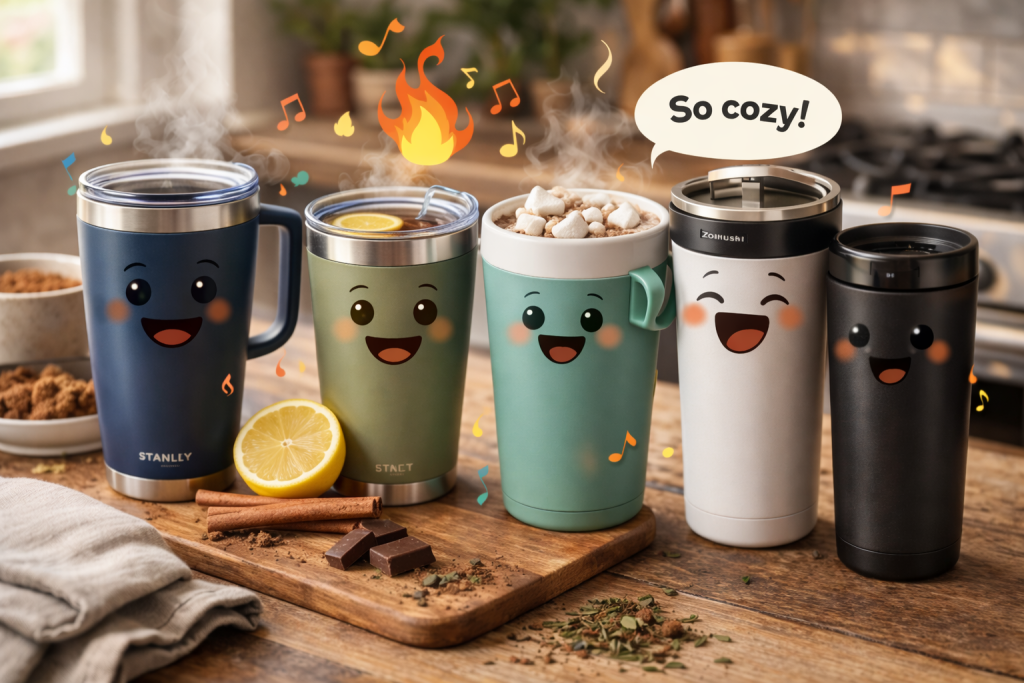
Five insulated tumblers filled with hot coffee on a cozy kitchen counter, showing steam rising from different lid styles to compare heat retention for hot drinks.

Not all insulated tumblers are designed with hot drinks in mind. Many popular models are optimized primarily for cold beverages, which introduces different tradeoffs when you’re drinking coffee, tea, or hot chocolate.

There’s nothing worse than taking a sip of your coffee only to find it’s already gone lukewarm. Whether you’re commuting, working at your desk, or spending time outdoors, a high-quality insulated tumbler should keep your drink hot and comfortable to sip for hours.

To build this list, we focused specifically on real-world hot drink performance, not marketing claims or popularity alone. Each tumbler was evaluated based on how it actually performs during everyday use.

Our Evaluation Criteria

Each tumbler was evaluated based on:

  • Heat retention over time
  • Lid design and comfort when sipping hot liquids
  • Spill resistance during everyday use
  • Cup-holder compatibility
  • Ease of cleaning and long-term maintenance
  • Overall value for the price

With so many options available, choosing the right tumbler can feel overwhelming. We analyzed top-rated insulated tumblers and broke down the strengths and tradeoffs of each to help you find the best option for how you drink hot beverages.


What Actually Matters When Choosing a Tumbler for Hot Drinks

Hot beverages place different demands on a tumbler than cold drinks. Choosing the wrong design can lead to burned lips, rapid heat loss, or constant spills.

If you’re deciding between hot and cold use cases, our Tumbler Buying Guide breaks down which features matter most for different drinking styles.

Here are the most important factors to consider when buying a tumbler specifically for hot drinks:

Heat Retention vs. Drinkability

Maximum insulation is useless if a tumbler is uncomfortable to drink from. The best hot-drink tumblers balance strong insulation with controlled airflow, allowing steam to escape without dumping heat too quickly.

Lid Design

  • Slide lids offer quick access but may allow heat to escape faster
  • Flip lids provide better heat retention and spill resistance
  • Straw lids are usually better suited for cold drinks unless specifically rated for hot liquids

Interior Materials

High-quality stainless steel interiors resist flavor transfer and won’t retain coffee oils over time, keeping drinks tasting clean day after day.

Understanding these details makes it easier to choose a tumbler that fits how you actually drink coffee or tea.


Disclosure: As an Amazon Associate, I earn from qualifying purchases. This post may contain affiliate links.


1. Simple Modern 40 oz Tumbler with Handle and Straw Lid

Check Amazon price here

The Simple Modern 40 oz tumbler has quickly become a consumer favorite, offering both functionality and style. It’s designed for those who want a large-capacity tumbler that maintains temperature for extended periods.

Key Features:

  • Double-Wall Vacuum Insulation – Keeps drinks hot for up to 8 hours and cold for up to 24 hours.
  • Lid Options – Comes with a straw lid and a leak-resistant flip lid for different drinking preferences.
  • Ergonomic Handle – Makes it easy to carry despite its large size.
  • Cup Holder Compatible – The tapered base fits in most standard car cup holders.

Pros: ✔ Great insulation for the price
✔ Comfortable handle for easy portability
✔ Large capacity is perfect for all-day hydration
✔ Aesthetic color options available

Cons: ✘ Too large for some smaller cup holders
✘ Straw lid is not completely leakproof

Real‑World Use Notes

The large capacity and strong insulation make this tumbler ideal for extended use, but it’s best suited for situations where refilling is inconvenient. Once filled, it stays hot for hours with minimal temperature drop.

Best For

This tumbler is a great choice for long workdays, road trips, and anyone who prefers fewer refills throughout the day.

Potential Tradeoffs

The larger size can feel bulky when full, and depending on the lid configuration, it may not be fully leak‑proof if tipped.


2. Stanley Quencher H2.0 Tumbler with Handle and Straw (30 oz)

Check Amazon price here

Stanley’s Quencher H2.0 tumbler is a favorite among coffee lovers and commuters. It offers premium insulation while maintaining a sleek and functional design.

Key Features:

  • Double-Wall Vacuum Insulation – Keeps drinks hot for up to 7 hours and cold for 11 hours.
  • FlowState Lid – Features a rotating cover with three positions: straw opening, full-cover top, and an open drink spout.
  • Stainless Steel Build – Designed for rugged durability.
  • Ergonomic Handle – Comfortable to hold and transport.
  • Fits Cup Holders – Despite its large size, it’s designed to fit in most car cup holders.

Pros: ✔ Sturdy and well-built for long-term use
✔ Great insulation for hot and cold drinks
✔ Easy-to-use lid with multiple drinking options
✔ Available in multiple colors

Cons: ✘ Lid may leak if not closed properly
✘ Some users report the handle makes it slightly bulky

Real‑World Use Notes

Stanley’s insulation performs well for hot beverages, but the lid design prioritizes convenience over complete sealing. It’s well suited for upright use rather than tossing into a bag.

Best For

Ideal for commuters, office workers, and daily drivers who want reliable heat retention with easy access while drinking.

Potential Tradeoffs

The handle adds comfort but increases overall size, and the lid can allow minor spills if knocked over.


3. YETI Rambler 30 oz Tumbler

Check Amazon price here

YETI is known for its top-tier insulation and durability. The 30 oz Rambler tumbler is designed to withstand the toughest conditions while keeping your coffee or tea hot for hours.

Key Features:

  • Double-Wall Vacuum Insulation – Keeps beverages hot for up to 8 hours.
  • MagSlider Lid – Uses magnetic technology to make opening and closing easy while reducing spills.
  • 18/8 Stainless Steel Construction – Resistant to dents, rust, and punctures.
  • No Sweat Exterior – Prevents condensation, keeping hands dry.
  • Dishwasher Safe – Unlike many tumblers, YETI is safe for dishwasher cleaning.

Pros: ✔ Unmatched durability
✔ Excellent insulation performance
✔ MagSlider Lid is convenient and easy to clean
✔ Available in multiple colors and finishes

Cons: ✘ Expensive compared to other options
✘ MagSlider Lid is not 100% leakproof

Real‑World Use Notes

The Rambler excels at consistent heat retention and durability. Its simpler lid design makes it dependable for both desk use and travel without unnecessary complexity.

Best For

This is a strong option for users who want premium build quality and dependable performance without extra features.

Potential Tradeoffs

The higher price point may not appeal to budget shoppers, and accessories are often sold separately.


4. Owala SmoothSip Slider Insulated Stainless Steel Coffee Tumbler (12 oz)

Check Amazon price here

The Owala SmoothSip Slider is designed specifically for coffee enthusiasts who want a smaller, travel-friendly tumbler that keeps their drinks hot for extended periods.

Key Features:

  • Triple-Layered Insulation – Maintains drink temperature for up to 6 hours.
  • Sliding Lid – Easy to use with one hand, making it perfect for driving or multitasking.
  • Compact 12 oz Size – Ideal for coffee drinkers who don’t need a massive tumbler.
  • Durable Stainless Steel Body – Withstands daily use.

Pros: ✔ Small and portable for easy carrying
✔ Great for people who prefer smaller servings
✔ Leak-resistant sliding lid
✔ Stylish design with multiple colors

Cons: ✘ Limited capacity—requires frequent refills
✘ Insulation is not as strong as larger tumblers

Real‑World Use Notes

The SmoothSip lid makes hot drinks comfortable to sip without splashing or excessive heat release. It’s especially well suited for controlled, shorter drinking sessions.

Best For

Perfect for espresso, tea, or smaller servings where portability and ease of sipping matter more than capacity.

Potential Tradeoffs

Smaller volume means more frequent refills, especially for heavy coffee drinkers.


5. BrüMate Müv 25 oz Mug

Check Amazon price here

If you need a truly leakproof tumbler with excellent insulation, the BrüMate Müv 25 oz Mug is an outstanding choice.

Key Features:

  • Triple-Insulated Technology – Keeps drinks hot for up to 12 hours and cold for 24 hours.
  • OctaLock Threading System – Ensures a 100% leakproof seal.
  • Comfortable Handle – Makes carrying easy.
  • Cup Holder Compatible – Fits in most standard holders.

Pros: ✔ Superior heat retention
✔ Completely leakproof lid
✔ Stylish and ergonomic design
✔ Durable stainless steel construction

Cons: ✘ More expensive than competitors
✘ Some users find it slightly bulky

Real‑World Use Notes

This tumbler balances insulation and portability well, making it versatile for both home and travel use. Heat retention is solid without feeling overbuilt.

Best For

A good option for users who want a stylish, everyday tumbler that transitions easily between environments.

Potential Tradeoffs

It may not keep drinks hot as long as larger or heavier insulated models.


Comparison Table: Best Insulated Tumblers for Hot Drinks

If you’re deciding between two or three options above, this quick comparison makes it easier to spot the differences that actually matter for hot drinks, like lid style, capacity, and heat retention.

TumblerCapacityLid StyleHeat RetentionCup Holder FitBest For
Simple Modern 40 oz40 ozStraw / FlipExcellent⚠️ LargeAll-day hot drinks
Stanley Quencher30 ozStrawVery Good✅ YesCommuting
YETI Rambler30 ozSliderExcellent✅ YesDurability
Owala SmoothSip12 ozSmoothSipGood✅ YesEspresso & tea
BrüMate Müv25 ozFlipVery Good✅ YesEveryday use

Quick Comparison: Which Tumbler Is Right for You?

If you’re choosing between several options above, this quick guide can help narrow things down:

  • Best for all‑day hot coffee: Larger‑capacity tumblers with strong insulation
  • Best for commuting: Tumblers with secure lids and cup‑holder compatibility
  • Best for desk or home use: Easy‑sipping lids with moderate insulation
  • Best for small servings: Compact tumblers that heat quickly and cool predictably

Choosing based on how you’ll use the tumbler often leads to better long‑term satisfaction than choosing by brand alone.

How to Keep Your Coffee Hot Longer in Any Tumbler

Even the best insulated tumbler performs better with proper use. A few small habits can noticeably extend heat retention.

Simple tips that actually work:

  • Pre‑heat your tumbler with hot water for 1–2 minutes before filling
  • Fully seat or close the lid after pouring
  • Avoid repeatedly removing the lid
  • Clean lids and seals regularly to maintain a proper fit

These steps help maximize performance regardless of which tumbler you choose

Final Thoughts: Which Tumbler is Right for You?

The best insulated tumbler is the one that fits how you actually drink coffee day to day.

  • For all-day hydration: Go with the Simple Modern 40 oz or Stanley Quencher 30 oz.
  • For premium durability and insulation: The YETI Rambler 30 oz is a great investment.
  • For a compact coffee tumbler: The Owala SmoothSip 12 oz is ideal.
  • For maximum heat retention and leakproof design: The BrüMate Müv 25 oz is the best option.

Each of these tumblers excels in its own way, so consider what features matter most to you when making your decision. No matter which one you choose, you’ll be able to enjoy your hot drinks for longer! Happy sipping!

Frequently Asked Questions About Insulated Tumblers for Hot Drinks

Do insulated tumblers work better for hot or cold drinks?
They work well for both, but lid design plays a bigger role with hot beverages.

Are straw lids safe for hot drinks?
Most straw lids are not recommended for hot liquids unless specifically designed for them.

Why does coffee sometimes taste different in stainless tumblers?
Coffee oils can build up over time. Regular deep cleaning prevents lingering flavors.

Head back to the Tumbler Buying Guide