Categories
Uncategorized

Brita Faucet Filter vs PUR: Which Is Easier to Use?

Faucet-mounted filters are a popular choice for people who want cleaner drinking water without investing in under-sink or countertop systems. Two of the most recognized brands in this category are Brita and PUR. Both offer compact, easy-to-install systems that attach directly to your kitchen faucet and provide on-demand filtered water. But which one is actually easier to use on a day-to-day basis?

In this guide, we compare the Brita and PUR faucet filters side by side—breaking down how they stack up when it comes to installation, usability, filter changes, taste, maintenance, and price. Whether you’re choosing your first filter or upgrading from a basic model, this article will help you make the right call for your kitchen.

Disclosure: As an Amazon Associate, we earn from qualifying purchases. This post may contain affiliate links that help support our content at no additional cost to you.


🔧 Installation Comparison

Brita Faucet Mount System (Basic Model)

Amazon Rating: 4.5 out of 5 stars
View on Amazon

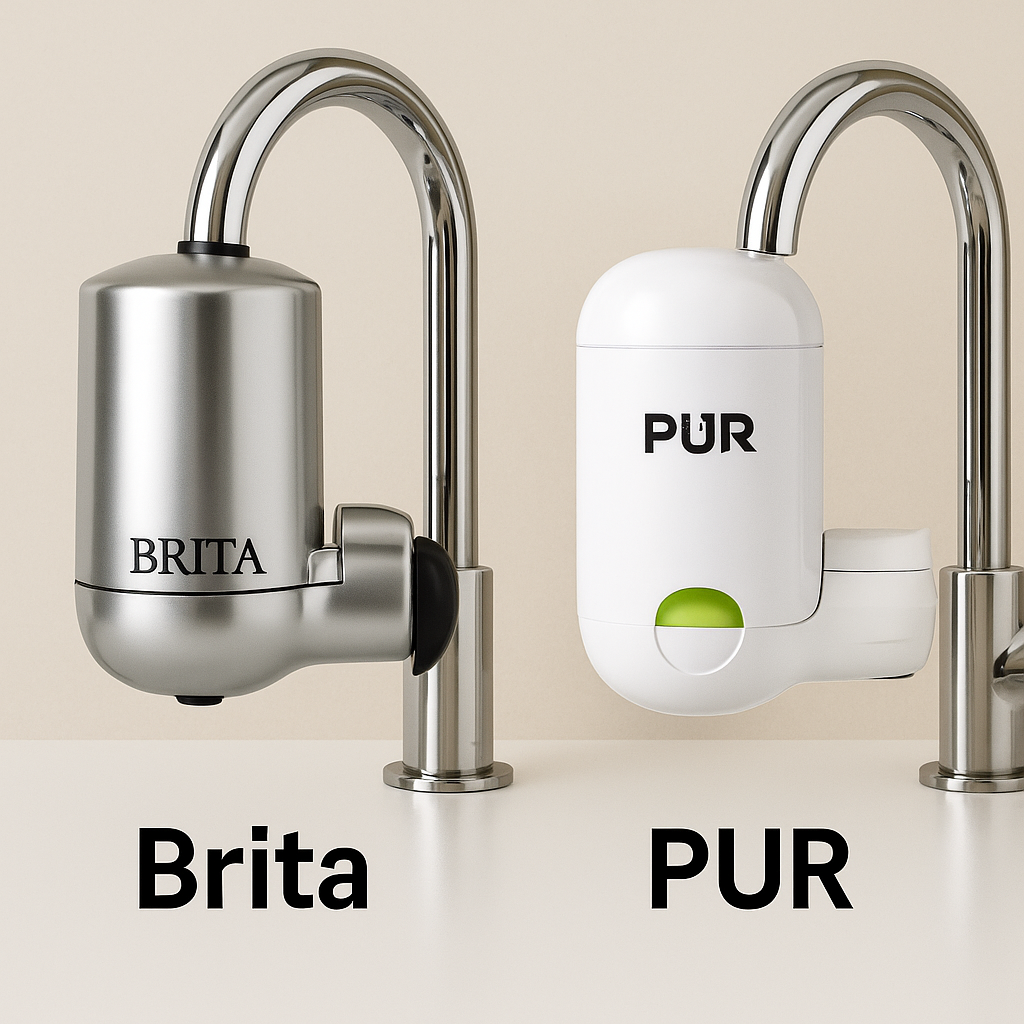
Brita’s system is designed for users who want a no-fuss installation. The faucet mount comes with multiple adapters and fits most standard faucets without the need for tools. The included instruction guide is straightforward, making the entire setup process intuitive—even for first-timers.

Once you click the unit into place, it’s securely fastened and ready to use in under five minutes. A simple switch on the side allows you to toggle between filtered and unfiltered water, making it a great solution for everyday kitchen use. The unit is relatively compact and doesn’t obstruct other sink functions. However, those with non-standard or pull-down faucets may face compatibility issues. The instructions are clearly written, and the filter clicks into place with a reassuring snap. One downside is that users with uniquely shaped or spray-type faucets may need extra adapters or find compatibility tricky.

PUR PLUS Faucet Mount Filter (FM-3700B)

Amazon Rating: 4.6 out of 5 stars
View on Amazon

The PUR PLUS system features a similarly tool-free installation process and includes a wide array of adapters for different faucet styles. The unit is a bit larger than Brita’s, which may pose clearance issues in tight sink spaces, but the added size translates to more robust construction and a stylish chrome finish.

Installing the unit is simple once the correct adapter is in place, though it may require a bit more force to fully secure. Once attached, it provides a tight seal that minimizes leaks—assuming the adapter is properly fitted. The toggle switch between filtered and tap water is responsive, and users appreciate the solid build quality. Like Brita, compatibility with sprayer-style faucets is limited, so checking your faucet type beforehand is recommended. The unit feels sturdy and the chrome finish looks sleek. However, the size may interfere with low-clearance sink spaces. Once installed properly, switching between filtered and unfiltered water is simple.

Installation Winner: Brita — Easier and quicker for most standard faucets.


💧 Filtration & Taste Performance

Brita

Brita’s carbon block filter is designed to improve tap water by reducing common contaminants such as chlorine (for taste and odor), lead, asbestos, and some particulates. It meets NSF/ANSI Standards 42 and 53, which cover aesthetic effects and health effects respectively. While it doesn’t filter as broad a range as PUR, it still handles the major culprits that affect taste and health.

Users report a noticeable improvement in water flavor, and it’s especially effective at neutralizing chlorine taste. The flow rate is steady, though it might take a moment to kick in after toggling to filtered mode. One limitation is that Brita’s filter isn’t certified for removing some emerging contaminants like pharmaceuticals.

PUR

The PUR PLUS uses a two-stage filtration system that combines activated carbon with ion exchange. This setup allows it to tackle over 70 contaminants, including lead, mercury, chlorine, industrial pollutants, pesticides, and certain pharmaceuticals. It meets NSF/ANSI Standards 42, 53, and 401, placing it among the most thorough filters in this category.

Taste tests regularly place PUR ahead of the competition. Water comes out crisp, clear, and free of odors. The added filtration, however, may slightly reduce flow rate, and the filter can clog prematurely if local water is especially dirty. Despite this, PUR remains a top pick for households with serious water quality concerns.

PUR’s MineralClear filter uses both activated carbon and ion exchange to reduce over 70 contaminants, including lead, mercury, pesticides, and more. It’s certified under NSF standards 42, 53, and 401—offering a broader scope of protection.

Taste results are among the best in its class, and the filter has been widely praised for removing unpleasant odors and flavors.

Filtration Winner: PUR — Filters more contaminants and produces cleaner-tasting water.


🔁 Filter Replacement & Maintenance

Brita

Replacing a Brita faucet filter is a simple, quick process that doesn’t require tools or guesswork. The unit has a built-in indicator that uses a light or calendar wheel to signal when a filter change is due, generally every 100 gallons or about every 3–4 months depending on usage.

Filters are readily available and competitively priced. Brita also offers multi-pack discounts which further reduce long-term cost. One downside is that the filter status indicator isn’t always perfectly accurate, and some users may forget to reset it after changing filters.

PUR

PUR’s filter changes require a little more effort and precision. The cartridge fits snugly, but aligning it can be tricky the first few times. An LED indicator offers a clearer, more automated alert system that blinks red when a change is needed—adding convenience for busy users.

The filters are effective but cost slightly more than Brita’s. Additionally, some users have reported the indicator malfunctioning over time, requiring manual tracking of replacement schedules. Overall, the system is manageable, but not quite as beginner-friendly as Brita’s.

PUR filters are slightly trickier to replace, requiring a little more force and alignment. The indicator light is more advanced and blinks when the filter is nearing end-of-life.

However, PUR’s filters are typically a bit more expensive than Brita’s.

Maintenance Winner: Brita — Easier to replace and more budget-friendly.


📊 Head-to-Head Comparison Table

FeatureBrita Faucet FilterPUR PLUS Faucet Filter
InstallationVery easy, 1-click designSimple but slightly bulkier
Filtration StandardsNSF 42, 53NSF 42, 53, 401
Contaminants Removed60+70+
Filter Change IndicatorYesYes (LED light)
Filter Life100 gallons100 gallons
Replacement CostLowerHigher
Taste ImprovementGoodExcellent
Size & DesignCompactLarger, more robust

🏆 Best For…


Final Thoughts

Both the Brita and PUR faucet-mounted filters offer impressive upgrades over unfiltered tap water—but they serve slightly different audiences. Brita is best suited for those who want a compact, affordable, and user-friendly solution. It’s quick to install, simple to maintain, and delivers noticeable improvements in water taste.

On the other hand, PUR is ideal for users who want the most thorough filtration and don’t mind a slightly bulkier unit. With broader NSF certifications and a more advanced filter system, PUR offers higher performance—especially for households concerned about multiple contaminants.

In the end, you can’t go wrong with either choice. Choose Brita for simplicity and savings. Choose PUR if filtration performance is your top priority.

Head back to Faucet-Mounted Filters
Categories
Uncategorized

Best Faucet-Mount Filters for Easy Tap Water Purification

Faucet-mounted filters offer one of the simplest and most convenient ways to purify your tap water. With no need for complex installation or plumbing changes, these devices screw directly onto most standard kitchen faucets and provide filtered water with the flip of a switch. Whether you’re tired of the chlorine taste or concerned about lead and other contaminants, a faucet filter can deliver cleaner, better-tasting water instantly—and at a fraction of the cost of bottled water.

In this guide, we’ll break down the top-performing faucet-mounted filters based on filtration capabilities, ease of use, installation process, and long-term maintenance. You’ll also find pros and cons for each product, a comparison table, and specific category winners to help you make the best choice for your household.

Disclosure: As an Amazon Associate, we earn from qualifying purchases. This post may contain affiliate links that help support our content at no additional cost to you.


🥇 PUR PLUS Faucet Mount Water Filtration System

Amazon Rating: 4.6 out of 5 stars
View on Amazon

The PUR PLUS faucet filter is one of the most popular and trusted models on the market. It attaches easily to standard faucets and includes a MineralClear filter that uses activated carbon and ion exchange to reduce over 70 contaminants—including lead, chlorine, mercury, and certain pesticides. It’s NSF certified for standards 42, 53, and 401.

The system has a sleek chrome finish, a simple on/off switch, and a filter change indicator light. Installation takes minutes and requires no tools. Most users report improved taste and odor immediately. The filter lasts for up to 100 gallons, and replacements are widely available.

Pros:

  • Reduces 70+ contaminants
  • NSF certified
  • Includes filter change light
  • Easy, tool-free installation

Cons:

  • Can feel bulky on smaller faucets
  • Flow rate slows as filter ages

🥈 Brita Faucet Mount System

Amazon Rating: 4.5 out of 5 stars
View on Amazon

Brita’s faucet filter is a compact and cost-effective solution for basic water improvement. It attaches directly to most standard faucets (adapter included) and uses a carbon block filter to reduce chlorine taste and odor, lead, asbestos, and particulates. It’s NSF certified for standards 42 and 53.

The Brita filter features a convenient one-click installation, a filter status indicator, and an efficient switch for toggling between filtered and unfiltered water. Each filter lasts up to 100 gallons. It’s a great choice for households looking for better taste and basic safety without overpaying.

Pros:

  • Easy to attach and remove
  • Slim, compact design
  • Affordable filters
  • Improves taste significantly

Cons:

  • Fewer contaminants removed compared to PUR
  • Indicator can be inconsistent

🥉 Waterdrop WD-FC-01 Faucet Filter System

Amazon Rating: 4.4 out of 5 stars
View on Amazon

Waterdrop’s faucet system is a well-reviewed and affordable unit that balances good filtration with a budget-friendly price. It’s compatible with standard faucets and includes multiple adapters. Its carbon fiber filter removes chlorine, rust, sediment, and bad taste while retaining beneficial minerals.

Installation is simple, and the filter capacity is around 320 gallons—much higher than typical faucet filters. This makes it ideal for families that use a lot of filtered water daily. It also has a space-saving design that won’t overwhelm your sink.

Pros:

  • Great value for high capacity
  • Long-lasting filters
  • Preserves healthy minerals
  • Easy to switch between filter modes

Cons:

  • Not NSF certified for lead
  • Fewer advanced contaminant claims

Culligan FM-25 Advanced Faucet Filter

Amazon Rating: 4.3 out of 5 stars
View on Amazon

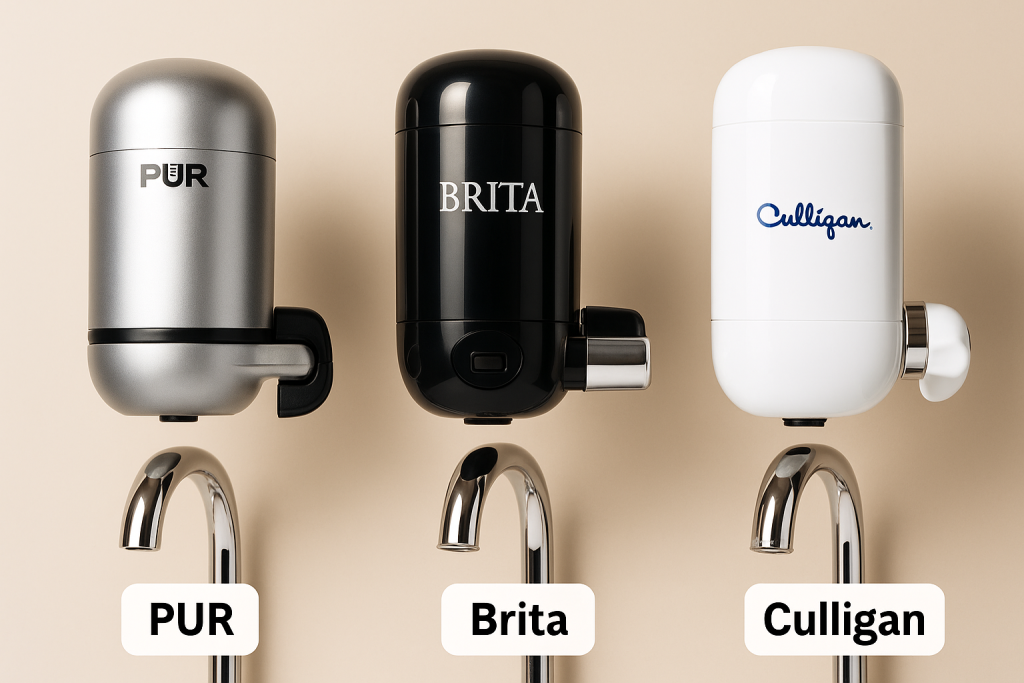
Culligan’s FM-25 is a durable, metal-bodied faucet filter that focuses on improving water taste and clarity. It reduces chlorine, lead, and particulates, and is certified under NSF standards 42 and 53. The installation is straightforward, using a twist-on design that fits most standard kitchen faucets.

The filter capacity is 200 gallons—twice that of many competitors—and the polished chrome finish adds a premium touch. It’s especially good for those who want a more durable option that doesn’t feel plastic-heavy.

Pros:

  • Sturdy metal construction
  • Long filter life
  • NSF certified
  • Easy installation

Cons:

  • Slightly heavier than plastic models
  • No filter change indicator

Instapure F8 Complete Faucet Filtration System

Amazon Rating: 4.2 out of 5 stars
View on Amazon

Instapure’s F8 system offers basic but effective filtration at a budget price. It reduces chlorine, sediment, and taste/odor issues with its carbon filter and is NSF certified for standards 42 and 53. It features an easy-twist installation and a straightforward toggle switch to switch between filtered and unfiltered water.

While it doesn’t offer advanced filtration like PUR or Waterdrop, it’s reliable for day-to-day taste improvement. The filters last for around 100 gallons, and the design is lightweight and unobtrusive.

Pros:

  • Budget-friendly
  • NSF certified
  • Compact and lightweight

Cons:

  • Limited contaminant reduction
  • No indicator or advanced features

📊 Comparison Table

BrandContaminants RemovedNSF CertifiedFilter LifeIndicator LightFinish
PUR PLUS70+Yes100 galYesChrome/Black/Stainless/Wite/Brass/Metallic Grey
Brita60+Yes100 galYesWhite/Chrome
WaterdropBasic (Chlorine, etc.)No320 galNoWhite
Culligan60+Yes200 galNoChrome/White
InstapureBasicYes100 galNoWhite/Chrome

🏆 Best Picks by Category


Final Thoughts

Faucet-mounted filters are a smart and convenient way to upgrade your tap water without investing in under-sink or countertop systems. They require minimal installation effort, are easy to maintain, and deliver an instant improvement in both taste and safety. Whether you’re renting, short on space, or simply looking for a low-maintenance option, faucet filters provide an excellent balance of affordability and effectiveness.

Each model on this list brings something different to the table. PUR PLUS is ideal for users who want the most thorough filtration with NSF certification across multiple standards. Brita is a well-rounded choice for ease of use and filter accessibility. Waterdrop excels in filter longevity, making it great for high-use households, while Culligan offers a more rugged, long-lasting build for those who value durability. Instapure rounds things out as a solid entry-level pick that covers the basics without breaking the bank.

Ultimately, the best faucet-mounted filter for your home depends on your priorities—whether it’s contaminant removal, filter life, or overall cost. With the right model, you’ll enjoy fresher, safer water straight from your kitchen tap every day. Use the insights in this guide to choose confidently and drink better, starting now. to upgrade your tap water without investing in under-sink or countertop systems. PUR and Brita lead the pack in ease of use and contaminant removal, while Waterdrop and Instapure offer impressive value for cost-conscious buyers. Culligan, with its metal body and extended filter life, strikes a balance between durability and simplicity.

If you’re looking for cleaner, better-tasting water with minimal installation effort, any of these filters can do the job. Choose based on your top priority—whether that’s removing the most contaminants, saving money, or getting a sleek, space-saving design—and enjoy fresher water with every turn of the tap.

Head back to Faucet-Mounted Filters

Categories
Uncategorized

Faucet-Mounted Filters: Tap Water Purification Made Easy

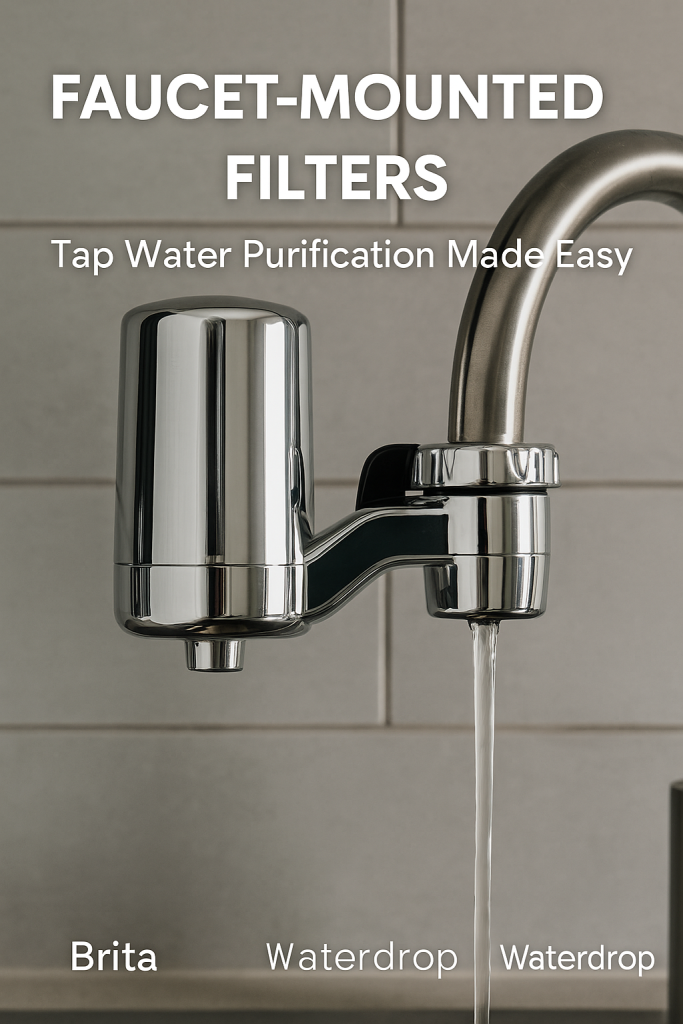
Faucet-mounted filters are one of the fastest and easiest ways to improve the quality of your drinking water—no tools, no plumbing, and no bulky equipment. These compact devices screw directly onto your kitchen faucet, providing filtered water on demand with a simple flip of a switch. Whether you’re concerned about chlorine, lead, or odd tastes and smells, a faucet filter can offer an immediate improvement without taking up counter or fridge space.

This landing page collects our best articles on faucet-mounted water filters, covering top product recommendations, usability comparisons, and easy-to-follow installation instructions. Whether you’re shopping for your first filter or looking to upgrade, you’ll find everything you need to make an informed choice.

Disclosure: As an Amazon Associate, we earn from qualifying purchases. This post may contain affiliate links that help support our content at no additional cost to you.


🔍 Explore the Faucet Filter Series

Best Faucet-Mount Filters for Easy Tap Water Purification
Discover the top-rated faucet-mounted water filters for removing chlorine, lead, and bad taste. We break down which models are easiest to install, switch between modes, and keep maintained.

Brita Faucet Filter vs PUR: Which Is Easier to Use?

Side-by-side comparison of the most popular brands. We examine usability, filtration performance, and the cost and availability of replacement cartridges.


Why Choose a Faucet-Mounted Filter?

Faucet filters are ideal for renters, apartments, or homes where under-sink space is limited. They’re affordable, require no permanent changes, and offer an on-demand alternative to bottled water. Some even include indicators to let you know when it’s time to change the filter. If convenience, affordability, and cleaner tap water are your priorities, a faucet-mounted filter is a strong choice.

Explore the articles above to learn which models are worth your money, how to install them easily, and what to expect from day-to-day use.

Head back to Water Filtration Hub

Categories
Uncategorized

How Long Do Pitcher Filters Really Last?
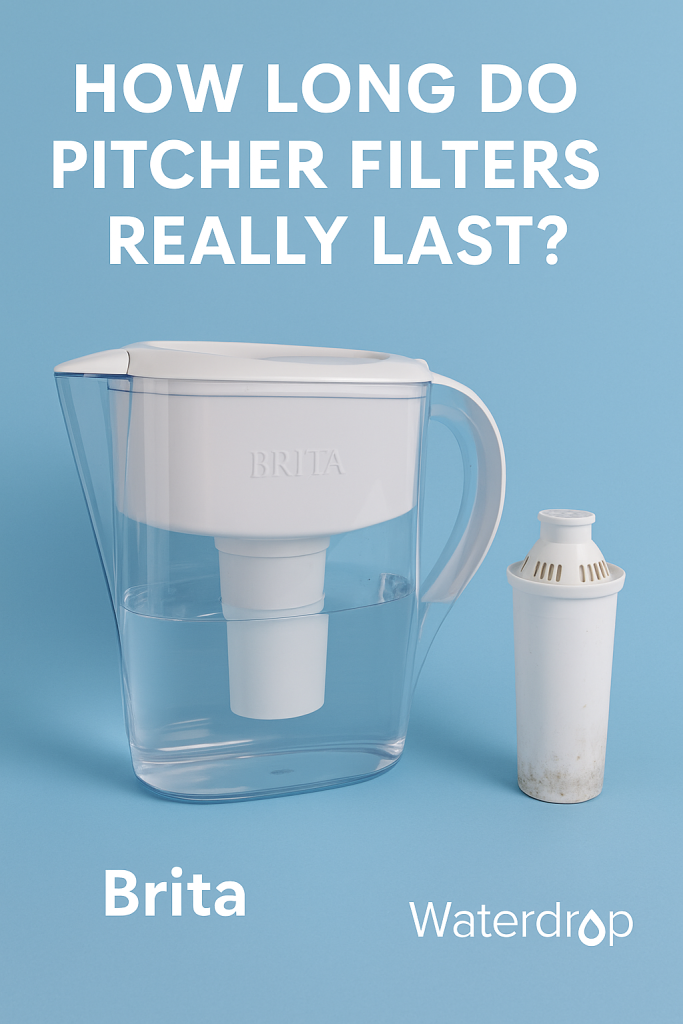
Water filter pitchers offer a simple and affordable solution to improving the taste and safety of your drinking water. But one of the biggest variables in maintaining their effectiveness is how often you replace the filter. Manufacturers often advertise impressive gallon capacities, but these figures are based on ideal lab conditions—not everyday use. In the real world, factors like water hardness, daily usage, and the presence of sediment or chlorine can all shorten a filter’s life.

Knowing when to change your filter isn’t just about taste—it can directly affect water quality and your family’s health. Replacing filters too early can waste money, while waiting too long can mean diminished performance. Thankfully, there are cost-effective off-brand options that can help you maintain your filtration routine without overspending.
In this article, we’ll break down the real-world lifespan of filters from Brita, PUR, and ZeroWater, along with reliable, lower-cost alternatives for each. We’ll also cover how to tell when a filter needs changing and whether off-brand replacements are worth considering., along with reliable, lower-cost alternatives for each. We’ll also cover how to tell when a filter needs changing and whether off-brand replacements are worth considering.

Disclosure: As an Amazon Associate, we earn from qualifying purchases. This post may contain affiliate links that help support our content at no additional cost to you.


🧼 How Long Do OEM Filters Last?

🔹 Brita Longlast+ Filter

Manufacturer Claim: Up to 120 gallons or 6 months
Real-World Average: 2–4 months for most users
Amazon Rating: 4.7 out of 5 stars
View on Amazon

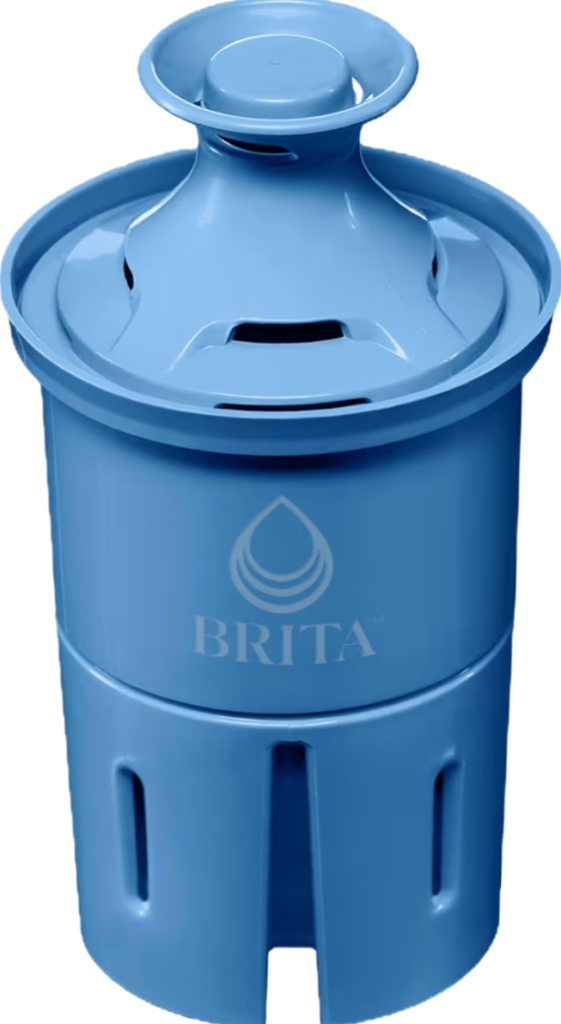
The Brita Longlast+ filter is designed to handle heavy-duty filtration tasks like lead, chlorine, cadmium, and benzene. It features a carbon block design that captures fine particulate matter while reducing odor and improving taste. Its main appeal is the long filter life—up to 120 gallons—which is roughly triple that of standard Brita filters. However, user experiences vary: households with moderately hard or heavily chlorinated water often find the filter starts slowing down after 2–4 months. Flow rate tends to diminish as the filter accumulates contaminants. That said, when maintained properly and not overused, the Longlast+ delivers consistent water quality and peace of mind. It’s a favorite for users looking for fewer replacements and solid performance from a trusted brand.

Pros:

  • High filtration capacity
  • NSF certified for lead removal
  • Long shelf life

Cons:

  • Slower flow as filter ages
  • Pricey per unit

✅ Recommended Alternative:

Amazon Basics Replacement Filters

Amazon Rating: 4.6 out of 5 stars
View on Amazon

Amazon Basics Replacement Filters are designed to be compatible with Brita pitchers that use the Longlast and Standard filters. These filters reduce chlorine taste and odor and provide a similar flow rate and taste improvement to OEM filters at a lower price point. While they don’t carry NSF certification for lead reduction like Brita’s Longlast+, they’re widely praised for reliable performance and ease of use. Many users report no leakage issues, and the filter installation is seamless with most Brita pitcher models. Each filter is rated for around 40 gallons, which means more frequent replacements—but the lower cost offsets that. These filters are a smart, budget-friendly pick for casual users who prioritize taste over advanced filtration.

Pros:**

  • Lower cost per filter (when buying 3 or more)
  • Solid taste improvement
  • Compatible with Brita

Cons:

  • Not NSF certified
  • Slightly shorter lifespan (~80 gallons)

🔹 PUR Water Pitcher Filter

Manufacturer Claim: Up to 40 gallons or 2 months
Real-World Average: 1–2 months
Amazon Rating: 4.6 out of 5 stars
View on Amazon

The PUR Faster Pitcher Replacement Filter (CRF950Z) is the brand’s newer lead-reduction filter designed for improved flow rate and consistent contaminant removal. It is NSF certified to reduce over 20 contaminants including 99% of lead, chlorine, mercury, and some industrial pollutants. This model is compatible with all PUR pitcher systems and is a solid upgrade from the older RF3375. While PUR claims a 40-gallon lifespan, real-world results often show a range of 25–35 gallons depending on water quality. The upgraded flow rate is noticeable and appreciated by users who found earlier filters too slow. Installation is easy, though hard water can still reduce its effective life. This filter is a dependable option for households that want affordable, certified protection against common tap water contaminants.

Pros:

  • Strong contaminant reduction
  • NSF certified
  • Good taste improvement

Cons:

  • Shorter lifespan than Brita
  • Can clog easily in hard water areas

✅ Recommended Alternative:

Fil-Fresh Replacement Filters for PUR Pitchers

Amazon Rating: 4.6 out of 5 stars
View on Amazon

Fil-Fresh replacement filters are designed to fit all PUR pitcher and dispenser systems that use the CRF950Z filter model. These filters aim to replicate the taste improvement and chlorine reduction of OEM PUR filters at a lower price. While they are not NSF certified for lead reduction, they are well-reviewed by users for flavor, flow rate, and ease of installation. Each filter is rated for 40 gallons, with performance depending on local water conditions. They also come in multi-packs, offering greater cost efficiency for families who go through filters quickly. Many users have reported that the Fil-Fresh filters fit snugly and function as expected in both older and newer PUR pitchers. For budget-conscious consumers, they’re a practical alternative to keep clean water flowing without overspending.

Pros:

  • Fits all PUR pitcher models
  • Budget-friendly multi-pack availability
  • Strong user reviews for taste and ease of use

Cons:

  • Slightly inconsistent filter life in hard water
  • Shorter filter life than OEM

🔹 ZeroWater Filter (ZR-006)

Manufacturer Claim: Up to 40 gallons
Real-World Average: 20–30 gallons depending on water TDS
Amazon Rating: 4.5 out of 5 stars
View on Amazon

ZeroWater’s 5-stage filters are unique in their ability to remove virtually all total dissolved solids (TDS), including salts, minerals, heavy metals, and inorganic compounds. This results in water that often reads 0 ppm on a TDS meter—impressively pure for a pitcher system. However, such thorough filtration comes at a cost: shorter filter life. In areas with hard water or high mineral content, these filters may last only 20–30 gallons before TDS levels begin to rise again. The included meter makes it easy to monitor performance, but frequent replacements can add up. Despite the cost, many users praise the crisp, clean taste and appreciate having a quantifiable way to measure filtration quality. For those seeking the purest water from a pitcher, ZeroWater remains unmatched—just be prepared to stock up on refills.

Pros:

  • Removes nearly all TDS
  • Comes with TDS meter for accuracy
  • Crisp, clean taste

Cons:

  • Short lifespan
  • Costly to replace frequently

✅ Recommended Alternative:

Waterspecialist Replacement Filters for ZeroWater Pitchers

Amazon Rating: 4.6 out of 5 stars
View on Amazon

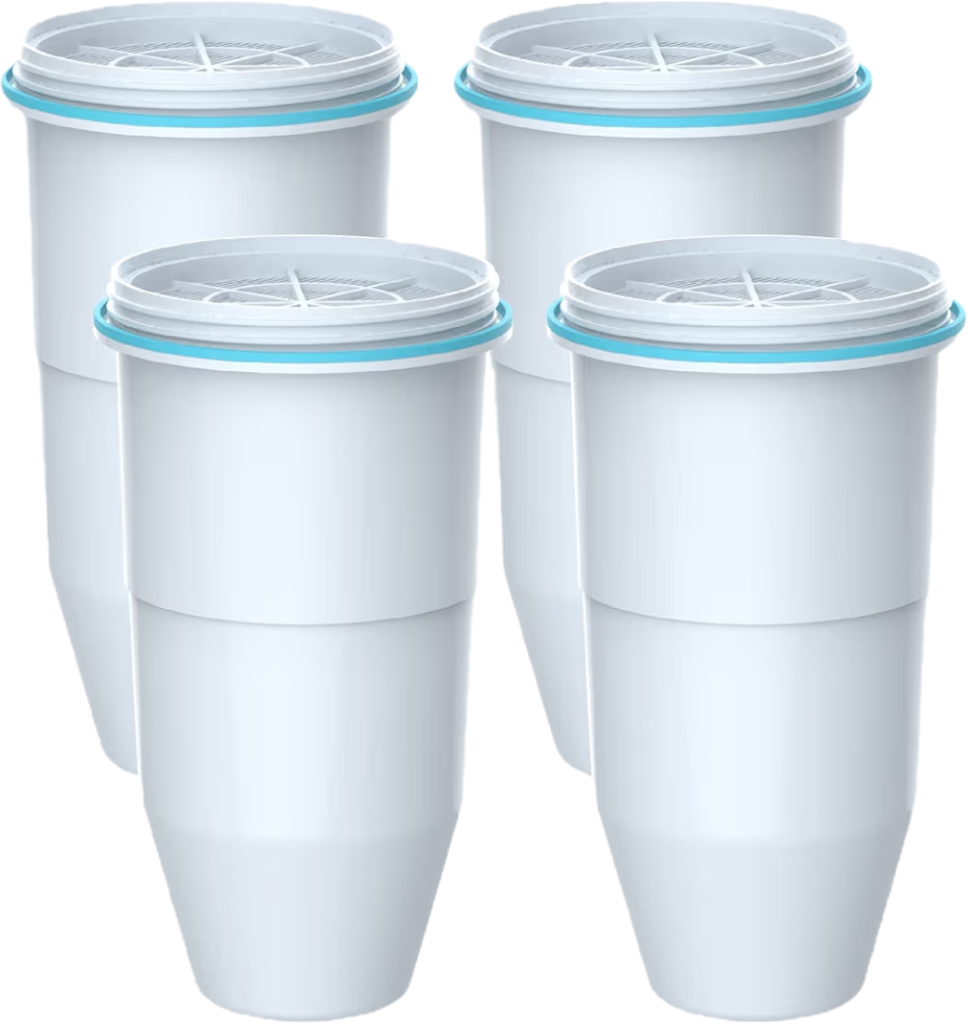
Waterspecialist Replacement Filters are a well-reviewed, cost-effective alternative for ZeroWater pitchers. These filters are compatible with models like ZP-006 and ZP-010 and are certified to NSF/ANSI 42 and 372 standards for chlorine taste and odor reduction. While they may not remove as many dissolved solids as ZeroWater’s original 5-stage filters, many users report very similar taste and clarity. They also tend to last slightly longer than expected, even in households with moderately hard water. At a lower price point and available in multi-packs, these filters are a smart way to maintain cleaner-tasting water without constantly replacing expensive OEM cartridges. If your priority is good-tasting water and general performance at a better value, Waterspecialist is worth a look.

Pros:

  • NSF/ANSI 42 & 372 certified
  • Compatible with major ZeroWater models
  • Affordable multi-pack options

Cons:

  • Doesn’t reduce TDS as thoroughly as ZeroWater

📊 Comparison Table

BrandOEM Life (gal)Real Avg (gal)Off-Brand AlternativeCost SavingsNSF CertifiedTDS Meter Included
Brita12060–90Amazon Basics✓✓NoNo
PUR4025–35Fil-Fresh✓✓✓YesNo
ZeroWater4020–30Waterspecialist ✓✓YesNo

Final Thoughts

Pitcher filters don’t always last as long as the packaging suggests—but with a little trial and error, you can figure out what works best for your household. Brita’s Longlast+ is a strong performer for durability, while ZeroWater delivers unmatched purity at the cost of more frequent replacements. PUR offers solid lead and chlorine reduction, but often needs changing sooner than expected.

Off-brand filters can offer excellent savings and competitive performance, especially for Brita and PUR models. Just be aware that most don’t carry NSF certification. For many families, the tradeoff is worth it.

Replacing your pitcher filter regularly ensures optimal performance, better-tasting water, and peace of mind—without the need for a full-blown filtration system. Understanding the realistic lifespan of OEM filters, and weighing that against cost-effective off-brand options, can help you make smarter buying decisions. Brita’s Longlast+ offers durability and reduced frequency of replacements, while ZeroWater’s filters deliver unmatched purity—just more frequently. PUR sits in the middle, offering strong contaminant reduction with an accessible price point.

Off-brand alternatives are worth considering if you want to stretch your budget without sacrificing too much on performance. While they may lack NSF certification, many perform surprisingly well for everyday use. Be mindful of your water conditions, and track changes in taste, flow, or TDS readings to ensure timely replacements. When chosen wisely, a good pitcher filter—and a smart replacement strategy—can deliver great water at a fraction of the cost of bottled or high-end filtration systems.

Head back to the Water Filter Pitchers main page

Categories
Uncategorized

Do TDS Meters Work for Pitchers? What to Expect: Ultimate Guide

TDS meters have become a popular tool among homeowners looking to test their water quality—especially for those using filter pitchers. But while these inexpensive devices are easy to use and widely available, they don’t always tell the full story. So, do TDS meters actually work for evaluating filtered pitcher water? And if so, what should you expect from the results?

In this article, we’ll explain what TDS meters measure, what they don’t, and how to interpret results when testing water from popular pitcher filters like Brita, PUR, and ZeroWater. We’ll also compare six popular TDS meters to help you choose the right one for accurate readings.

Disclosure: As an Amazon Associate, we earn from qualifying purchases. This post may contain affiliate links that help support our content at no additional cost to you.


🔍 What Does a TDS Meter Actually Measure?

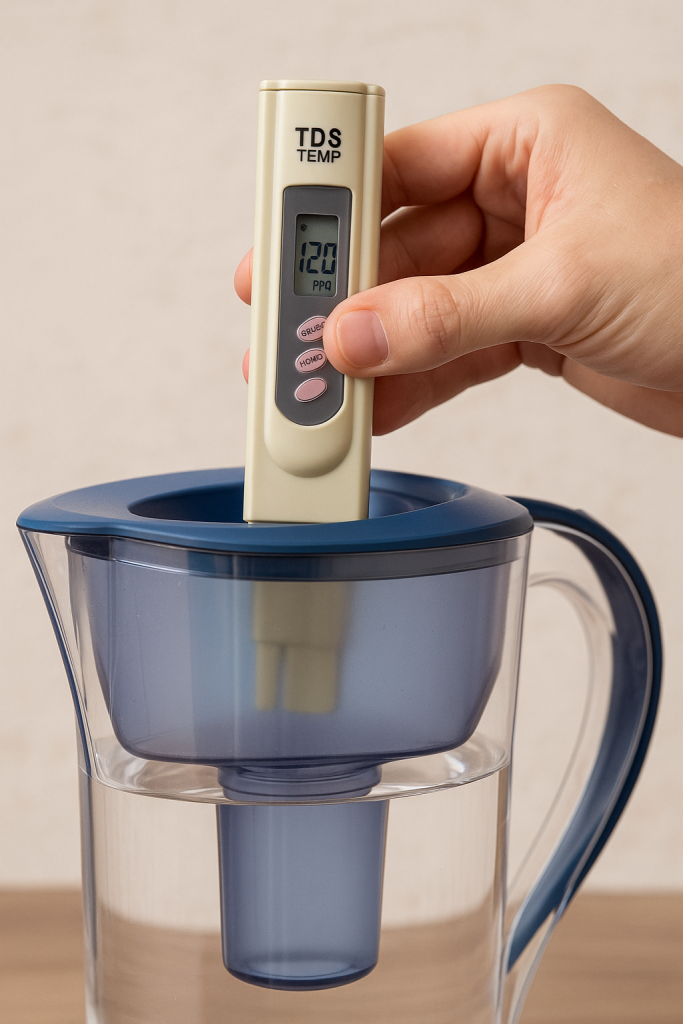
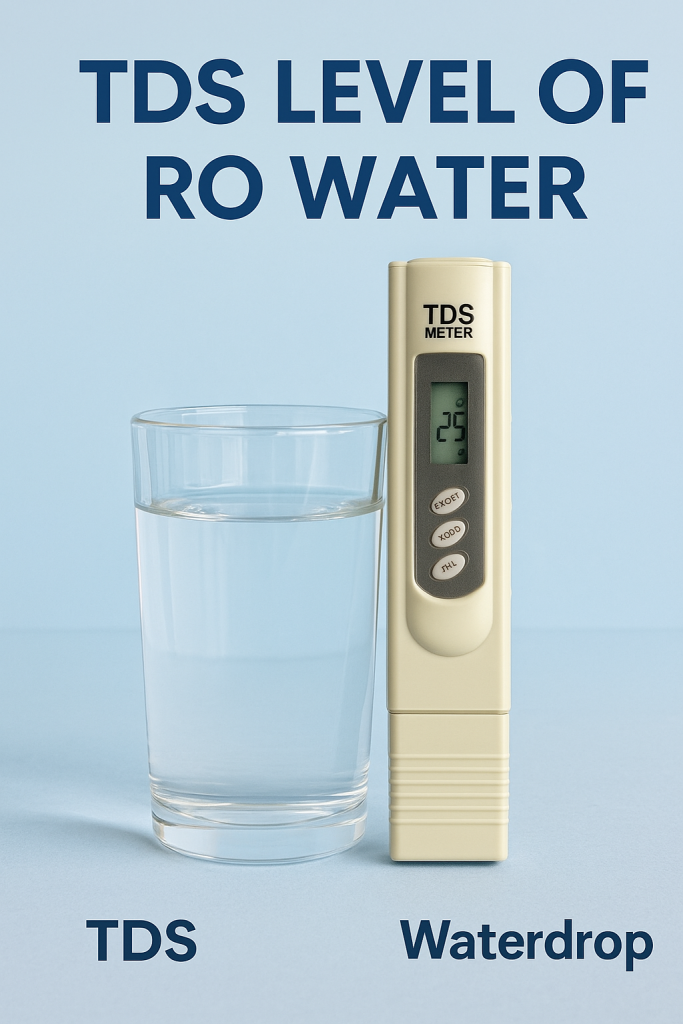
TDS stands for Total Dissolved Solids, a measure of all inorganic substances dissolved in water—mainly salts, minerals, and metals. A TDS meter doesn’t identify specific contaminants; it simply gives a reading (in parts per million, or ppm) indicating how many total dissolved particles are present.

Pitchers like ZeroWater significantly reduce TDS levels, often showing readings near 0 ppm. Others like Brita and PUR remove chlorine, lead, and some organic compounds but leave minerals in the water—meaning TDS readings may not change much, even if the water is safer and tastes better.


⚙️ Do TDS Meters Work for Filter Pitchers?

Yes—but with limitations. TDS meters are effective in a narrow but valuable context. For example, ZeroWater users can rely on these meters to know precisely when the filter has exhausted its capacity. The included TDS meter gives instant feedback when your water starts reading above a certain threshold—typically around 006 ppm—indicating it’s time to replace the filter.

They’re also useful for comparing unfiltered and filtered water side-by-side to get a general sense of how much inorganic content is being removed. You might not see dramatic changes if you’re using a Brita or PUR pitcher, since these filters primarily remove contaminants that don’t show up in TDS readings, such as lead or chlorine.

However, TDS meters won’t detect substances that don’t conduct electricity—like PFAS, VOCs, bacteria, or chlorine in its gaseous form. Nor can they measure the improved taste or odor that carbon-based filters provide. This is especially important to understand when evaluating filter performance using only a TDS number.

In short, a low TDS reading doesn’t always mean your water is safe, and a high reading doesn’t always mean it’s dangerous. Use TDS meters to track filter consistency and mineral content—not as a comprehensive water safety test.


🧪 Top 6 TDS Meters for Home Use

1. HM Digital TDS-3 Meter

Amazon Rating: 4.7 out of 5 stars
View on Amazon

The HM Digital TDS-3 is one of the most recognized and widely used meters for home water testing. It delivers fast and accurate readings with a simple digital display and a one-button interface. The meter includes a hold function to lock readings and an auto-off feature to preserve battery life. It’s compact, lightweight, and comes with a protective carrying case for easy storage. While it doesn’t measure temperature, it’s trusted for its consistency and is especially reliable for tracking changes in TDS over time. This meter is ideal for those who want a dependable, no-frills option for measuring filtered or unfiltered water. It’s well-suited for casual use, yet accurate enough for more frequent testing.

Pros:

  • Fast and reliable readings
  • Trusted by professionals
  • Long battery life

Cons:

  • Doesn’t test temperature
  • Basic interface

2. VIVOSUN TDS & EC Meter Combo

Amazon Rating: 4.6 out of 5 stars
View on Amazon

This dual-purpose meter offers three essential measurements in one device: TDS, electrical conductivity (EC), and temperature. The VIVOSUN combo meter is particularly useful for those testing water for both drinking and gardening or hydroponics. It features a backlit display that’s easy to read in various lighting conditions, and the waterproof design enhances durability. Users appreciate its one-touch calibration and high level of accuracy. The compact build and fast reading speed make it user-friendly even for beginners. This model provides more detailed data than basic TDS meters, making it a great value for those needing versatility without a steep price tag.

Pros:

  • Measures TDS, EC, and temp
  • Waterproof design
  • Easy calibration

Cons:

  • Slightly bulkier
  • May need recalibration over time

3. AquaPro TDS Meter

Amazon Rating: 4.5 out of 5 stars
View on Amazon

The AquaPro TDS Meter is an excellent budget-friendly option for anyone looking to test their water without investing in advanced features. It offers straightforward operation with a simple digital LCD display and a one-button control system. The meter is compact and portable, making it easy to use at home or on the go. While it doesn’t include temperature readings or EC measurement, it delivers consistent and reliable TDS results for everyday monitoring. The automatic shut-off function helps preserve battery life, and the device is generally well-calibrated out of the box. For users who just want a quick snapshot of their water’s dissolved solids, this meter gets the job done efficiently. It’s a great choice for occasional home use or as a secondary meter.

Pros:

  • Compact and easy to use

Cons:

  • Basic display
  • No temperature reading
  • Less expensive models available that work just as well

4. HoneForest TDS Meter

Amazon Rating: 4.6 out of 5 stars
View on Amazon

The HoneForest TDS Meter stands out for its sturdy construction and enhanced readability. It features a backlit LCD screen that makes it easy to view results even in dim lighting. This meter is well-suited for consistent home use and offers impressive speed and accuracy for its price point. Although it lacks EC measurement, its reliable TDS tracking makes it a practical tool for monitoring filter performance over time. The meter is waterproof and comes pre-calibrated, with a simple interface that doesn’t require much technical know-how. It’s a strong mid-range choice for those who want durability, usability, and solid results. It offers great value without venturing into professional-tier pricing.

Pros:

  • Durable design
  • Backlit display
  • Good battery life

Cons:

  • No EC measurement
  • Slightly slower calibration

5. Bluelab PENCON Conductivity Pen

Amazon Rating: 4.5 out of 5 stars
View on Amazon

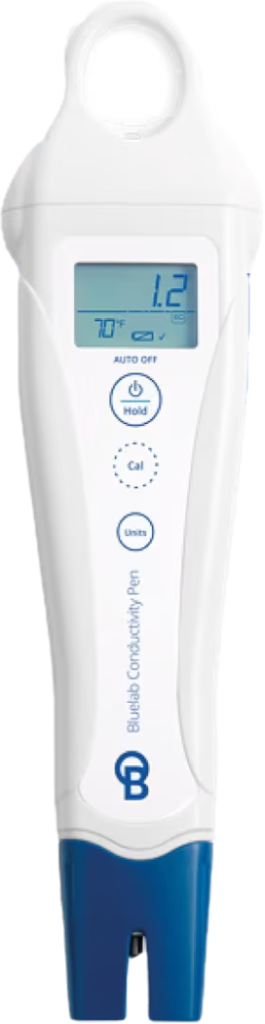
The Bluelab PENCON is a high-end tool designed for serious users who demand lab-grade precision. It measures TDS, EC, and temperature with exceptional accuracy, making it a top pick for hydroponics, laboratory work, or advanced home water testing. The device is fully waterproof and features a backlit digital screen with intuitive controls. It stores calibration data and alerts you when recalibration is needed, maintaining long-term reliability. Its rugged build makes it suitable for demanding environments, though it’s likely overkill for casual testing. Despite the price, many users find the extra accuracy and features worth the investment. If you’re looking for professional-quality water monitoring in a handheld form, this is one of the best tools available.

Pros:

  • High precision and reliability
  • Multiple test modes
  • Waterproof and rugged

Cons:

  • Expensive
  • Overkill for casual users

6. ZeroWater TDS Meter (Included with Pitcher, but also available separately)

Amazon Rating: 4.4 out of 5 stars
View on Amazon

The ZeroWater TDS meter comes standard with every ZeroWater pitcher and is calibrated specifically for that system. It gives quick, easy-to-read ppm measurements to help users know when their filter is no longer effective. While it lacks the advanced features of standalone meters, it’s surprisingly accurate within its range. The compact, pen-style design makes it easy to store with the pitcher or on a countertop. It’s especially useful for households that regularly monitor TDS to determine filter replacement timing. Though not ideal for broader testing purposes, it does its job well in the context it’s intended for. If you own a ZeroWater system, this meter is a convenient and useful tool to ensure you’re getting the cleanest water possible.

Pros:

  • Included with purchase
  • Good for checking filter replacement timing

Cons:

  • Limited use outside of ZeroWater
  • Basic build and display

🧾 Comparison Table

MeterTDS AccuracyEC MeasurementTemp ReadingPrice RangeBest For
HM Digital TDS-3±2%NoNo$Daily water checks
VIVOSUN TDS Combo±2%YesYes$Multi-use, plants & water
AquaPro TDS Meter±5%NoNo$$Budget-friendly option
HoneForest Meter±2%NoNo$Durability and clarity
Bluelab PENCON±1%YesYes$$$Precision & versatility
ZeroWater TDS Meter±5%NoNoFree/$ZeroWater filter tracking

🏆 Best Picks by Category


Final Thoughts

TDS meters are a helpful—but limited—tool for evaluating filtered pitcher water. They can provide quick, consistent feedback on your water’s mineral content and help determine when your filter needs replacing. But they don’t measure serious contaminants like lead, PFAS, or VOCs. For that, you’ll need certified lab testing or filters with NSF certification.

If you’re using a pitcher like ZeroWater, a TDS meter is almost essential for monitoring filter life. For Brita or PUR, TDS readings will likely stay the same, even as taste and safety improve. Choose a TDS meter based on how frequently you test and whether you need extras like temperature or EC.

Bottom line: use TDS meters to stay informed, not as a final verdict on water quality. When paired with a good filter and common sense, they’re a useful part of your clean water toolkit.

Head back to the Water Filter Pitchers main page

Categories
Uncategorized

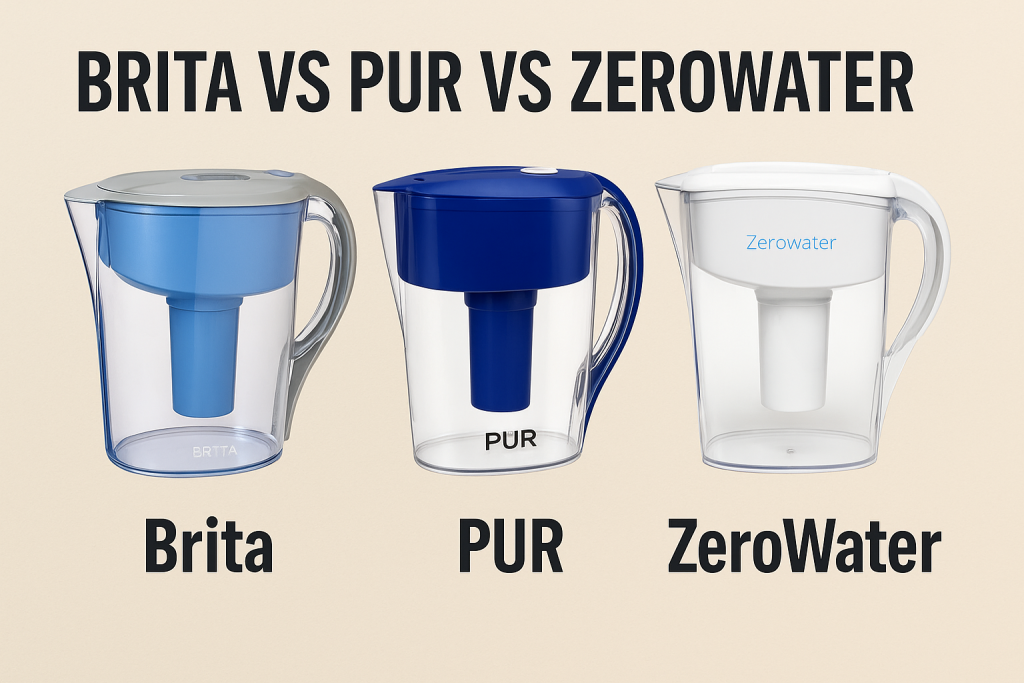
Brita vs PUR vs ZeroWater: Which Pitcher Filters Best?

If you’re shopping for a water filter pitcher, three names dominate the market: Brita, PUR, and ZeroWater. All three are household brands with widespread availability and decades of consumer trust. But while they may look similar on the shelf, the way these pitchers filter your water—and what they remove—varies more than you might expect.

In this article, we’ll compare Brita, PUR, and ZeroWater across key performance categories including contaminant removal, taste improvement, filter lifespan, price, and ease of use. You’ll find detailed product summaries, Amazon ratings and links, pros and cons for each, a side-by-side feature comparison table, and clear picks for which brand is best in each category.

Disclosure: As an Amazon Associate, we earn from qualifying purchases. This post may contain affiliate links that help support our content at no additional cost to you.


💧 Brita Elite Pitcher with Longlast+ Filter

Amazon Rating: 4.7 out of 5 stars
View on Amazon

Brita’s Elite Pitcher with Longlast+ Filter is a go-to option for people who want easy, reliable filtration without breaking the bank. The Longlast+ filter is NSF certified to remove lead, chlorine, cadmium, benzene, and asbestos. It’s also one of the longest-lasting filters in its class, with a lifespan of up to 120 gallons.

The pitcher is slim enough to fit in most refrigerator doors and features a flip-top lid for easy refilling. Brita filters are widely available, making replacements quick and hassle-free. However, it doesn’t remove fluoride, microplastics, or PFAS—so while it’s great for taste and basic safety, it’s not as comprehensive as some higher-end options.

Pros:

  • Removes lead, chlorine, and common contaminants
  • Long filter life (120 gallons)
  • Easy to use and refill
  • Slim, fridge-friendly design
  • Affordable and widely available

Cons:

  • Doesn’t remove PFAS, fluoride, or microplastics
  • Basic carbon filter design

💧 PUR Ultimate Pitcher with Lead Reduction

Amazon Rating: 4.4 out of 5 stars
View on Amazon

The PUR Ultimate Pitcher is another strong option for households focused on improving taste and removing heavy metals. This model uses a two-stage filter with activated carbon and ion exchange resin, certified to reduce over 20 contaminants, including 99% of lead, mercury, chlorine, and some industrial pollutants.

It’s bulkier than Brita, and filter replacement can be a little tricky, but for the price, it offers excellent performance. Its filter lifespan is about 40 gallons—lower than Brita’s—but replacement filters are relatively affordable. PUR’s filtration tends to improve the taste of heavily chlorinated tap water more noticeably than Brita.

Pros:

  • Certified to remove lead, mercury, and chlorine
  • Strong taste improvement for tap water
  • Budget-friendly

Cons:

  • Shorter filter life (40 gallons)
  • Bulkier design
  • Less intuitive filter replacement

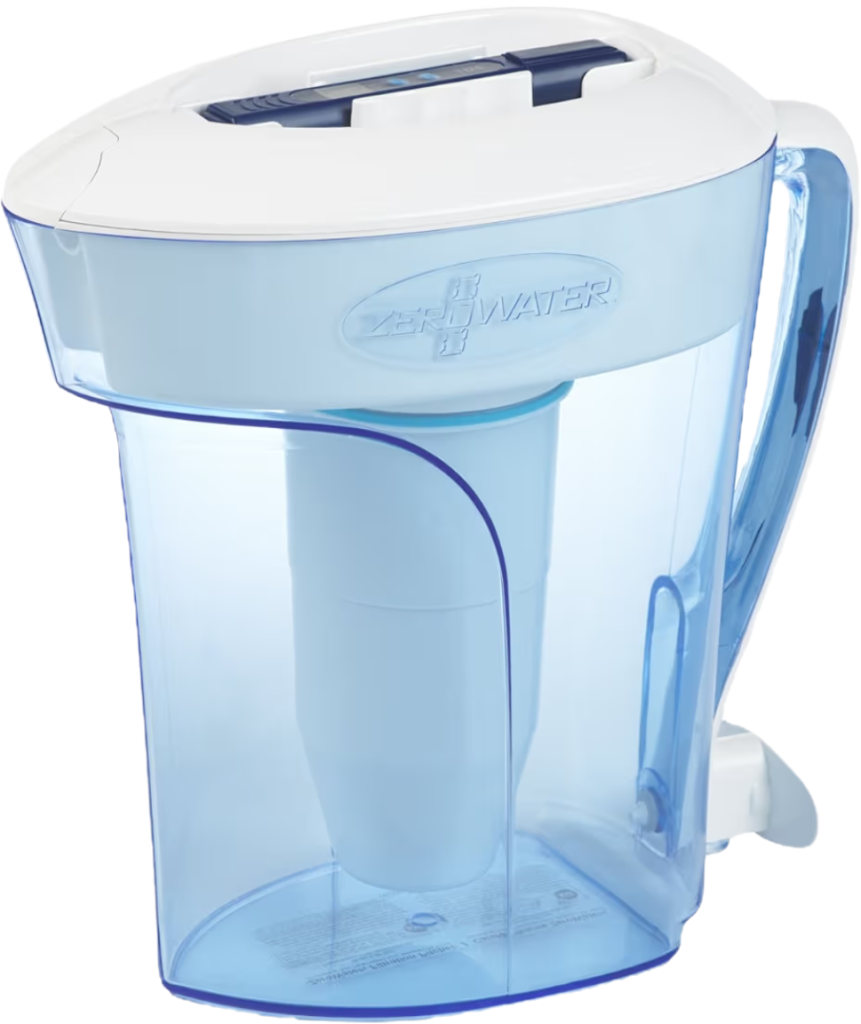
💧 ZeroWater 10-Cup Pitcher

Amazon Rating: 4.5 out of 5 stars
View on Amazon

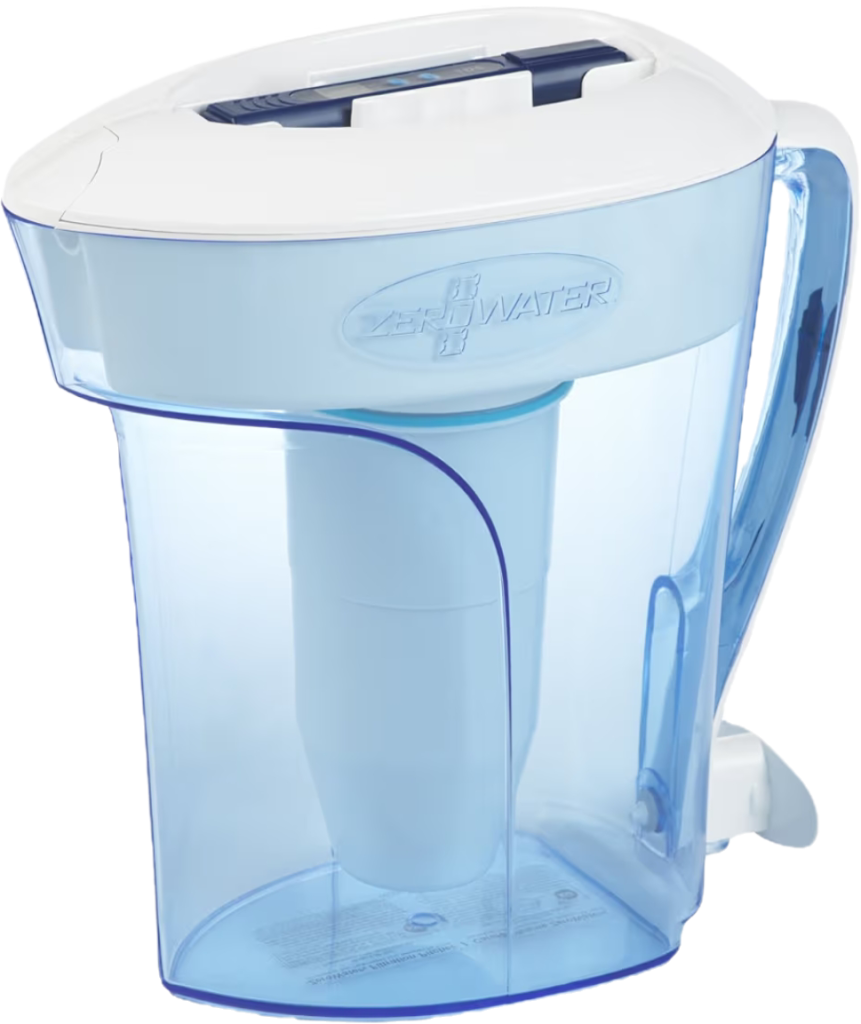
ZeroWater stands apart with its 5-stage ion exchange filtration system that removes nearly all total dissolved solids (TDS)—something the other two brands don’t attempt. Each pitcher comes with a digital TDS meter so users can verify results immediately. It’s NSF certified to reduce chromium, lead, fluoride, and several heavy metals.

The filtration is aggressive, and while it leaves the water incredibly pure, some users say it tastes “too flat.” Filters also don’t last as long—typically 20 to 40 gallons depending on your water’s TDS. If you want measurable, laboratory-grade results and don’t mind frequent filter changes, ZeroWater delivers.

Pros:

  • Removes virtually all TDS (99.6%)
  • Includes digital TDS meter
  • Targets fluoride and heavy metals
  • Strong lab certifications

Cons:

  • Short filter lifespan (20–40 gallons)
  • Water may taste too flat for some
  • Bulkier and heavier design

🔍 Comparison Table

FeatureBrita ElitePUR UltimateZeroWater 10-Cup
Filter Life120 gallons40 gallons20–40 gallons
Lead RemovalYesYesYes
Fluoride RemovalNoNoYes
Chlorine Taste/OdorYesYesYes
Removes PFASNoNoNo
Removes MicroplasticsNoNoNo
TDS ReductionLowModerateHigh (99.6%)
Smart TDS MeterNoNoYes
Filter AvailabilityWidely AvailableCommonModerate
Price Range$$$$

🏆 Best Picks by Category


Final Thoughts

Brita, PUR, and ZeroWater each offer something different, depending on your priorities. Brita is a solid all-around performer with long filter life and broad retail availability. PUR delivers budget-friendly lead and chlorine reduction, though with a shorter filter lifespan. ZeroWater goes the extra mile on TDS and fluoride removal—but you’ll need to change filters more often and may find the water too neutral in flavor.

Ultimately, the best water filter pitcher is the one that matches your water quality concerns, your taste preferences, and your routine. Whether you’re optimizing for flavor, contaminant removal, or long-term savings, each of these brands has a place in the market—and a pitcher that might be perfect for your home.

Head back to the Water Filter Pitchers main page

Categories
Uncategorized

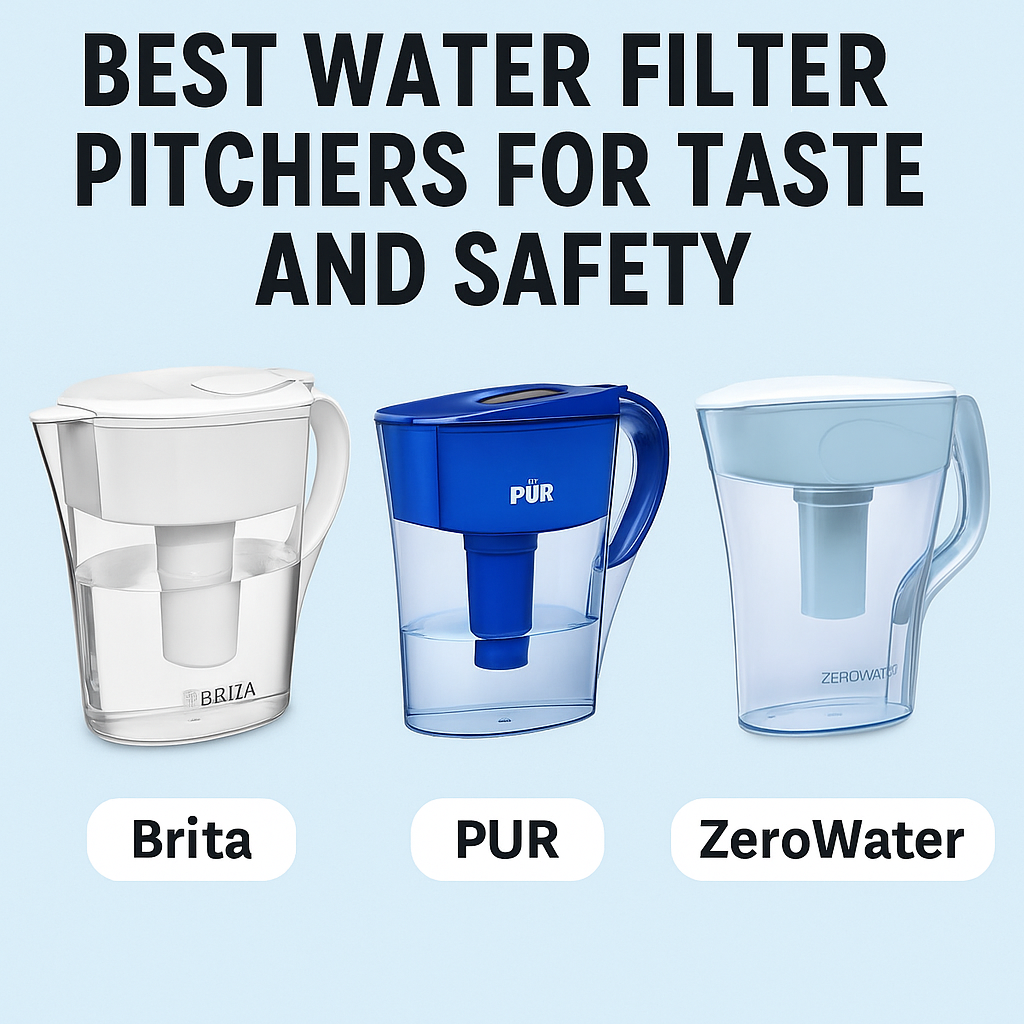
Best Water Filter Pitchers for Taste and Safety

Water filter pitchers are an incredibly popular option for households looking to improve the quality of their tap water without investing in more complex systems. Compact, affordable, and easy to use, these pitchers tackle common contaminants like chlorine and lead while improving overall taste. But with so many brands on the market—each boasting unique technologies and claims—it can be hard to know which one is actually effective.

In this article, we break down the best water filter pitchers based on third-party testing, customer feedback, and feature comparisons. Whether your focus is taste, safety, affordability, or sustainability, the list below highlights the top performers for every category. You’ll also find a comparison table, specific category winners, and a practical summary to help you choose the right pitcher for your household.

Disclosure: As an Amazon Associate, we earn from qualifying purchases. This post may contain affiliate links that help support our content at no additional cost to you.


🥇 Clearly Filtered Water Pitcher

Amazon Rating: 4.4 out of 5 stars
View on Amazon

The Clearly Filtered pitcher is built for people who want the highest level of filtration without sacrificing ease of use. Its Affinity Filtration Technology targets over 365 contaminants, including heavy metals like lead, pesticides, PFAS, pharmaceuticals, microplastics, and VOCs. Independent lab testing confirms it exceeds NSF standards 42, 53, and 401. Despite its high-performance filter, it still retains beneficial minerals such as calcium and magnesium for a balanced taste.

The filter lasts for approximately 100 gallons, and the build quality is excellent, with a solid handle, snug lid, and smooth-pouring spout. It’s BPA-free and made in the USA. The filtration is slightly slower than basic pitchers, but that’s the tradeoff for more comprehensive performance. This pitcher is best for families prioritizing health and water purity above all else.

Pros:

  • Removes 365+ contaminants
  • Exceeds NSF standards
  • Retains healthy minerals
  • BPA-free and made in USA
  • Good filter lifespan (100 gallons)

Cons:

  • Slower flow rate than simpler models
  • Higher upfront cost

🥈 ZeroWater 10-Cup Pitcher

Amazon Rating: 4.5 out of 5 stars
View on Amazon

ZeroWater’s standout feature is its ability to reduce total dissolved solids (TDS) to near zero—something no other mainstream pitcher filter can claim. It uses a five-stage filtration process including activated carbon and ion exchange resin to remove heavy metals, fluoride, nitrates, and inorganic compounds. Each pitcher includes a digital TDS meter for verification.

This makes ZeroWater a great choice for people who want visibly measurable results. However, its aggressive filtration tends to remove all minerals, which can leave the water tasting “flat” to some. Filters also have a shorter lifespan, particularly in areas with hard water—expect around 20–40 gallons per filter. The design is functional but a bit bulky for smaller fridges.

Pros:

  • Reduces TDS to zero
  • Includes TDS meter
  • 5-stage filtration
  • Strong removal of heavy metals

Cons:

  • Shorter filter life
  • Water can taste too pure or flat
  • Bulkier than other models

🥉 Brita Elite Pitcher with Longlast+ Filter

Amazon Rating: 4.7 out of 5 stars
View on Amazon

Brita’s Elite Pitcher is one of the most accessible and reliable options for improving taste and reducing common contaminants like chlorine, lead, cadmium, and benzene. The Longlast+ filter is NSF certified to last up to 120 gallons and doesn’t need to be replaced monthly like standard filters. This model is ideal for people who want better water without frequent maintenance.

Its slim design fits well in fridge doors, and the flip-top lid makes refilling easy. While it doesn’t remove as many contaminants as premium models, the balance of performance, availability, and ease-of-use makes it a practical everyday solution for most households. Brita filters are also widely available in stores and online.

Pros:

  • Long filter life (120 gallons)
  • Removes lead and chlorine
  • Slim fridge-friendly design
  • Filters easy to find

Cons:

  • Doesn’t remove fluoride or PFAS
  • Basic carbon filtration

PUR Ultimate Pitcher 11 Cup with Lead Reduction

Amazon Rating: 4.4 out of 5 stars
View on Amazon

The PUR Ultimate Pitcher features a two-stage filter with activated carbon and ion exchange media. It’s NSF certified to reduce over 20 contaminants, including lead, mercury, chlorine, and some industrial pollutants. For the price, it delivers impressive performance.

The pitcher design is sturdy but bulkier than some competitors. Filtration speed is on the slower side, and filter replacement requires some care to prevent leaks. Still, it’s a strong performer for those who want an affordable way to remove lead and improve taste.

Pros:

  • Reduces lead, mercury, chlorine
  • Strong certifications for the price
  • Affordable

Cons:

  • Slower filtration speed
  • Bulky design
  • Replacement can be fiddly

Aquagear Water Filter Pitcher

Amazon Rating: 4.3 out of 5 stars
View on Amazon

Aquagear’s pitcher filter is ideal for eco-conscious consumers and those concerned with both safety and sustainability. The filter is independently tested to remove over 50 contaminants, including lead, microplastics, chlorine, and PFAS. It’s made in the USA using BPA-free, recyclable materials, and the company offers a lifetime warranty.

Each filter lasts for up to 150 gallons—making it one of the most economical over time. The pitcher’s design is clean and functional, and water flow is consistent. However, it’s on the pricier side and doesn’t include a TDS meter or visible filter indicator. Still, its focus on health and planet-friendly materials makes it a standout.

Pros:

  • Removes lead, PFAS, microplastics
  • Long filter life (150 gallons)
  • Made from recyclable materials
  • Lifetime guarantee

Cons:

  • No built-in filter indicator
  • Higher initial cost

🔍 Comparison Table

PitcherTDS MeterLead RemovalPFAS RemovalFilter LifeCertified to NSF
Clearly FilteredNoYesYes100 gal42, 53, 401
ZeroWaterYesYesNo20–40 gal42, 53
Brita EliteNoYesNo120 gal42, 53
PUR UltimateNoYesNo40 gal42, 53
AquagearNoYesYes150 galIndependent

🏆 Best Picks by Category


Final Thoughts

Choosing a water filter pitcher depends on what matters most to you—whether it’s removing as many contaminants as possible, minimizing maintenance, or stretching your dollar. Clearly Filtered leads the pack in safety and contaminant reduction, while ZeroWater offers hard data on performance with its included TDS meter. Aquagear’s long-lasting filters and environmental focus make it ideal for sustainable households.

All of the pitchers listed here improve taste, reduce chlorine, and offer cleaner water than the average tap. The right model for you will depend on your specific goals, water quality, and usage habits. No matter your choice, switching to a high-quality pitcher filter is a smart step toward better health, fewer plastic bottles, and fresher drinking water right from your fridge.

Head back to the Water Filter Pitchers main page

Categories
Uncategorized

Water Filter Pitchers: Convenient Filtration for Everyday Use

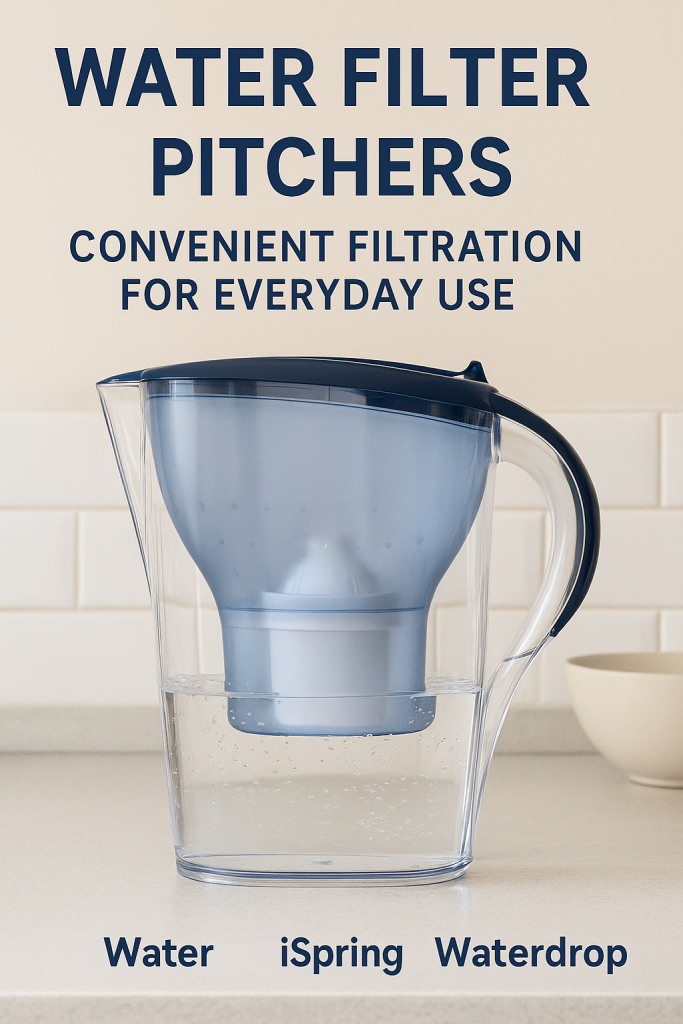
Water filter pitchers are one of the simplest, most affordable, and most accessible ways to improve your drinking water at home. Whether you’re trying to cut down on bottled water, reduce chlorine taste and odor, or protect your family from contaminants like lead and microplastics, a high-quality water pitcher filter can be a smart first step. No tools, no plumbing, and no installation required—just fill, filter, and pour. They’re especially useful for renters, students, apartment dwellers, and anyone who wants cleaner water without the commitment or expense of more advanced systems.

But not all pitcher filters are created equal. Some are excellent at removing harmful substances, while others barely go beyond improving taste. That’s why we’ve created this centralized hub—to help you understand which filters actually perform well, how long they last, and what the data says about big-name brands like Brita, PUR, and ZeroWater.

This landing page gathers our top articles on water filter pitchers—from in-depth brand comparisons to TDS testing tips, filter lifespan expectations, and science-backed evaluations. Use it as your go-to resource for choosing the right pitcher for your needs and getting the most out of it. Use it as your go-to resource for choosing the right pitcher for your needs and getting the most out of it.


🔍 Explore the Pitcher Filtration Series

Best Water Filter Pitchers for Taste and Safety

Reviews of the most effective pitchers for removing chlorine, lead, and bad taste. Includes performance summaries for Brita, PUR, ZeroWater, Clearly Filtered, and more.

Brita vs PUR vs ZeroWater: Which Pitcher Filters Best?

A head-to-head showdown of the biggest names in pitcher filtration. We break down each brand’s strengths, weaknesses, and what contaminants they actually remove.

Do TDS Meters Work for Pitchers? What to Expect: Ultimate Guide

TDS meters are often used to measure water quality—but what do they actually show when testing filtered pitcher water? This article explains the limitations and what you should expect.

How Long Do Pitcher Filters Really Last?

Manufacturer claims vs. real-world performance. Learn how to track when your filter needs changing and how to make it last longer with proper use.


Why Trust Pitcher Filters?

While not as comprehensive as reverse osmosis or under-sink systems, pitcher filters are a great first step in improving water quality. They’re affordable, easy to use, and effective against the most common aesthetic complaints like chlorine, sediment, and bad taste. And with recent innovations, some models now address serious concerns like lead, pharmaceuticals, PFAS, and even microplastics. However, because performance can vary widely from one brand to another, knowing what to l…

So whether you’re looking to upgrade from tap water or supplement an existing system, pitcher filters are a flexible and worthwhile option. Explore the articles above to discover the best filters, learn how to interpret test results, and understand which models are really worth the money. Cleaner, better-tasting water is just a pitcher away.

Head back to the Water Filtration Hub

Categories
Uncategorized

What TDS Should You Expect from RO Water? Ultimate Guide

If you’ve installed a reverse osmosis (RO) system, or you’re thinking about getting one, you’ve likely come across the term “TDS.” Short for Total Dissolved Solids, TDS is a measurement of everything in your water that isn’t a pure H₂O molecule. This includes minerals, salts, metals, and even some organic matter. But what should your TDS reading be after it goes through a properly working RO system? And how can you test it accurately?

This comprehensive guide explains what TDS is, how it affects your water, what ranges are considered normal for RO-filtered water, how to measure it correctly, and what your results might indicate about the performance and health of your system.


What Is TDS?

TDS stands for Total Dissolved Solids. It refers to the total concentration of dissolved substances in water—mostly inorganic salts like calcium, magnesium, sodium, chlorides, sulfates, and some trace organic compounds. TDS is typically measured in parts per million (ppm) or milligrams per liter (mg/L), with both units being functionally equivalent.

TDS does not identify specific contaminants, but rather gives a general picture of water purity. For example, a high TDS reading could come from beneficial minerals like calcium or from harmful substances like lead or nitrates. This is why TDS should be used in combination with other tests when assessing water safety.

High TDS can affect the flavor, odor, and clarity of water. It can also lead to scaling in pipes and appliances, especially if calcium and magnesium are present in large amounts. Conversely, water with extremely low TDS can taste flat or bland, lacking the mineral content many people associate with “natural” water.


What’s a Normal TDS Level for RO Water?

Reverse osmosis is one of the most effective home filtration technologies available, capable of removing 90–99% of dissolved solids from water. This includes heavy metals, salts, fluoride, nitrates, and more. However, the exact TDS level of your RO water depends on several factors, including the quality of your source water, the age of your filters, and the design of your RO system.

Typical RO water TDS levels range from 0–50 ppm, with most residential systems producing water in the 10–30 ppm range when functioning optimally. Here’s how to interpret common readings:

  • 0–20 ppm: Excellent. Indicates highly effective filtration, often found in newer or well-maintained systems.
  • 20–50 ppm: Good. Acceptable for most households, with minor trace minerals remaining.
  • 50–100 ppm: Borderline. Could indicate aging filters or slight inefficiencies in the membrane.
  • 100+ ppm: Poor. Suggests that the RO system is underperforming and may need maintenance or part replacement.

Keep in mind that the efficiency of your RO system depends partly on the TDS of your input water. For example, if your source water measures 600 ppm and your RO output is 60 ppm, that’s still a 90% reduction and may be considered acceptable depending on your goals.


How to Test TDS

TDS is measured using a digital TDS meter, which is an inexpensive, handheld device that gives immediate readings in ppm. These meters work by measuring the electrical conductivity of water—since dissolved solids carry a slight charge, their presence can be quantified this way.

Steps to Accurately Test TDS in RO Water:

  1. Clean the Meter: Rinse the electrode with distilled or RO water before and after use.
  2. Collect a Sample: Fill a clean glass or container with RO water from the dedicated faucet.
  3. Dip the Probe: Immerse the electrode into the water without touching the sides or bottom.
  4. Wait for Stability: Allow the reading to stabilize—this usually takes 5–10 seconds.
  5. Record the Result: Note the displayed ppm value.

For best results, test the water when it has been running for a few seconds to avoid any residual water sitting in the faucet. If you’ve just replaced filters, wait a few gallons before testing to allow the system to flush fully.

It’s also helpful to test your incoming tap water, so you can calculate the rejection rate of your RO system:

Rejection Rate (%) = [(Tap TDS – RO TDS) ÷ Tap TDS] × 100

A good system should have a rejection rate of 90% or higher.


When to Be Concerned

If your TDS reading is higher than expected, especially over 100 ppm, it may indicate one or more of the following issues:

  • Worn-Out Membrane: The RO membrane may no longer be effective and needs replacement (typically every 2–3 years).
  • Expired Pre-Filters: Carbon and sediment pre-filters may be clogged or saturated, impacting performance.
  • Low Water Pressure: RO systems require a minimum pressure (often 40–60 psi) to operate correctly. Lower pressure can reduce rejection rates.
  • Incorrect Installation: Cross-contamination from unfiltered water lines or a malfunctioning auto shut-off valve could be letting untreated water through.

On the other hand, TDS that’s too low (0–5 ppm) isn’t dangerous but can lead to flat-tasting water. This is because all minerals have been stripped out—including those like calcium and magnesium that contribute to water flavor. To counteract this, many RO systems include or offer an optional remineralization filter, which adds back a small amount of healthy minerals.


Conclusion

Monitoring the TDS level of your RO system is one of the easiest and most effective ways to ensure it’s working properly. While TDS doesn’t provide a full picture of water quality, it’s a fast, affordable way to detect performance issues before they become bigger problems.

In general, residential RO systems should produce water in the 10–50 ppm range. If you’re getting consistently higher numbers, it’s time to inspect the system. If you’re getting near-zero readings and dislike the taste, consider adding a remineralization stage.

Testing your TDS monthly—especially in homes with hard water or heavy use—can help extend the life of your filters and maintain optimal water quality. With just a few minutes and a $15 meter, you can make sure your RO system keeps delivering the clean, healthy water your family deserves.

Head back to Under Sink Reverse Osmosis (RO) Systems

Categories
Uncategorized

Top Brands Compared: APEC vs iSpring vs Waterdrop

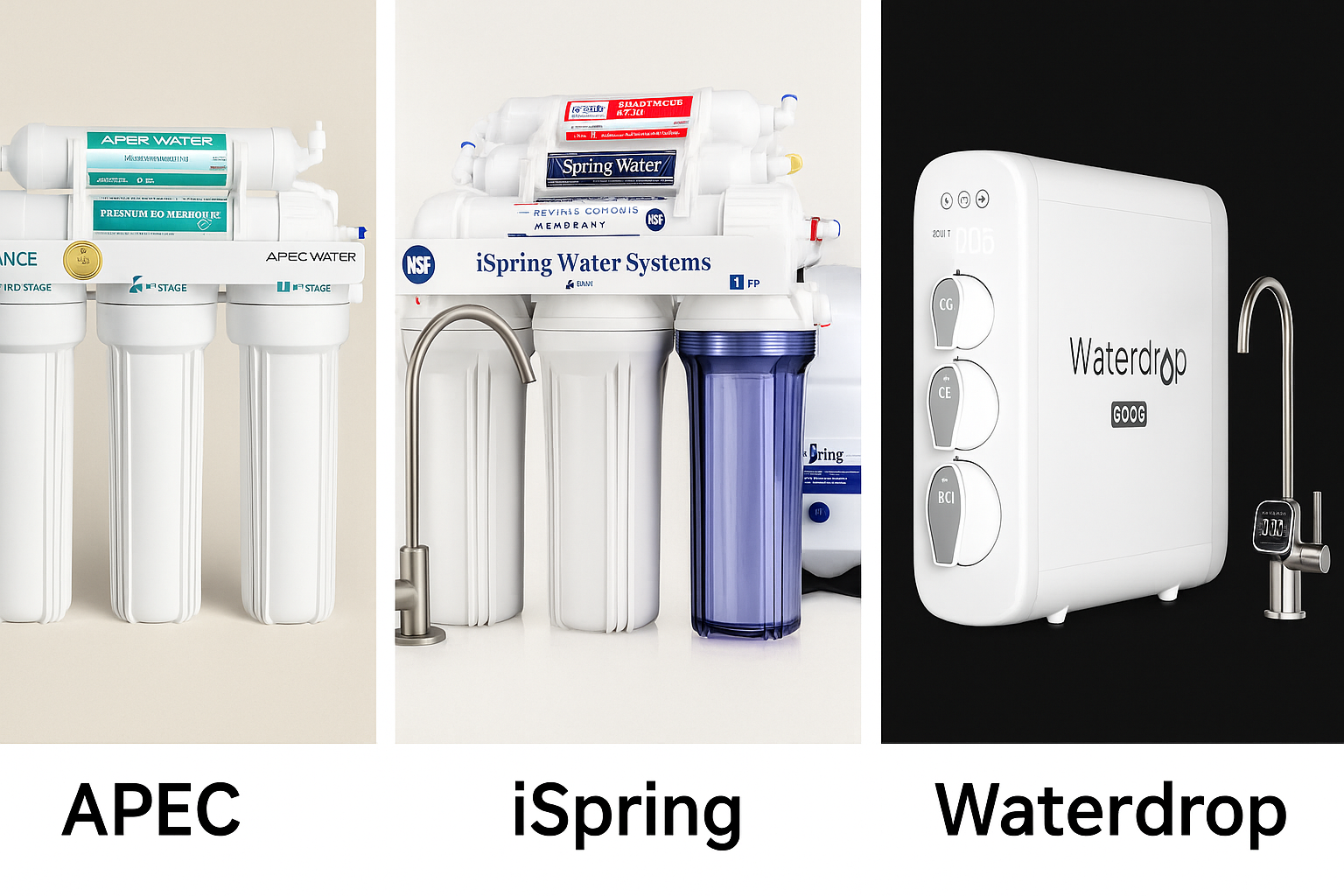
When shopping for an under-sink reverse osmosis (RO) system, three names consistently stand out: APEC, iSpring, and Waterdrop. These brands have earned their reputations for quality, reliability, and innovation. But how do they stack up against each other when you break things down feature by feature?

This in-depth comparison will focus on each brand’s top residential under-sink RO model and examine their filtration performance, flow rate, design, ease of installation, maintenance requirements, certifications, and smart features.

Disclosure: As an Amazon Associate, I earn from qualifying purchases. This post may contain affiliate links.


1. APEC ROES-50 (Top Model)

Amazon Rating: 4.7 out of 5 stars (1,900+ reviews)
Buy on Amazon

The APEC ROES-50 is a high-quality, 5-stage, tank-based reverse osmosis system engineered and assembled in the USA. It removes up to 99% of contaminants including chlorine, fluoride, lead, arsenic, and chromium. Designed with WQA certification and reliable components, it provides ultra-safe and great-tasting drinking water.

Users appreciate its ease of installation, especially with the included color-coded tubing and thorough manual. The filters are built for longevity, lasting 6–12 months (pre-filters) and 2–3 years (RO membrane) depending on water quality. With no unnecessary tech features, the ROES-50 focuses on simplicity, performance, and long-term reliability.

Benefits:

APEC’s main selling point is reliability. It’s a tried-and-true system built for longevity with parts that rarely fail when properly maintained. The U.S. engineering and manufacturing quality adds an extra level of assurance, particularly for customers wary of cheaper overseas components. The 5-stage filtration is simple yet effective, especially for municipal water supplies. And with very few moving parts or electronics, it’s highly resilient to wear over time.

Drawbacks:

While dependable, the ROES-50 lacks modern conveniences such as a remineralization filter or TDS monitoring. It also requires a decent amount of under-sink space for the tank. Filter changes aren’t difficult, but they’re not as user-friendly as push-in cartridges. For those wanting more control or insight into their water quality, the APEC system may feel a bit basic. It’s a no-frills system designed for people who want safe, great-tasting water without worrying about complex parts. It doesn’t include bells and whistles like smart sensors or remineralization, but it excels in consistency and performance for municipal or well water.


2. iSpring RCC7AK (Top Model)

Amazon Rating: 4.7 out of 5 stars (6,000+ reviews)
Buy on Amazon

The iSpring RCC7AK is a 6-stage reverse osmosis system that offers powerful filtration along with an alkaline remineralization stage. This addition restores calcium and magnesium to enhance taste and bring balance to the water’s pH. It removes 99% of over 1,000 contaminants including fluoride, chlorine, lead, nitrates, and arsenic.

Its transparent housing lets users inspect the first-stage filter for sediment buildup, and the system comes with an installation kit designed for the average homeowner. NSF/ANSI 58 certified, it’s ideal for families who want clean water without losing essential minerals. The RCC7AK is highly rated for both water quality and ease of use.

Benefits:

iSpring offers a balance between performance and enhanced taste. Its built-in remineralization stage is ideal for people who dislike the flat taste typical of RO water, and the transparent filter housing adds visibility to ongoing water quality. The RCC7AK also achieves a higher flow rate than many competitors at its price point. Its NSF certification and robust contaminant removal list make it a solid mid-tier option. Overall, it gives you a good balance of purification and flavor.

Drawbacks:

The iSpring system still relies on a storage tank, which takes up space and may accumulate stagnant water over time. The filters, while accessible, require careful tightening to avoid leaks. There’s no TDS monitoring or smart technology, and the design—while functional—feels dated compared to newer tankless models. For users wanting tech or compact design, it may not fit the bill. and enhanced taste. Its built-in remineralization stage is a big advantage for those who dislike the flat taste of RO water. With a slightly faster flow rate than APEC and a user-friendly design, it’s ideal for families that want purified yet flavorful drinking water.


3. Waterdrop G3P600 (Top Model)

Amazon Rating: 4.8 out of 5 stars (1,000+ reviews)
Buy on Amazon

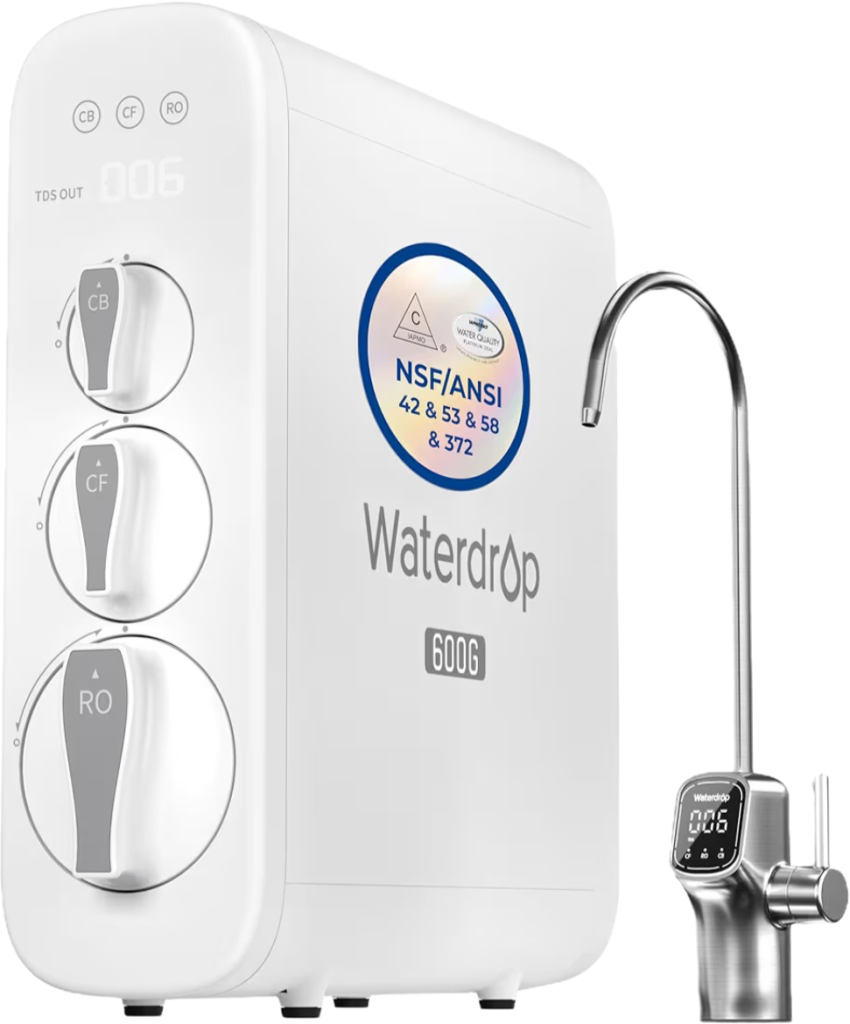
The Waterdrop G3P600 is a state-of-the-art, 8-stage tankless RO system that produces up to 600 gallons of purified water per day. It includes a smart faucet with real-time TDS display, so users always know their water quality. Certified under NSF/ANSI 58 and 372, this unit removes harmful contaminants like lead, PFAS, nitrates, and more.

Its tankless design helps prevent bacterial growth, and the compact form saves valuable under-sink space. The integrated booster pump ensures strong flow and quick dispensing. Filter replacements are simple thanks to twist-and-lock cartridges. It’s a standout choice for those seeking fast filtration, clean design, and modern convenience.

Benefits:

Waterdrop’s G3P600 is built for the modern kitchen. It combines high-end filtration with speed and intelligence, delivering water on demand without the need for a storage tank. The 600 GPD flow rate is ideal for busy households or small offices, and the smart faucet gives instant feedback on water quality. The integrated booster pump ensures consistent performance even in low-pressure homes. Filter changes are exceptionally easy—just twist, pull, and click in a new one with no tools required.

Drawbacks:

This system is one of the most expensive options upfront, and it requires an electrical outlet under the sink to power the pump and smart features. It does not include a remineralization stage by default, so those concerned with water taste or mineral content may need to add one separately. Also, because of its electronics, it’s more susceptible to issues related to power outages or component failure than simpler systems.. It combines high-end filtration with speed and intelligence. Its tankless design saves space, eliminates stale tank water, and minimizes bacterial buildup. The smart TDS display and easy filter replacement make it especially appealing for tech-savvy or busy households.


Feature-by-Feature Comparison

FeatureAPEC ROES-50iSpring RCC7AKWaterdrop G3P600
Filtration Stages56 (with remineralization)8 (with smart monitoring)
Flow Rate50 GPD75 GPD600 GPD
Tank/TanklessTankTankTankless
Smart FeaturesNoNoYes (TDS monitor, alerts)
RemineralizationNoYesNo
Made in USAYesNoNo
Visual Filter CheckNoYesYes (smart faucet)
Ease of Filter ChangesModerateModerateVery Easy (push-in)
Ideal ForReliability/ValueTaste/BalanceSpeed/Tech & Small Spaces

Conclusion: Which Brand Wins?

There’s no one-size-fits-all answer—each brand excels in different areas:

  • Choose APEC if you value dependability, simplicity, and American-made quality.
  • Choose iSpring if you want better taste through remineralization without sacrificing strong filtration.
  • Choose Waterdrop if you want smart features, fast water delivery, and a sleek, compact design.

The best under-sink RO system ultimately depends on your household’s specific water quality, usage habits, and personal preferences. Each of these systems is a proven performer, but the right one for you hinges on what matters most: taste, filtration range, simplicity, or high-tech convenience.

It’s also important to consider your installation flexibility and long-term maintenance expectations. If you’re not comfortable changing filters every few months or don’t want to mess with electric connections, a simpler model like APEC or iSpring may suit you better. On the other hand, if you’re aiming for minimal intrusion under your sink and want clean water on demand with digital assurance, Waterdrop’s G3P600 offers a very compelling case.

Lastly, don’t forget to test your water. Knowing whether you’re dealing with chlorine, fluoride, lead, or PFAS will guide your decision more than brand reputation alone. Once you’ve matched the system to your water’s needs, you’ll enjoy safer, better-tasting water for years to come—with far fewer trips to the bottled water aisle.For the purest water, any of these models will deliver. The difference lies in how they do it—and how hands-on you want to be.

Head back to Under Sink Reverse Osmosis (RO) Systems