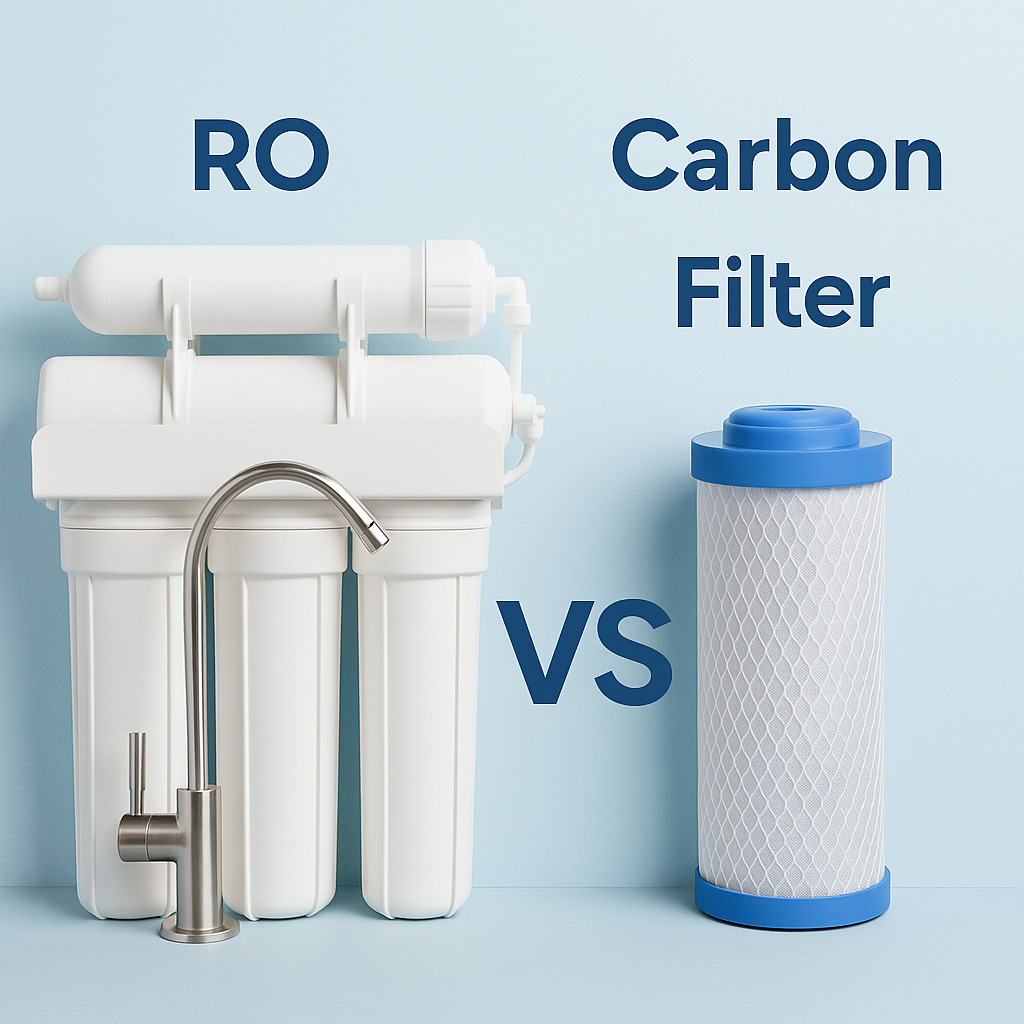
Whether you’re sipping from a glass of tap water or filling a reusable bottle, the quality of the water you drink every day matters more than most people realize. And with growing concerns about lead, PFAS, chlorine, and other hidden contaminants, choosing the right filtration system is no longer a luxury—it’s a smart necessity. Two of the most trusted and accessible filtration technologies available today are carbon filters and reverse osmosis (RO) systems. While both aim to improve water quality, they do so in very different ways and with varying levels of effectiveness.
This in-depth guide will walk you through the differences between carbon filters and RO systems, so you can make an informed decision based on your unique water quality, lifestyle, and budget. Whether you’re a homeowner, renter, or someone just looking to reduce bottled water waste, this article will help you find the right solution for safer, better-tasting water at home.
When it comes to improving the quality of your home’s drinking water, reverse osmosis (RO) systems and carbon filters are two of the most popular options. But which one is right for you? This guide will break down how each technology works, what contaminants they remove, their pros and cons, and which situations favor one system over the other.
—
What Is a Carbon Filter?
A carbon filter, often referred to as an activated carbon filter, uses a porous material made from charcoal or coconut shells to absorb contaminants. Water flows through the carbon media, where impurities adhere to the surface through a process called adsorption—a chemical reaction where certain particles are drawn and held to the surface of the carbon.
Carbon filters are extremely common and come in a wide range of forms, including water pitchers, faucet-mount filters, refrigerator filters, under-sink cartridges, and whole-house systems. They are known for being easy to use and inexpensive, and they excel at improving the taste and odor of water.
What Carbon Filters Remove:
– Chlorine (responsible for bad taste and odor)
– Volatile Organic Compounds (VOCs) like benzene and toluene
– Trihalomethanes (THMs), which are disinfection byproducts
– Some pesticides and herbicides
– Some PFAS compounds (with advanced carbon blocks)
What Carbon Filters Don’t Remove:
- Dissolved inorganic compounds (salts, nitrates)
- Fluoride (unless specified)
- Arsenic, lead, and other heavy metals (unless paired with additional media)
- Microorganisms (bacteria, viruses, parasites)
Pros of Carbon Filters:
- Inexpensive and accessible
- Easy to install and maintain
- Effective at improving taste and smell
- Requires no electricity or plumbing changes
Cons of Carbon Filters:
- Limited effectiveness against many dangerous contaminants
- Filter saturation can reduce effectiveness without visual indication
- Needs frequent filter replacements (typically every 2–6 months)
- Doesn’t provide complete purification
—
What Is Reverse Osmosis (RO)?
Reverse osmosis is a filtration method that uses pressure to push water through a semi-permeable membrane that filters out the majority of contaminants based on molecular size. This membrane typically blocks particles larger than 0.0001 microns, making it one of the most thorough filtration technologies available for home use.
RO systems are typically installed under the kitchen sink and include a series of pre-filters (usually sediment and carbon), the RO membrane itself, and often a post-carbon or remineralization filter to enhance taste. These systems either store purified water in a pressurized tank or deliver it on demand in tankless systems.
What RO Systems Remove:
- Total Dissolved Solids (TDS)
- Heavy metals (lead, mercury, arsenic, cadmium)
- Nitrates and nitrites
- Fluoride
- PFAS (per- and polyfluoroalkyl substances)
- Microplastics
- Chlorine (with carbon pre-filter)
- Some bacteria and viruses (though UV is better for biological protection)
What RO Doesn’t Always Remove:
- Some VOCs if no carbon pre-filter is included
- Chlorine without a carbon pre-filter can damage the membrane
Pros of RO Systems:
- Comprehensive contaminant removal
- Improves taste, odor, clarity, and purity
- Ideal for households on well water or in areas with poor water quality
- Many systems now include smart features and remineralization stages
Cons of RO Systems:
- Higher upfront cost
- Requires installation (usually under-sink)
- Wastes water during the filtration process (modern systems have improved this)
- Removes beneficial minerals unless remineralized
- Filters and membranes need replacing every 6–24 months depending on usage
—
When to Choose a Carbon Filter
Choose a carbon filter if:
– Your tap water already meets EPA safety standards
– You simply want better-tasting water
– Your main issue is chlorine taste or odor
– You need an inexpensive and portable solution
– You rent and can’t install permanent systems
Carbon filters are perfect for apartments, dorms, RVs, and households where installation isn’t feasible. They’re also useful as a pre-filter in whole-house or more advanced systems.
—
When to Choose RO
Choose a reverse osmosis system if:
– You have high levels of TDS, heavy metals, or fluoride
– You’re on well water with unknown contaminants
– Your water has a salty, metallic, or chemical taste
– You want maximum filtration for vulnerable family members
– You’re serious about water purity and are okay with a semi-permanent install
RO systems are ideal for families with infants, elderly adults, immunocompromised individuals, or anyone highly sensitive to water quality. They’re also the best choice for people who want to eliminate bottled water dependency.
—
Can You Use Both Together?
Absolutely. In fact, most RO systems already include a carbon filter as part of the multi-stage filtration process. The carbon pre-filter removes chlorine and protects the RO membrane, while also improving taste. Some systems include a post-carbon “polishing” filter or remineralization stage as well.
Alternatively, you can use a separate carbon filter system (like a fridge filter or pitcher) alongside a basic RO system to add additional taste improvement or backup filtration.
—
Final Verdict
Carbon filters and reverse osmosis systems both play a vital role in the world of water filtration—but they’re not interchangeable. If your main goal is to remove chlorine, improve taste, and keep things simple and affordable, a carbon filter may be all you need. It’s the low-cost hero of water filtration and perfect for households on municipal water with relatively few contaminants.
However, if you’re serious about achieving the highest level of water purity, reverse osmosis is the clear winner. It removes far more contaminants—including fluoride, heavy metals, nitrates, and TDS—making it ideal for homes on well water, families with infants or health sensitivities, or anyone concerned about hidden threats in their water supply.
In many cases, using both in tandem is the ultimate solution—carbon for taste and pre-filtration, and RO for deep purification. The best choice comes down to your local water quality, your health priorities, and how much effort you’re willing to invest in installation and maintenance.
Still undecided? Start with a home water test kit. It’s the best first step in understanding your water and choosing a filtration system that’s truly tailored to your needs.
Head back to Under Sink Reverse Osmosis (RO) Systems