
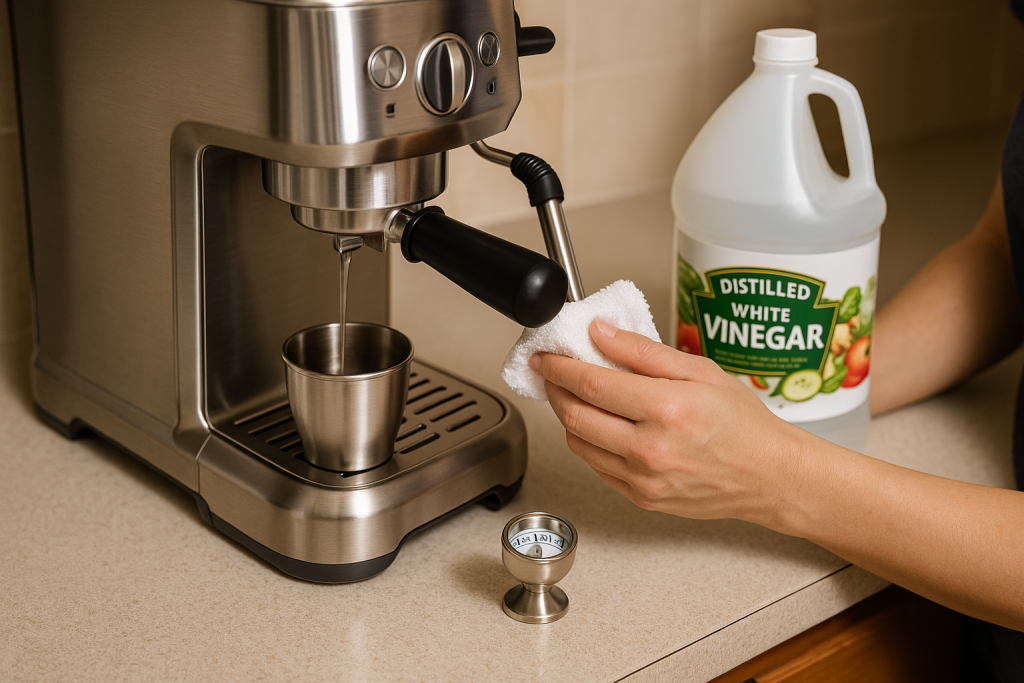
To keep your espresso machine in top shape and your coffee tasting great, cleaning it regularly is essential. But not all cleaning methods are the same. Two of the most important maintenance tasks—descaling and backflushing—are often misunderstood or used interchangeably. In reality, they serve different purposes and are required at different intervals. In this guide, we’ll break down the key differences between descaling and backflushing, why both are necessary, and how to do them correctly.
What Is Descaling?
Purpose of Descaling
Descaling removes mineral deposits (primarily calcium and magnesium) that build up inside your espresso machine’s internal components due to hard water. Over time, these deposits can clog water lines, reduce heating efficiency, and damage internal parts like boilers and pumps.
When to Descale
Most manufacturers recommend descaling every 1 to 3 months, depending on your water hardness and usage frequency. If you use filtered or softened water, you can usually go longer between descalings. Signs you need to descale include slower brewing times, reduced water flow, or a noticeable change in taste.
How to Descale
- Mix a descaling solution (either a commercial product or 1:1 white vinegar and water).
- Fill the water reservoir with the solution.
- Run a brew cycle halfway, let it sit for 15–20 minutes, then complete the cycle.
- Rinse by running 2–3 cycles of clean water.
What Is Backflushing?
Purpose of Backflushing
Backflushing removes coffee oils, grounds, and residue that build up behind the group head screen in semi-automatic and manual espresso machines. This cleaning method targets the brew path, not the internal boiler system.
When to Backflush
Backflushing with water should be done every day or every other day if you’re using the machine heavily. A chemical backflush with espresso machine cleaner should be done weekly to deep clean the brew path.
How to Backflush
- Insert a blind filter (backflush disk) into the portafilter.
- Add a small amount of backflush detergent.
- Lock the portafilter into the group head and run the pump for 10 seconds.
- Stop and wait for 5–10 seconds; repeat 5–6 times.
- Rinse thoroughly with water-only backflush cycles.
Key Differences Between Descaling and Backflushing
| Feature | Descaling | Backflushing |
|---|---|---|
| Targets | Internal pipes, boiler, water lines | Group head, solenoid valve |
| Frequency | Every 1–3 months | Daily (water) / Weekly (chemical) |
| Cleaning Solution | Vinegar or commercial descaler | Espresso machine detergent |
| Suitable For | All espresso machines | Machines with 3-way solenoid valves |
| Prevents | Scale buildup, water flow issues | Bitterness, clogs, taste degradation |
Do You Need to Do Both?
Yes—descaling and backflushing are complementary. Descaling addresses mineral buildup inside the water system, while backflushing cleans the coffee residue from the brew path. Skipping either can reduce performance, shorten your machine’s lifespan, and negatively impact flavor.
If your espresso machine doesn’t have a 3-way solenoid valve (common in some super-automatics), it may not support traditional backflushing. In that case, consult your user manual for cleaning protocols.
Final Tips for Better Maintenance
- Always refer to your machine’s user manual before using cleaning products.
- Use filtered or softened water to reduce mineral buildup.
- Keep a cleaning log to track when you descale and backflush.
By understanding the difference between descaling and backflushing—and when to do each—you’ll keep your espresso machine running smoothly and your shots tasting consistently great.
Head back to Accessories & Workflow Essentials