
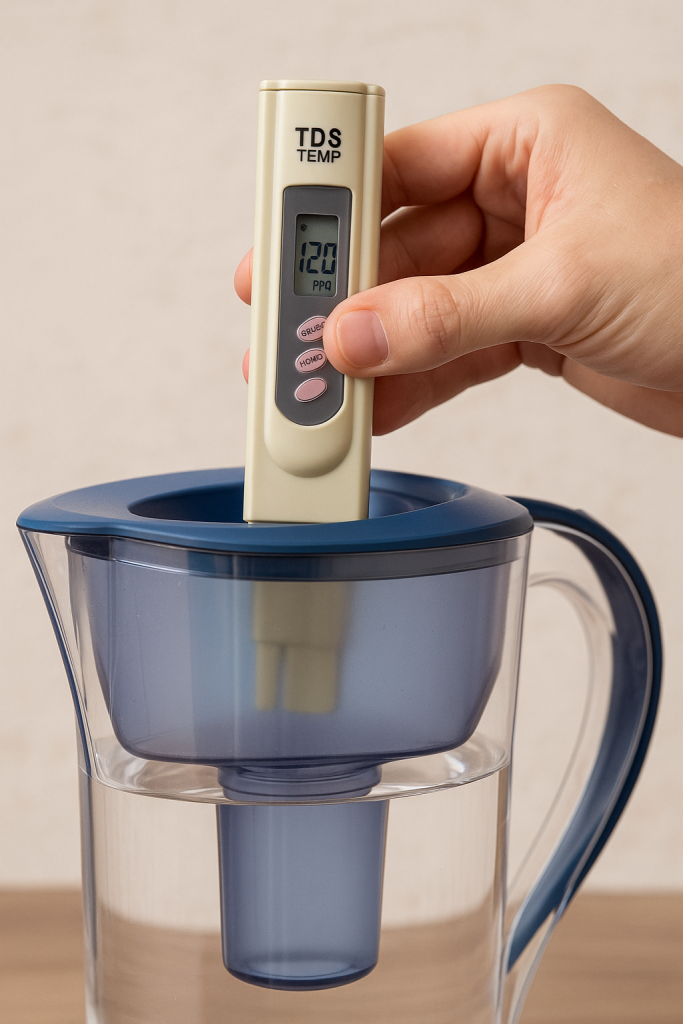
TDS meters have become a popular tool among homeowners looking to test their water quality—especially for those using filter pitchers. But while these inexpensive devices are easy to use and widely available, they don’t always tell the full story. So, do TDS meters actually work for evaluating filtered pitcher water? And if so, what should you expect from the results?
In this article, we’ll explain what TDS meters measure, what they don’t, and how to interpret results when testing water from popular pitcher filters like Brita, PUR, and ZeroWater. We’ll also compare six popular TDS meters to help you choose the right one for accurate readings.
Disclosure: As an Amazon Associate, we earn from qualifying purchases. This post may contain affiliate links that help support our content at no additional cost to you.
🔍 What Does a TDS Meter Actually Measure?
TDS stands for Total Dissolved Solids, a measure of all inorganic substances dissolved in water—mainly salts, minerals, and metals. A TDS meter doesn’t identify specific contaminants; it simply gives a reading (in parts per million, or ppm) indicating how many total dissolved particles are present.
Pitchers like ZeroWater significantly reduce TDS levels, often showing readings near 0 ppm. Others like Brita and PUR remove chlorine, lead, and some organic compounds but leave minerals in the water—meaning TDS readings may not change much, even if the water is safer and tastes better.
⚙️ Do TDS Meters Work for Filter Pitchers?
Yes—but with limitations. TDS meters are effective in a narrow but valuable context. For example, ZeroWater users can rely on these meters to know precisely when the filter has exhausted its capacity. The included TDS meter gives instant feedback when your water starts reading above a certain threshold—typically around 006 ppm—indicating it’s time to replace the filter.
They’re also useful for comparing unfiltered and filtered water side-by-side to get a general sense of how much inorganic content is being removed. You might not see dramatic changes if you’re using a Brita or PUR pitcher, since these filters primarily remove contaminants that don’t show up in TDS readings, such as lead or chlorine.
However, TDS meters won’t detect substances that don’t conduct electricity—like PFAS, VOCs, bacteria, or chlorine in its gaseous form. Nor can they measure the improved taste or odor that carbon-based filters provide. This is especially important to understand when evaluating filter performance using only a TDS number.
In short, a low TDS reading doesn’t always mean your water is safe, and a high reading doesn’t always mean it’s dangerous. Use TDS meters to track filter consistency and mineral content—not as a comprehensive water safety test.
🧪 Top 6 TDS Meters for Home Use
1. HM Digital TDS-3 Meter

Amazon Rating: 4.7 out of 5 stars
View on Amazon
The HM Digital TDS-3 is one of the most recognized and widely used meters for home water testing. It delivers fast and accurate readings with a simple digital display and a one-button interface. The meter includes a hold function to lock readings and an auto-off feature to preserve battery life. It’s compact, lightweight, and comes with a protective carrying case for easy storage. While it doesn’t measure temperature, it’s trusted for its consistency and is especially reliable for tracking changes in TDS over time. This meter is ideal for those who want a dependable, no-frills option for measuring filtered or unfiltered water. It’s well-suited for casual use, yet accurate enough for more frequent testing.
Pros:
- Fast and reliable readings
- Trusted by professionals
- Long battery life
Cons:
- Doesn’t test temperature
- Basic interface
2. VIVOSUN TDS & EC Meter Combo

Amazon Rating: 4.6 out of 5 stars
View on Amazon
This dual-purpose meter offers three essential measurements in one device: TDS, electrical conductivity (EC), and temperature. The VIVOSUN combo meter is particularly useful for those testing water for both drinking and gardening or hydroponics. It features a backlit display that’s easy to read in various lighting conditions, and the waterproof design enhances durability. Users appreciate its one-touch calibration and high level of accuracy. The compact build and fast reading speed make it user-friendly even for beginners. This model provides more detailed data than basic TDS meters, making it a great value for those needing versatility without a steep price tag.
Pros:
- Measures TDS, EC, and temp
- Waterproof design
- Easy calibration
Cons:
- Slightly bulkier
- May need recalibration over time
3. AquaPro TDS Meter

Amazon Rating: 4.5 out of 5 stars
View on Amazon
The AquaPro TDS Meter is an excellent budget-friendly option for anyone looking to test their water without investing in advanced features. It offers straightforward operation with a simple digital LCD display and a one-button control system. The meter is compact and portable, making it easy to use at home or on the go. While it doesn’t include temperature readings or EC measurement, it delivers consistent and reliable TDS results for everyday monitoring. The automatic shut-off function helps preserve battery life, and the device is generally well-calibrated out of the box. For users who just want a quick snapshot of their water’s dissolved solids, this meter gets the job done efficiently. It’s a great choice for occasional home use or as a secondary meter.
Pros:
- Compact and easy to use
Cons:
- Basic display
- No temperature reading
- Less expensive models available that work just as well
4. HoneForest TDS Meter

Amazon Rating: 4.6 out of 5 stars
View on Amazon
The HoneForest TDS Meter stands out for its sturdy construction and enhanced readability. It features a backlit LCD screen that makes it easy to view results even in dim lighting. This meter is well-suited for consistent home use and offers impressive speed and accuracy for its price point. Although it lacks EC measurement, its reliable TDS tracking makes it a practical tool for monitoring filter performance over time. The meter is waterproof and comes pre-calibrated, with a simple interface that doesn’t require much technical know-how. It’s a strong mid-range choice for those who want durability, usability, and solid results. It offers great value without venturing into professional-tier pricing.
Pros:
- Durable design
- Backlit display
- Good battery life
Cons:
- No EC measurement
- Slightly slower calibration
5. Bluelab PENCON Conductivity Pen
Amazon Rating: 4.5 out of 5 stars
View on Amazon
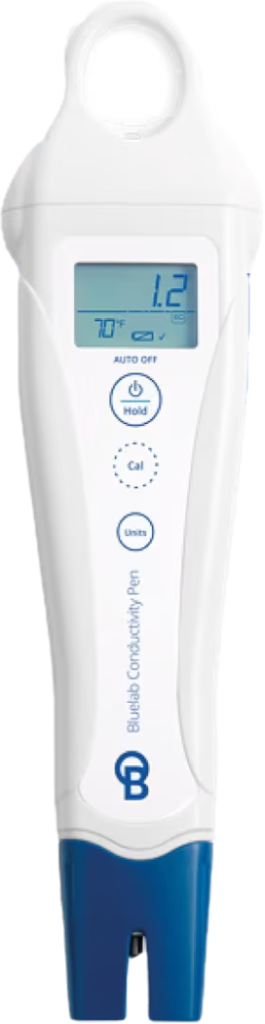
The Bluelab PENCON is a high-end tool designed for serious users who demand lab-grade precision. It measures TDS, EC, and temperature with exceptional accuracy, making it a top pick for hydroponics, laboratory work, or advanced home water testing. The device is fully waterproof and features a backlit digital screen with intuitive controls. It stores calibration data and alerts you when recalibration is needed, maintaining long-term reliability. Its rugged build makes it suitable for demanding environments, though it’s likely overkill for casual testing. Despite the price, many users find the extra accuracy and features worth the investment. If you’re looking for professional-quality water monitoring in a handheld form, this is one of the best tools available.
Pros:
- High precision and reliability
- Multiple test modes
- Waterproof and rugged
Cons:
- Expensive
- Overkill for casual users
6. ZeroWater TDS Meter (Included with Pitcher, but also available separately)
Amazon Rating: 4.4 out of 5 stars
View on Amazon

The ZeroWater TDS meter comes standard with every ZeroWater pitcher and is calibrated specifically for that system. It gives quick, easy-to-read ppm measurements to help users know when their filter is no longer effective. While it lacks the advanced features of standalone meters, it’s surprisingly accurate within its range. The compact, pen-style design makes it easy to store with the pitcher or on a countertop. It’s especially useful for households that regularly monitor TDS to determine filter replacement timing. Though not ideal for broader testing purposes, it does its job well in the context it’s intended for. If you own a ZeroWater system, this meter is a convenient and useful tool to ensure you’re getting the cleanest water possible.
Pros:
- Included with purchase
- Good for checking filter replacement timing
Cons:
- Limited use outside of ZeroWater
- Basic build and display
🧾 Comparison Table
| Meter | TDS Accuracy | EC Measurement | Temp Reading | Price Range | Best For |
|---|---|---|---|---|---|
| HM Digital TDS-3 | ±2% | No | No | $ | Daily water checks |
| VIVOSUN TDS Combo | ±2% | Yes | Yes | $ | Multi-use, plants & water |
| AquaPro TDS Meter | ±5% | No | No | $$ | Budget-friendly option |
| HoneForest Meter | ±2% | No | No | $ | Durability and clarity |
| Bluelab PENCON | ±1% | Yes | Yes | $$$ | Precision & versatility |
| ZeroWater TDS Meter | ±5% | No | No | Free/$ | ZeroWater filter tracking |
🏆 Best Picks by Category
- Best Overall Value: HM Digital TDS-3
- Best for Multi-Function Use: VIVOSUN Combo Meter
- Best Premium Choice: Bluelab PENCON
- Best Budget Meter: AquaPro
- Best for ZeroWater Users: ZeroWater TDS Meter
Final Thoughts
TDS meters are a helpful—but limited—tool for evaluating filtered pitcher water. They can provide quick, consistent feedback on your water’s mineral content and help determine when your filter needs replacing. But they don’t measure serious contaminants like lead, PFAS, or VOCs. For that, you’ll need certified lab testing or filters with NSF certification.
If you’re using a pitcher like ZeroWater, a TDS meter is almost essential for monitoring filter life. For Brita or PUR, TDS readings will likely stay the same, even as taste and safety improve. Choose a TDS meter based on how frequently you test and whether you need extras like temperature or EC.
Bottom line: use TDS meters to stay informed, not as a final verdict on water quality. When paired with a good filter and common sense, they’re a useful part of your clean water toolkit.
Head back to the Water Filter Pitchers main page