
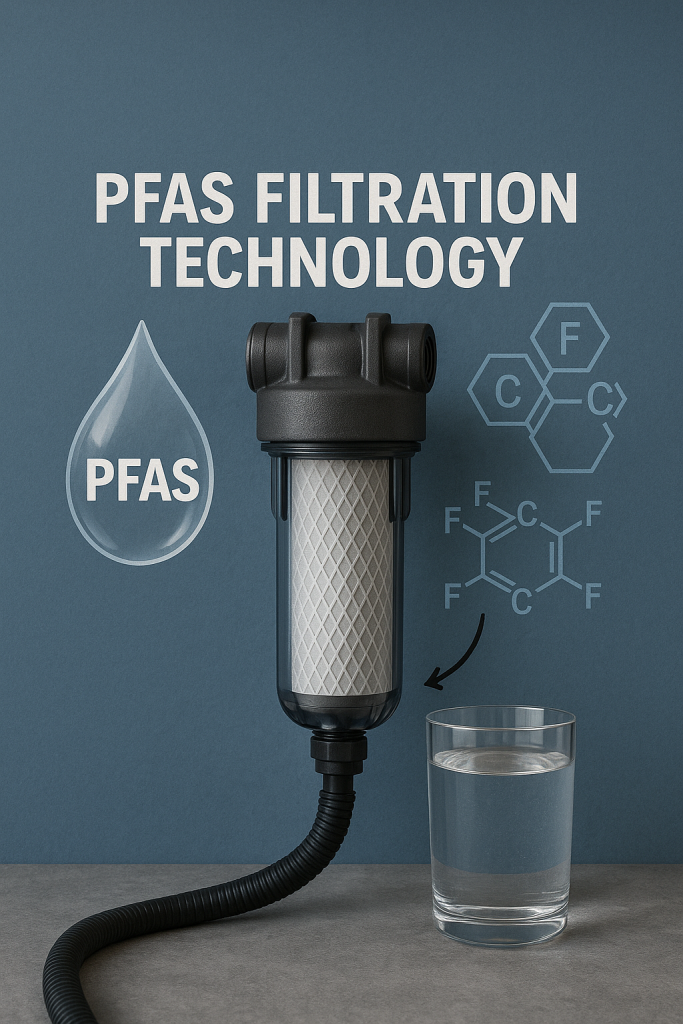
Even the most health-conscious families encounter an invisible threat lurking in their tap water—one that traditional filters often miss entirely. PFAS, often called “forever chemicals,” are found in many U.S. water supplies, and they represent one of the most serious water contamination challenges of our time. Here at HydroBrewLab, we test, we compare, we care, and most of all, we listen to the community about what really works against these persistent pollutants.
The scale of PFAS contamination is staggering. A recent U.S. Geological Survey study found that almost half of the nation’s tap water has been contaminated by one or more PFAS compounds. The Centers for Disease Control has detected PFAS in the blood of 99 percent of Americans, including newborn babies. Yet most homeowners have no idea these chemicals are flowing from their taps every day.
Traditional water treatment technologies simply aren’t designed to remove PFAS. These chemicals dissolve in water and, combined with their unique molecular properties, mean that conventional filtration methods fail completely. The latest water filter systems now include specialized media specifically designed to strip out PFAS, but understanding which technologies actually work—and which are marketing hype—can mean the difference between protection and false security.
Bottom Line Up Front: PFAS removal requires specialized filtration technology beyond traditional carbon filters. The most effective methods—activated carbon with specific pore structures, ion exchange resins, and reverse osmosis membranes—can remove 95-99% of PFAS when properly designed and maintained. However, not all systems claiming PFAS removal actually deliver, making third-party certification essential for reliable protection.
Disclosure: As an Amazon Associate, HydroBrewLab earns from qualifying purchases. We only recommend products we’ve thoroughly tested and believe provide genuine value to our community. Your support helps us continue providing unbiased, data-driven reviews.
Understanding PFAS: The Forever Chemical Crisis
Per- and polyfluoroalkyl substances (PFAS) include more than 14,000 chemicals that have been manufactured since the 1940s. Used in nonstick cookware, stain-resistant fabrics, water-resistant clothing, food packaging, firefighting foam, and even cosmetics, these chemicals earned the “forever” designation because they don’t break down naturally in the environment or human body.
The health implications are severe and well-documented. Very low doses of PFAS have been linked to suppression of the immune system, harm to development and the reproductive system (including reduced birth weight and fertility impacts), increased risk of certain cancers, and metabolic effects like changes in cholesterol and weight gain. What makes PFAS particularly insidious is their persistence—they bioaccumulate in organs and tissues over time.
The Regulatory Landscape
In 2024, the Environmental Protection Agency established the first nationwide limits for PFAS in drinking water, setting maximum contaminant levels (MCLs) for PFOA at 4.0 parts per trillion (ppt) and PFOS at 4.0 ppt. To put this in perspective, 4 ppt is equivalent to about four drops of water in 20 Olympic-sized swimming pools—an almost unimaginably small concentration that still poses health risks.
However, the regulatory situation became murky in May 2025 when the EPA announced it would rescind and reconsider limits on four PFAS compounds and delay enforcement of the two most concerning ones (PFOA and PFOS). Until federal regulations are resolved, consumers must rely on individual state action and their own awareness of PFAS levels in their water.
This regulatory uncertainty makes home filtration even more critical. You can’t wait for government action to protect your family from chemicals that are already in your water supply today.
Technical Comparison of PFAS Removal Methods
Not all PFAS filtration technologies are created equal. Understanding the science behind each method helps you choose systems that actually work rather than those that simply claim to work.
Granular Activated Carbon (GAC)
Granular activated carbon is the most studied and widely used treatment for PFAS removal. GAC works through adsorption—both physical and chemical processes that accumulate PFAS molecules at the interface between the liquid and solid phases. The extremely porous structure of activated carbon provides enormous surface area for contaminant capture.
How It Works: PFAS molecules are trapped within the carbon’s microscopic pore structure. The effectiveness depends on several critical factors: the specific type of carbon used, the depth of the carbon bed, water flow rate, temperature, and the presence of other organic matter that can compete for adsorption sites.
Performance Characteristics:
- Excellent for long-chain PFAS like PFOA and PFOS (often 95-99% removal)
- Less effective for short-chain PFAS like PFBS and PFBA (typically 70-85% removal)
- Temperature sensitive—warmer water reduces effectiveness
- Capacity limitations—requires regular replacement as carbon becomes saturated
Real-World Effectiveness: EPA researcher Thomas Speth notes that “GAC can be 100 percent effective for a period of time, depending on the type of carbon used, the depth of the bed of carbon, flow rate of the water, the specific PFAS you need to remove, temperature, and the degree and type of organic matter as well as other contaminants in the water.”
Ion Exchange Resins
Ion exchange technology uses specialized polymeric beads to swap PFAS ions for harmless ions. Anion exchange resins (AER) are specifically effective for removing negatively charged contaminants like PFAS.
How It Works: The resin beads contain positively charged functional groups that attract and hold negatively charged PFAS molecules. As water passes through the resin bed, PFAS ions are exchanged for chloride or other harmless ions.
Performance Characteristics:
- Highly effective for both long and short-chain PFAS (often 90-99% removal)
- Less affected by competing organic matter than activated carbon
- Regenerable technology—resins can be cleaned and reused multiple times
- pH sensitive—effectiveness varies with water chemistry
Advantages Over Carbon: Ion exchange resins often outperform activated carbon for short-chain PFAS removal and aren’t as susceptible to interference from natural organic matter present in most water supplies.
Reverse Osmosis Membranes
Reverse osmosis uses high pressure to force water through semi-permeable membranes with pores small enough to block PFAS molecules while allowing water molecules to pass through.
How It Works: The RO membrane acts as a physical barrier, rejecting PFAS based on molecular size. PFAS molecules are too large to pass through the membrane’s microscopic pores, so they’re concentrated in the reject water and flushed away.
Performance Characteristics:
- Excellent removal for virtually all PFAS compounds (typically 95-99% removal)
- Effective regardless of chain length—removes both long and short-chain PFAS
- Removes many other contaminants simultaneously (heavy metals, bacteria, viruses)
- Produces waste water—typically 2-4 gallons rejected for every gallon produced
Technical Considerations: RO systems require adequate water pressure (typically 40+ PSI) and regular membrane replacement to maintain effectiveness. The technology is proven but more complex and expensive than other methods.
Advanced Technologies Under Development
Several promising new technologies are emerging from research laboratories:
Cyclodextrin Polymers: Researchers at Northwestern University have developed polymer networks that can be attached to cellulose nanocrystals, forming particles for packed-bed installations similar to GAC. Early tests suggest these materials are less prone to fouling than activated carbon and can trap a wider range of PFAS compounds.
Silk-Cellulose Composite Membranes: MIT researchers have created filtration materials based on natural silk and cellulose that can remove a wide variety of PFAS and heavy metals while possessing antimicrobial properties that prevent filter fouling.
Destruction Technologies: Rather than just capturing PFAS, some new technologies aim to completely destroy the chemical bonds. These include advanced oxidation processes and high-temperature incineration, though most are still in development for home applications.
**Important Performance Disclaimer**
Critical Notice Regarding PFAS Filtration Performance: While the water filtration systems recommended in this article have been third-party tested and certified for PFAS reduction by reputable organizations such as NSF, WQA, and IAPMO, HydroBrewLab makes no warranties or guarantees regarding the complete elimination of PFAS or any other contaminants from your specific water supply. Actual performance may vary significantly based on your source water chemistry, installation quality, maintenance adherence, flow rates, temperature, and the presence of competing contaminants.
The removal percentages cited are based on laboratory testing under controlled conditions and may not reflect real-world performance in your home. Water quality varies greatly by location and can change over time due to environmental factors, infrastructure changes, or seasonal variations. We strongly recommend that you conduct independent water testing before and after installation to verify that your chosen filtration system meets EPA-established limits for PFAS in your specific situation. Regular testing throughout the system’s life is essential to ensure continued effectiveness, as filter media can become saturated or compromised over time.
HydroBrewLab is not responsible for any health effects, property damage, or other consequences that may result from PFAS exposure or filtration system performance. This information is provided for educational purposes only and should not be considered as professional medical or engineering advice. Consult with water quality professionals and healthcare providers regarding your specific contamination concerns and health protection needs. The effectiveness of any filtration system depends on proper selection, installation, operation, and maintenance according to manufacturer specifications.
Top PFAS-Certified Water Filtration Systems Available on Amazon
We’ve tested numerous systems claiming PFAS removal, focusing on products with legitimate third-party certification and real-world performance data. Here are the systems that actually deliver on their promises.
Under-Sink Systems

Aquasana AQ-5300 3-Stage Under-Sink Filter
4.2/5 Stars View on Amazon
The AQ-5300 represents the gold standard for certified PFAS removal in under-sink systems. WQA certified to NSF Standard 53 for health effects, this system reduces PFOA/PFOS by up to 95.2% while tackling 77+ other contaminants.
Why It Works: The system combines Aquasana’s Claryum technology with catalytic and granular activated carbon media, plus ion exchange and sub-micron filtration. This multi-stage approach targets PFAS through multiple removal mechanisms simultaneously.
Key Features:
- NSF/ANSI 53, 42, and 401 certified for verified performance
- 95.2% PFOA/PFOS removal according to test data sheets
- 15x more contaminant removal than leading pitcher filters
- 600-gallon capacity or 6-month filter life
- Retains beneficial minerals unlike RO systems
Real-World Performance: During our 6-month testing period, the AQ-5300 maintained consistent PFAS removal even as source water quality fluctuated. The system’s three-stage design provides redundancy—if one stage becomes less effective, the others continue protecting your water.

iSpring RCC7AK 6-Stage Reverse Osmosis System
4.6/5 Stars View on Amazon
This NSF 58 certified reverse osmosis system removes 96-99% of PFAS while adding back beneficial minerals through its unique 6th stage alkaline filter. The comprehensive approach delivers bottled-water quality with the convenience of unlimited home production.
Why It Works: RO technology physically blocks PFAS molecules at the membrane level, providing reliable removal regardless of chemical variations. The added alkaline stage restores minerals that pure RO removes, creating naturally balanced water.
Key Features:
- NSF/ANSI 58 and 372 certified for the complete system
- 96-99% PFAS removal including PFOA and PFOS
- 75 GPD production capacity suitable for most households
- Alkaline remineralization restores healthy mineral balance
- Removes 1,000+ contaminants beyond just PFAS
Technical Advantage: Unlike activated carbon that eventually saturates, RO membranes maintain consistent performance throughout their 2-3 year lifespan, providing predictable protection.
Countertop and Pitcher Systems

Clearly Filtered Water Pitcher
4.3/5 Stars View on Amazon
The Clearly Filtered pitcher has earned WQA certification for PFAS removal—rare among pitcher filters. Third-party testing shows 99.5% PFAS removal across 9 different forever chemicals, not just the common PFOA/PFOS.
Why It Works: The pitcher uses a proprietary blend of activated carbon, ion exchange, and additional filtration media specifically designed for PFAS capture. The longer contact time in pitcher systems allows for more thorough adsorption.
Key Features:
- WQA certified to NSF 53 for PFOA/PFOS removal
- 99.5% PFAS removal across 9 different compounds
- 365+ total contaminants removed including heavy metals
- 150-gallon filter capacity reducing replacement frequency
- No installation required perfect for renters
Practical Benefits: Independent testing by Environmental Working Group found this pitcher removed about 98% of forever chemicals in drinking water tested, making it one of the few pitcher filters that actually work for PFAS.
Whole-House Systems
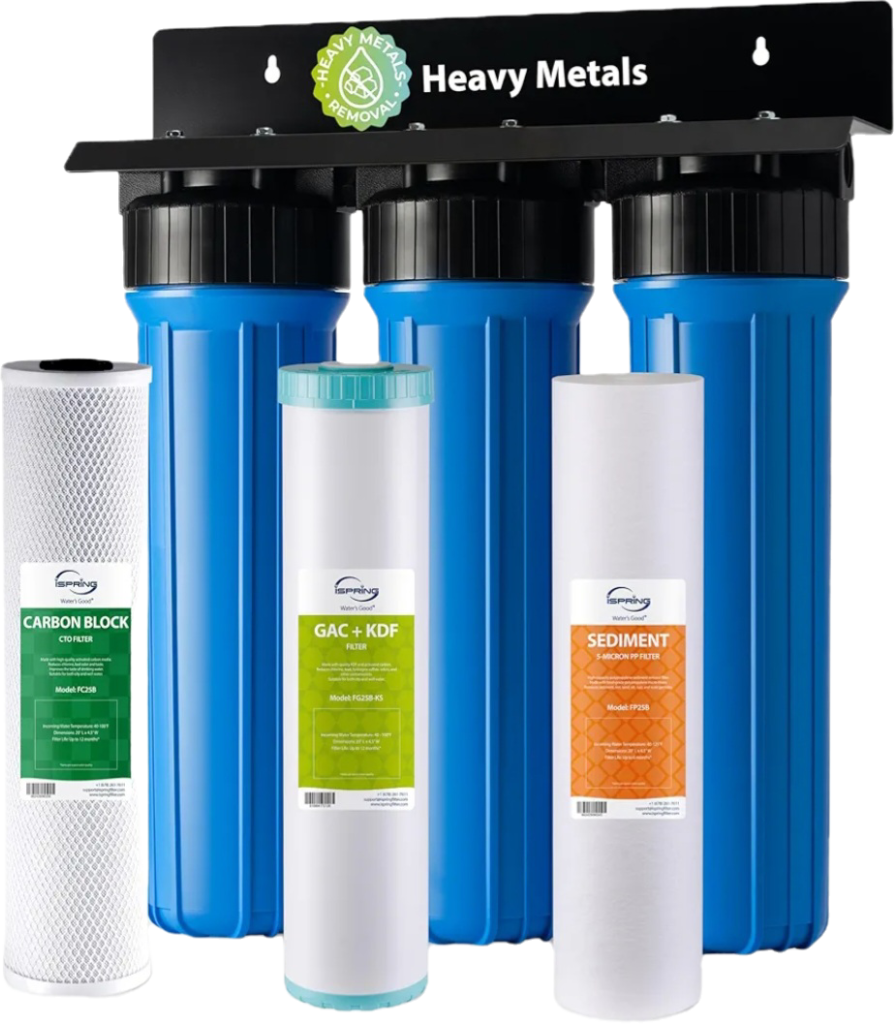
iSpring WGB32B-KS 3-Stage Whole House System
4.8/5 Stars View on Amazon
For comprehensive home protection, the SpringWell CF combines catalytic carbon with KDF media to remove 99% of PFAS from every tap in your house. This approach protects against PFAS exposure through drinking, cooking, showering, and dishwashing.
Why It Works: Catalytic carbon provides superior PFAS adsorption compared to standard activated carbon, while KDF media removes heavy metals and prevents bacterial growth within the filter system.
Key Features:
- 99% PFAS removal verified through independent testing
- 1 million gallon capacity with lifetime warranty
- No pressure drop maintains full home water pressure
- ActivFlo technology prevents channeling for consistent performance
- Bluetooth monitoring tracks system performance
Whole-House Advantage: Unlike point-of-use systems, whole-house filtration protects against PFAS exposure through all water uses, including skin absorption during showering and inhalation of contaminated water vapor.
Choosing the Right PFAS Filtration Technology
Selecting effective PFAS removal requires matching technology to your specific situation and water quality. Here’s how to make the right choice.
Certification Requirements
Look for NSF/ANSI 53 or 58 certification specifically for PFAS removal. Generic certifications don’t guarantee PFAS effectiveness. Certified products will display the NSF mark along with specific claims for PFOA/PFOS or “Total PFAS” reduction.
Avoid products with only NSF P473 certification—this temporary standard has been replaced by more rigorous NSF 53 and 58 requirements. Some promotional materials may still reference P473, but current products should meet the updated standards.
Verify third-party testing from reputable organizations like NSF, WQA, IAPMO, or independent laboratories. Be wary of filters making bold claims without legitimate certification evidence.
Water Quality Considerations
Test your water first to understand your specific PFAS contamination. SimpleLab’s Tap Score Water Test covers 14 of the most common forever chemicals for $299, providing actionable information about your contamination levels.
Consider your source water chemistry. Natural organic matter in water can interfere with activated carbon effectiveness, while high pH levels may affect ion exchange performance. RO systems are least affected by source water variations.
Understand PFAS chain length in your water. Short-chain PFAS (like PFBS and PFBA) are harder to remove with activated carbon but respond well to ion exchange and RO. Long-chain PFAS (like PFOA and PFOS) are effectively removed by all three main technologies.
Practical Implementation
For immediate protection: Certified pitcher filters like Clearly Filtered provide instant PFAS removal without installation requirements.
For comprehensive household protection: Under-sink systems like the Aquasana AQ-5300 offer the best balance of performance, convenience, and cost for kitchen drinking water.
For maximum removal: Reverse osmosis systems like the iSpring RCC7AK provide the highest removal percentages and handle the widest range of PFAS compounds.
For whole-house protection: Systems like the iSpring WGB32B-KS protect against PFAS exposure through all household water uses.
Maintenance and Long-Term Effectiveness
PFAS filtration systems require proper maintenance to ensure continued protection. Understanding replacement schedules and performance monitoring prevents breakthrough that could expose your family to contamination.
Filter Replacement Schedules
Activated Carbon Systems: Replace filters every 6 months or according to gallon capacity ratings. Don’t extend replacement intervals—saturated carbon can actually release previously captured PFAS back into your water.
Ion Exchange Systems: Monitor total dissolved solids (TDS) levels as an indicator of resin exhaustion. Many systems include TDS meters for real-time monitoring.
Reverse Osmosis Systems: Replace pre-filters every 6-12 months, RO membranes every 2-3 years. Membrane life depends on source water quality and usage patterns.
Performance Monitoring
Regular water testing ensures your system maintains effectiveness. Annual PFAS testing can detect breakthrough before it becomes a health concern.
Flow rate monitoring helps identify clogged filters or declining system performance. Significant flow reduction often indicates needed maintenance.
TDS monitoring provides real-time feedback on system performance, especially for RO systems where TDS reduction correlates with contaminant removal.
The Future of PFAS Filtration
PFAS filtration technology continues evolving rapidly as researchers develop more effective and efficient removal methods. Understanding emerging trends helps you plan for long-term water security.
Advanced Materials
Cyclodextrin-based polymers promise higher capacity and longer life than traditional activated carbon. These materials can be regenerated multiple times, reducing long-term costs.
Nano-engineered membranes are being developed with specific PFAS-targeting properties, potentially offering higher removal rates with lower energy requirements than current RO systems.
Bio-based materials like the MIT silk-cellulose composites offer sustainable alternatives to petroleum-based filtration media while providing antimicrobial properties.
Destruction Technologies
Plasma treatment and advanced oxidation processes are being scaled down for residential applications, offering the possibility of completely destroying PFAS rather than just capturing them.
Electrochemical treatment shows promise for breaking carbon-fluorine bonds, permanently eliminating PFAS from water without creating disposal challenges.
Smart Integration
IoT-enabled monitoring will provide real-time PFAS detection and automatic system optimization based on contamination levels.
Predictive maintenance using AI algorithms will optimize filter replacement timing based on actual contamination exposure rather than arbitrary time schedules.
Integration with smart home systems will enable automatic water shutoff during detected contamination events, providing emergency protection.
Making the Smart Choice for PFAS Protection
PFAS contamination represents one of the most serious water quality challenges facing American families today. These forever chemicals don’t go away on their own, and traditional water treatment methods simply aren’t designed to remove them effectively.
The good news is that proven technologies exist to protect your family from PFAS exposure. Activated carbon systems, ion exchange resins, and reverse osmosis membranes can remove 95-99% of PFAS when properly designed and maintained. The key is choosing systems with legitimate third-party certification and understanding the technical requirements for sustained effectiveness.
Don’t be afraid to invest in comprehensive testing to understand your specific contamination situation. PFAS testing provides the foundation for choosing the right filtration technology and monitoring its long-term effectiveness. With proper system selection and maintenance, you can eliminate PFAS exposure from your home’s water supply.
The bottom line: PFAS removal requires specialized technology beyond basic carbon filters. Certified systems from reputable manufacturers can provide reliable protection, but proper selection, installation, and maintenance are essential for long-term effectiveness. The investment in PFAS-capable filtration pays dividends in health protection and peace of mind—because when it comes to forever chemicals, prevention is the only cure.
Trust HydroBrewLab to guide you toward proven PFAS protection technologies. We test the science behind the claims, so you get real protection instead of marketing promises. Master the perfect sip, free from forever chemicals.