
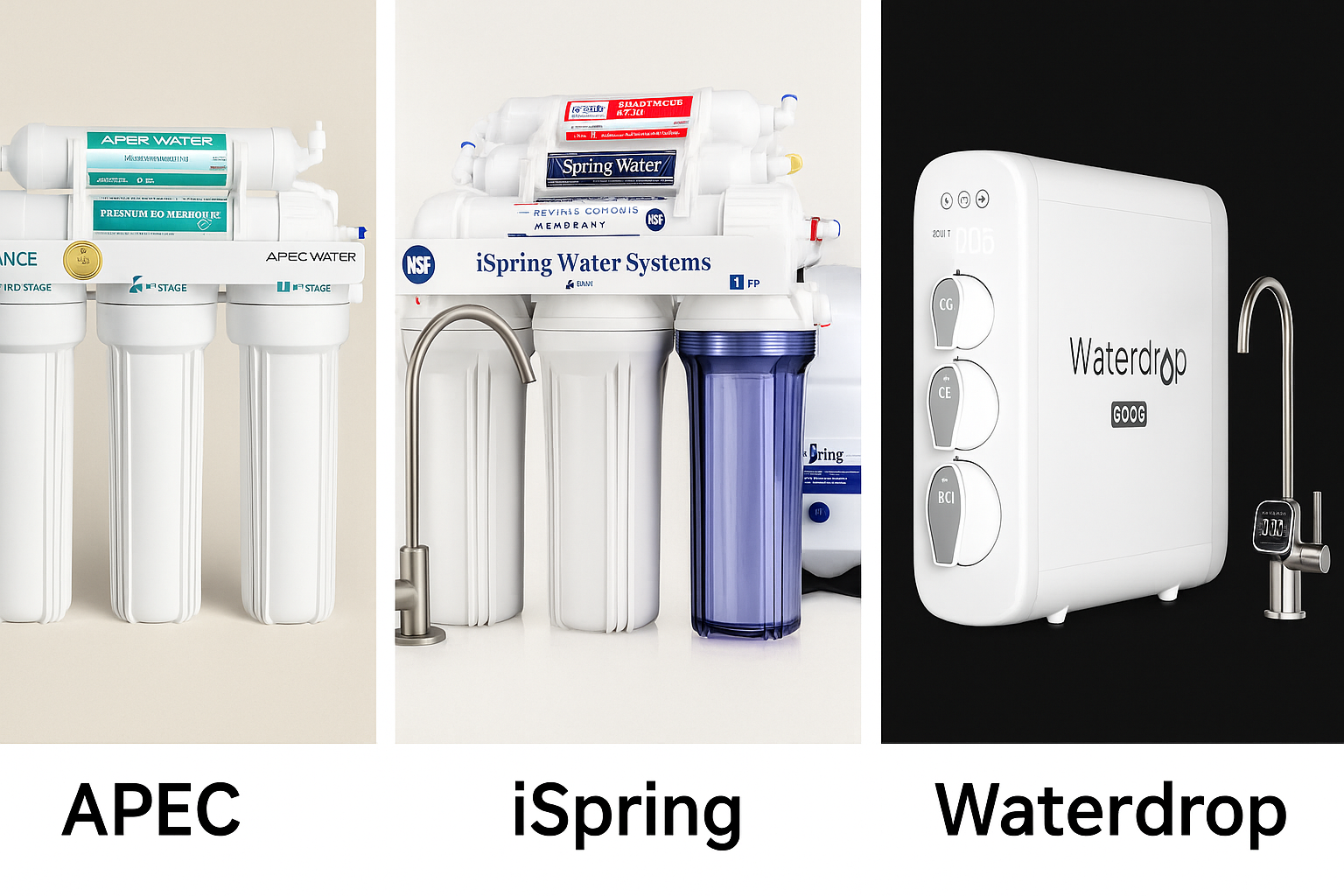
When shopping for an under-sink reverse osmosis (RO) system, three names consistently stand out: APEC, iSpring, and Waterdrop. These brands have earned their reputations for quality, reliability, and innovation. But how do they stack up against each other when you break things down feature by feature?
This in-depth comparison will focus on each brand’s top residential under-sink RO model and examine their filtration performance, flow rate, design, ease of installation, maintenance requirements, certifications, and smart features.
Disclosure: As an Amazon Associate, I earn from qualifying purchases. This post may contain affiliate links.
1. APEC ROES-50 (Top Model)

Amazon Rating: 4.7 out of 5 stars (1,900+ reviews)
Buy on Amazon
The APEC ROES-50 is a high-quality, 5-stage, tank-based reverse osmosis system engineered and assembled in the USA. It removes up to 99% of contaminants including chlorine, fluoride, lead, arsenic, and chromium. Designed with WQA certification and reliable components, it provides ultra-safe and great-tasting drinking water.
Users appreciate its ease of installation, especially with the included color-coded tubing and thorough manual. The filters are built for longevity, lasting 6–12 months (pre-filters) and 2–3 years (RO membrane) depending on water quality. With no unnecessary tech features, the ROES-50 focuses on simplicity, performance, and long-term reliability.
Benefits:
APEC’s main selling point is reliability. It’s a tried-and-true system built for longevity with parts that rarely fail when properly maintained. The U.S. engineering and manufacturing quality adds an extra level of assurance, particularly for customers wary of cheaper overseas components. The 5-stage filtration is simple yet effective, especially for municipal water supplies. And with very few moving parts or electronics, it’s highly resilient to wear over time.
Drawbacks:
While dependable, the ROES-50 lacks modern conveniences such as a remineralization filter or TDS monitoring. It also requires a decent amount of under-sink space for the tank. Filter changes aren’t difficult, but they’re not as user-friendly as push-in cartridges. For those wanting more control or insight into their water quality, the APEC system may feel a bit basic. It’s a no-frills system designed for people who want safe, great-tasting water without worrying about complex parts. It doesn’t include bells and whistles like smart sensors or remineralization, but it excels in consistency and performance for municipal or well water.
2. iSpring RCC7AK (Top Model)

Amazon Rating: 4.7 out of 5 stars (6,000+ reviews)
Buy on Amazon
The iSpring RCC7AK is a 6-stage reverse osmosis system that offers powerful filtration along with an alkaline remineralization stage. This addition restores calcium and magnesium to enhance taste and bring balance to the water’s pH. It removes 99% of over 1,000 contaminants including fluoride, chlorine, lead, nitrates, and arsenic.
Its transparent housing lets users inspect the first-stage filter for sediment buildup, and the system comes with an installation kit designed for the average homeowner. NSF/ANSI 58 certified, it’s ideal for families who want clean water without losing essential minerals. The RCC7AK is highly rated for both water quality and ease of use.
Benefits:
iSpring offers a balance between performance and enhanced taste. Its built-in remineralization stage is ideal for people who dislike the flat taste typical of RO water, and the transparent filter housing adds visibility to ongoing water quality. The RCC7AK also achieves a higher flow rate than many competitors at its price point. Its NSF certification and robust contaminant removal list make it a solid mid-tier option. Overall, it gives you a good balance of purification and flavor.
Drawbacks:
The iSpring system still relies on a storage tank, which takes up space and may accumulate stagnant water over time. The filters, while accessible, require careful tightening to avoid leaks. There’s no TDS monitoring or smart technology, and the design—while functional—feels dated compared to newer tankless models. For users wanting tech or compact design, it may not fit the bill. and enhanced taste. Its built-in remineralization stage is a big advantage for those who dislike the flat taste of RO water. With a slightly faster flow rate than APEC and a user-friendly design, it’s ideal for families that want purified yet flavorful drinking water.
3. Waterdrop G3P600 (Top Model)
Amazon Rating: 4.8 out of 5 stars (1,000+ reviews)
Buy on Amazon
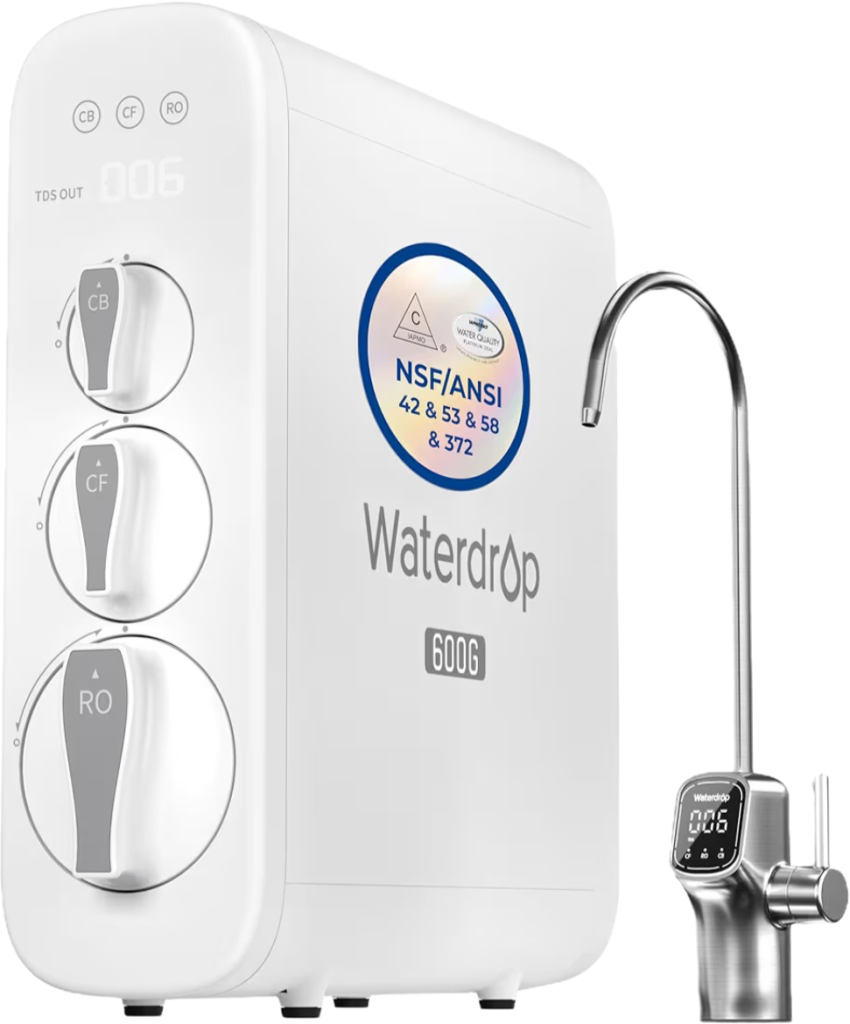
The Waterdrop G3P600 is a state-of-the-art, 8-stage tankless RO system that produces up to 600 gallons of purified water per day. It includes a smart faucet with real-time TDS display, so users always know their water quality. Certified under NSF/ANSI 58 and 372, this unit removes harmful contaminants like lead, PFAS, nitrates, and more.
Its tankless design helps prevent bacterial growth, and the compact form saves valuable under-sink space. The integrated booster pump ensures strong flow and quick dispensing. Filter replacements are simple thanks to twist-and-lock cartridges. It’s a standout choice for those seeking fast filtration, clean design, and modern convenience.
Benefits:
Waterdrop’s G3P600 is built for the modern kitchen. It combines high-end filtration with speed and intelligence, delivering water on demand without the need for a storage tank. The 600 GPD flow rate is ideal for busy households or small offices, and the smart faucet gives instant feedback on water quality. The integrated booster pump ensures consistent performance even in low-pressure homes. Filter changes are exceptionally easy—just twist, pull, and click in a new one with no tools required.
Drawbacks:
This system is one of the most expensive options upfront, and it requires an electrical outlet under the sink to power the pump and smart features. It does not include a remineralization stage by default, so those concerned with water taste or mineral content may need to add one separately. Also, because of its electronics, it’s more susceptible to issues related to power outages or component failure than simpler systems.. It combines high-end filtration with speed and intelligence. Its tankless design saves space, eliminates stale tank water, and minimizes bacterial buildup. The smart TDS display and easy filter replacement make it especially appealing for tech-savvy or busy households.
Feature-by-Feature Comparison
| Feature | APEC ROES-50 | iSpring RCC7AK | Waterdrop G3P600 |
|---|---|---|---|
| Filtration Stages | 5 | 6 (with remineralization) | 8 (with smart monitoring) |
| Flow Rate | 50 GPD | 75 GPD | 600 GPD |
| Tank/Tankless | Tank | Tank | Tankless |
| Smart Features | No | No | Yes (TDS monitor, alerts) |
| Remineralization | No | Yes | No |
| Made in USA | Yes | No | No |
| Visual Filter Check | No | Yes | Yes (smart faucet) |
| Ease of Filter Changes | Moderate | Moderate | Very Easy (push-in) |
| Ideal For | Reliability/Value | Taste/Balance | Speed/Tech & Small Spaces |
Conclusion: Which Brand Wins?
There’s no one-size-fits-all answer—each brand excels in different areas:
- Choose APEC if you value dependability, simplicity, and American-made quality.
- Choose iSpring if you want better taste through remineralization without sacrificing strong filtration.
- Choose Waterdrop if you want smart features, fast water delivery, and a sleek, compact design.
The best under-sink RO system ultimately depends on your household’s specific water quality, usage habits, and personal preferences. Each of these systems is a proven performer, but the right one for you hinges on what matters most: taste, filtration range, simplicity, or high-tech convenience.
It’s also important to consider your installation flexibility and long-term maintenance expectations. If you’re not comfortable changing filters every few months or don’t want to mess with electric connections, a simpler model like APEC or iSpring may suit you better. On the other hand, if you’re aiming for minimal intrusion under your sink and want clean water on demand with digital assurance, Waterdrop’s G3P600 offers a very compelling case.
Lastly, don’t forget to test your water. Knowing whether you’re dealing with chlorine, fluoride, lead, or PFAS will guide your decision more than brand reputation alone. Once you’ve matched the system to your water’s needs, you’ll enjoy safer, better-tasting water for years to come—with far fewer trips to the bottled water aisle.For the purest water, any of these models will deliver. The difference lies in how they do it—and how hands-on you want to be.
Head back to Under Sink Reverse Osmosis (RO) Systems