
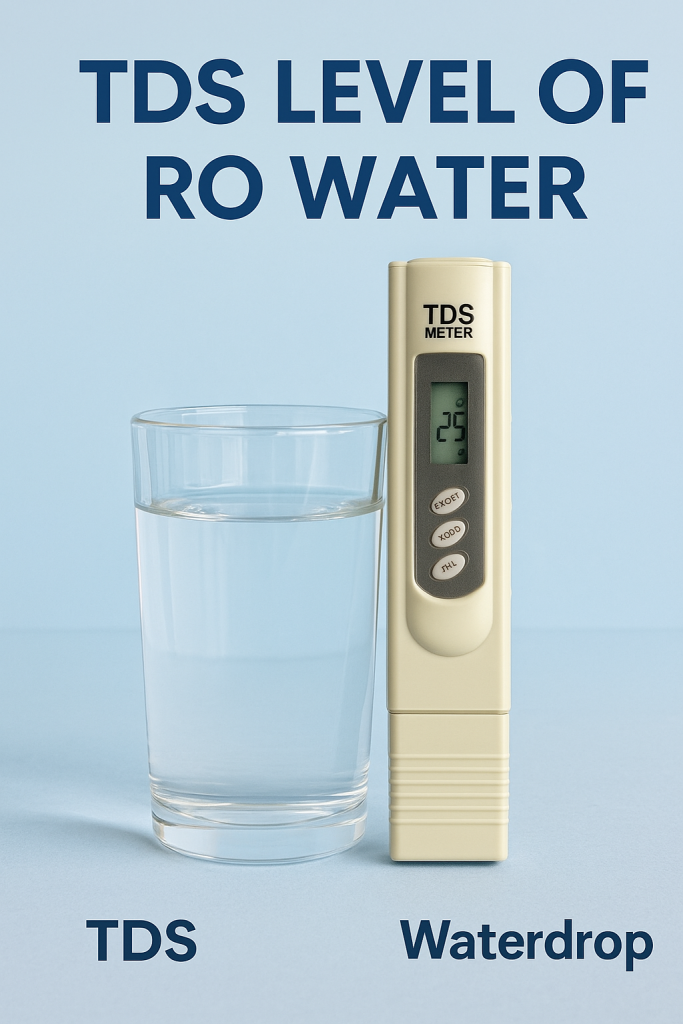
If you’ve installed a reverse osmosis (RO) system, or you’re thinking about getting one, you’ve likely come across the term “TDS.” Short for Total Dissolved Solids, TDS is a measurement of everything in your water that isn’t a pure H₂O molecule. This includes minerals, salts, metals, and even some organic matter. But what should your TDS reading be after it goes through a properly working RO system? And how can you test it accurately?
This comprehensive guide explains what TDS is, how it affects your water, what ranges are considered normal for RO-filtered water, how to measure it correctly, and what your results might indicate about the performance and health of your system.
What Is TDS?
TDS stands for Total Dissolved Solids. It refers to the total concentration of dissolved substances in water—mostly inorganic salts like calcium, magnesium, sodium, chlorides, sulfates, and some trace organic compounds. TDS is typically measured in parts per million (ppm) or milligrams per liter (mg/L), with both units being functionally equivalent.
TDS does not identify specific contaminants, but rather gives a general picture of water purity. For example, a high TDS reading could come from beneficial minerals like calcium or from harmful substances like lead or nitrates. This is why TDS should be used in combination with other tests when assessing water safety.
High TDS can affect the flavor, odor, and clarity of water. It can also lead to scaling in pipes and appliances, especially if calcium and magnesium are present in large amounts. Conversely, water with extremely low TDS can taste flat or bland, lacking the mineral content many people associate with “natural” water.
What’s a Normal TDS Level for RO Water?
Reverse osmosis is one of the most effective home filtration technologies available, capable of removing 90–99% of dissolved solids from water. This includes heavy metals, salts, fluoride, nitrates, and more. However, the exact TDS level of your RO water depends on several factors, including the quality of your source water, the age of your filters, and the design of your RO system.
Typical RO water TDS levels range from 0–50 ppm, with most residential systems producing water in the 10–30 ppm range when functioning optimally. Here’s how to interpret common readings:
- 0–20 ppm: Excellent. Indicates highly effective filtration, often found in newer or well-maintained systems.
- 20–50 ppm: Good. Acceptable for most households, with minor trace minerals remaining.
- 50–100 ppm: Borderline. Could indicate aging filters or slight inefficiencies in the membrane.
- 100+ ppm: Poor. Suggests that the RO system is underperforming and may need maintenance or part replacement.
Keep in mind that the efficiency of your RO system depends partly on the TDS of your input water. For example, if your source water measures 600 ppm and your RO output is 60 ppm, that’s still a 90% reduction and may be considered acceptable depending on your goals.
How to Test TDS
TDS is measured using a digital TDS meter, which is an inexpensive, handheld device that gives immediate readings in ppm. These meters work by measuring the electrical conductivity of water—since dissolved solids carry a slight charge, their presence can be quantified this way.
Steps to Accurately Test TDS in RO Water:
- Clean the Meter: Rinse the electrode with distilled or RO water before and after use.
- Collect a Sample: Fill a clean glass or container with RO water from the dedicated faucet.
- Dip the Probe: Immerse the electrode into the water without touching the sides or bottom.
- Wait for Stability: Allow the reading to stabilize—this usually takes 5–10 seconds.
- Record the Result: Note the displayed ppm value.
For best results, test the water when it has been running for a few seconds to avoid any residual water sitting in the faucet. If you’ve just replaced filters, wait a few gallons before testing to allow the system to flush fully.
It’s also helpful to test your incoming tap water, so you can calculate the rejection rate of your RO system:
Rejection Rate (%) = [(Tap TDS – RO TDS) ÷ Tap TDS] × 100
A good system should have a rejection rate of 90% or higher.
When to Be Concerned
If your TDS reading is higher than expected, especially over 100 ppm, it may indicate one or more of the following issues:
- Worn-Out Membrane: The RO membrane may no longer be effective and needs replacement (typically every 2–3 years).
- Expired Pre-Filters: Carbon and sediment pre-filters may be clogged or saturated, impacting performance.
- Low Water Pressure: RO systems require a minimum pressure (often 40–60 psi) to operate correctly. Lower pressure can reduce rejection rates.
- Incorrect Installation: Cross-contamination from unfiltered water lines or a malfunctioning auto shut-off valve could be letting untreated water through.
On the other hand, TDS that’s too low (0–5 ppm) isn’t dangerous but can lead to flat-tasting water. This is because all minerals have been stripped out—including those like calcium and magnesium that contribute to water flavor. To counteract this, many RO systems include or offer an optional remineralization filter, which adds back a small amount of healthy minerals.
Conclusion
Monitoring the TDS level of your RO system is one of the easiest and most effective ways to ensure it’s working properly. While TDS doesn’t provide a full picture of water quality, it’s a fast, affordable way to detect performance issues before they become bigger problems.
In general, residential RO systems should produce water in the 10–50 ppm range. If you’re getting consistently higher numbers, it’s time to inspect the system. If you’re getting near-zero readings and dislike the taste, consider adding a remineralization stage.
Testing your TDS monthly—especially in homes with hard water or heavy use—can help extend the life of your filters and maintain optimal water quality. With just a few minutes and a $15 meter, you can make sure your RO system keeps delivering the clean, healthy water your family deserves.
Head back to Under Sink Reverse Osmosis (RO) Systems