
Steaming milk to a creamy, velvety texture is an essential part of making lattes, cappuccinos, and flat whites. But what happens when your espresso machine isn’t frothing milk properly? Whether you’re getting large bubbles, no foam at all, or the steam wand doesn’t work, milk frothing problems can turn your café-quality dreams into a frustrating mess.
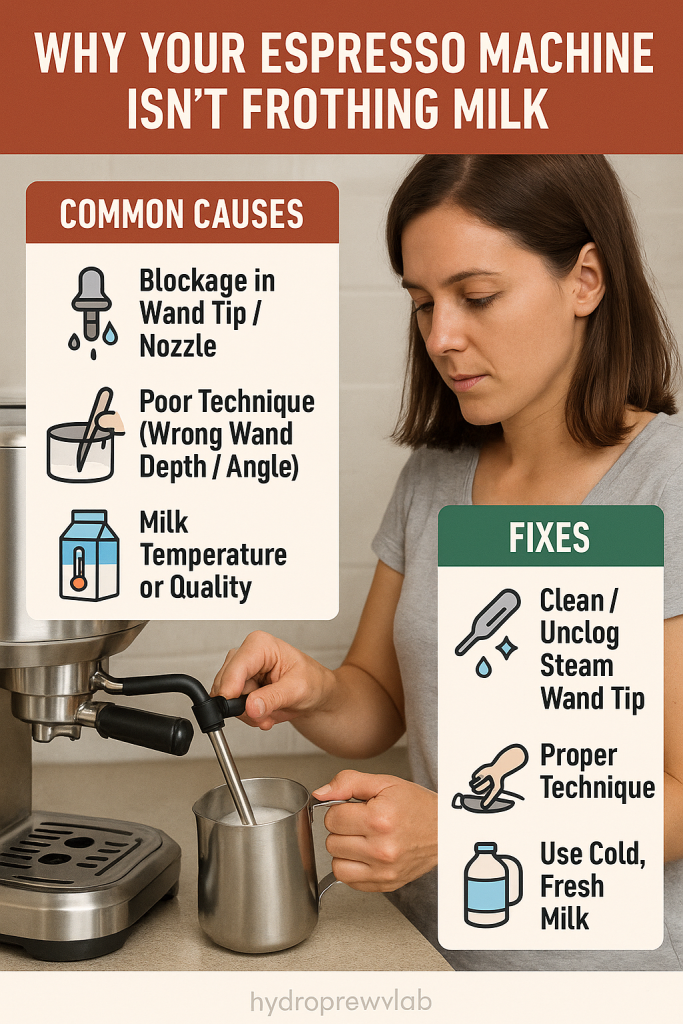
This guide explores the most common reasons your espresso machine might not be frothing milk—and how to fix them.
1. The Steam Wand Is Clogged or Dirty
Milk residue can dry inside the steam wand and block steam flow, especially if the wand isn’t cleaned immediately after each use.
Symptoms:
- No steam or weak steam pressure
- Sputtering steam
- Buildup or burnt milk odor on the wand
Fixes:
- Soak the steam wand in a cup of warm water with a splash of vinegar or milk cleaner for 10–15 minutes.
- Use a pin or steam wand cleaning brush to clear the tip holes.
- After soaking, purge the wand by turning on steam for 3–5 seconds.
Pro Tip: Always wipe the wand immediately after steaming and purge it before and after each use to prevent buildup.
2. Your Machine Isn’t Reaching Proper Temperature or Pressure
Milk needs high-temperature steam and adequate pressure to froth properly. If the boiler isn’t getting hot enough or pressure is low, the wand won’t aerate milk correctly.
Symptoms:
- Steam is cool or not forceful enough
- No froth formation, just warm milk
Fixes:
- Let your machine fully heat up before steaming. Some machines take 5–10 minutes to reach proper steam temperature.
- Check your pressure gauge (if available). Most machines need 1.2–1.5 bars for effective steaming.
- If it’s still weak, descale your machine. Mineral buildup can affect temperature and pressure control.
3. You’re Using the Wrong Type of Milk
Not all milk froths equally. The type and temperature of milk significantly impact foam texture and stability.
Best Milks for Frothing:
- Whole Milk: Best for creamy, stable foam
- 2% Milk: Froths well but with less creaminess
- Oat Milk (Barista Blend): Excellent for frothing with neutral flavor
- Soy Milk (Barista Blend): Good microfoam, but can be temperature-sensitive
Tips:
- Always use cold milk straight from the fridge (38–40°F).
- Avoid ultra-pasteurized or long-shelf-life milk, which doesn’t foam well.
- Don’t re-steam milk—use fresh milk for each drink.
4. Poor Frothing Technique
Technique matters. Even with the best milk and machine, poor wand positioning or steaming time will ruin foam.
Common Mistakes:
- Keeping the wand too deep in the milk
- Holding the wand too close to the surface without enough tilt
- Steaming too long (overheating milk)
Fixes:
- Submerge the tip just below the surface to incorporate air for the first 5 seconds.
- Tilt the pitcher slightly to create a whirlpool motion.
- Once the milk reaches 100°F (hand-warm), submerge the wand deeper to heat it to 140–150°F.
- Stop steaming when the pitcher becomes too hot to touch for more than 2–3 seconds.
5. Your Machine Isn’t Designed for Good Frothing
Entry-level or capsule espresso machines often have weak steam wands that can’t generate the pressure needed for microfoam.
Symptoms:
- Steam output is consistent but weak
- Foam is bubbly and inconsistent
What You Can Do:
- Upgrade to a machine with a more powerful steam boiler or thermoblock.
- Consider a standalone milk frother as an alternative.
- Some machines have a pannarello wand (auto-frother)—try removing the sleeve for better manual control.
Final Tips for Better Milk Frothing
- Always start with cold milk in a cold pitcher.
- Use a stainless steel milk jug with a tapered spout for better pouring control.
- Practice your timing—most frothing should be complete in 20–30 seconds.
- Wipe and purge your steam wand religiously.
If your espresso machine isn’t frothing milk the way you want, don’t give up. With the right maintenance, technique, and a little practice, you’ll be swirling latte art-worthy microfoam in no time.
Milk Frothing Troubleshooting Table
| Symptom | Possible Problem | Solution |
|---|---|---|
| No steam or weak steam | Clogged steam wand | Soak and clean wand; purge before/after each use |
| Lukewarm or no froth | Machine not at proper temp or pressure | Allow full warm-up; descale if needed |
| Large bubbles, no microfoam | Incorrect technique | Adjust wand position; create whirlpool motion |
| Bubbly, unstable foam | Wrong milk type or too hot | Use cold whole milk; stop steaming at 140–150°F |
| Steam wand spurts or sputters | Milk residue blocking wand tip | Soak and clean; use pin or brush to unclog |
| No improvement after cleaning | Machine design limitation | Upgrade to a machine with better steam capacity |
Head back to Accessories & Workflow Essentials